I’ve written about the oldest houses in Dayton, but what about the first home that was ever built in the new settlement?
I recently came across an illustration of it, which inspired me to tell the story of the journey that established Dayton.
Dayton’s Early Settlement History
The story brings us to the spring of 1796 when the first parties from made the trip up the Miami river from Cincinnati to Dayton.
46 individuals had agreed to settle in Dayton the previous winter but “when the time came to start only nineteen responded, and they set out in three sections.”
One group was led by Samuel Thompson and included his wife Catharine Benham Van Cleve, Benjamin Van Cleve, and several children.
One source explains that “so unsettled was the country, and so nearly non-existent were the wagon trails, that the party … preferred to travel in a flat-bottomed boat on the Miami River” (Kelly) while the other two groups traveled by land.
The boat trip took 10 days but they were still the first party to arrive on April 1, 1796 to their destination which had just been named for Revolutionary War solider Jonathan Dayton who had owned a large amount of land in the area.
The exact location they came ashore is the head of what became St. Clair Street.
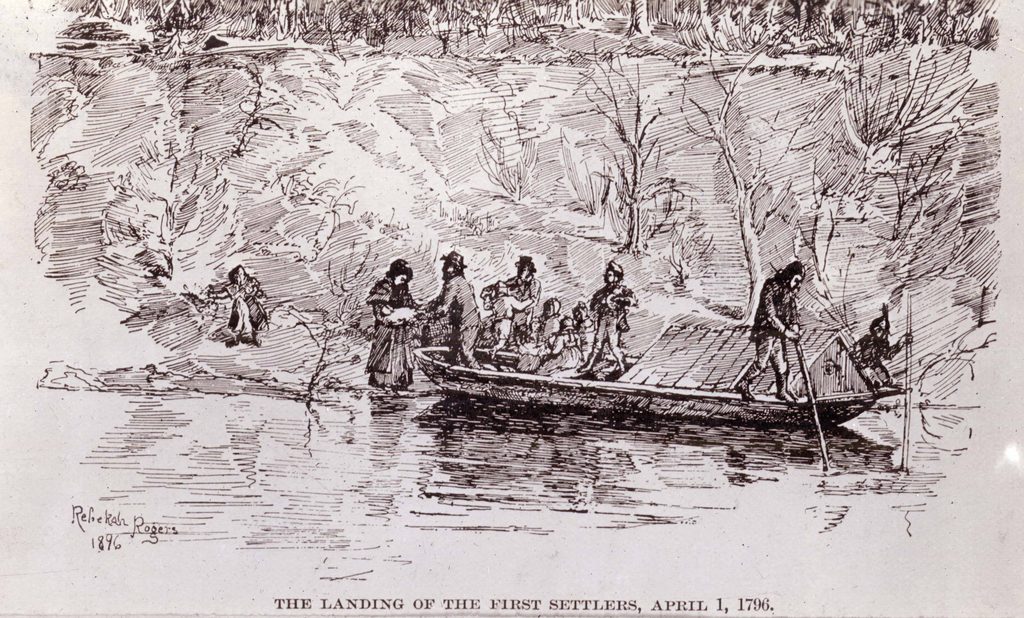
Later accounts describe the landscape that the travelers encountered: “The country around for many miles, with but few exceptions, was covered with unbroken forest, or a thicket of hazel bushes and wild fruit-trees.”
It also described their first interactions with the indigenous residents of the area: “Two small camps of Indians were here when the pirogue touched the Miami bank, but they proved friendly and were persuaded to leave in a day or two” (An outline of the history of Dayton, Ohio, 1796-1896).
That pirogue was “a long, narrow boat, pointed at each end, with boards on either side on which the men walked in poling the boat up stream.”
The First House Built in Dayton
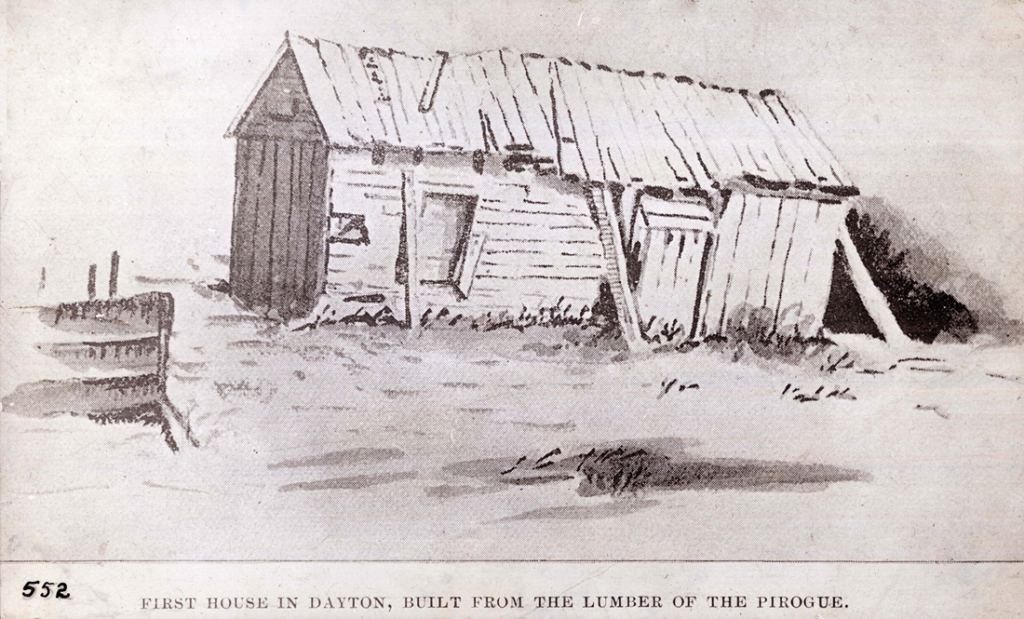
After the journey the boat itself provided the first shelter for the settlers, as it “was carefully taken apart, piece by piece, and rebuilt on dry land, forming the first house in Dayton.”
According to a source, “this house stood as built for eighty-four years, and for many years was owned and used by John W. Harries to store charcoal, which he used in making malt. It was a fine hiding-place for slaves, in the early days, on their way to Canada” (Pioneer Life in Dayton and Vicinity).
Other cabins were soon built around it, “all of them being one story high and containing only one room.”
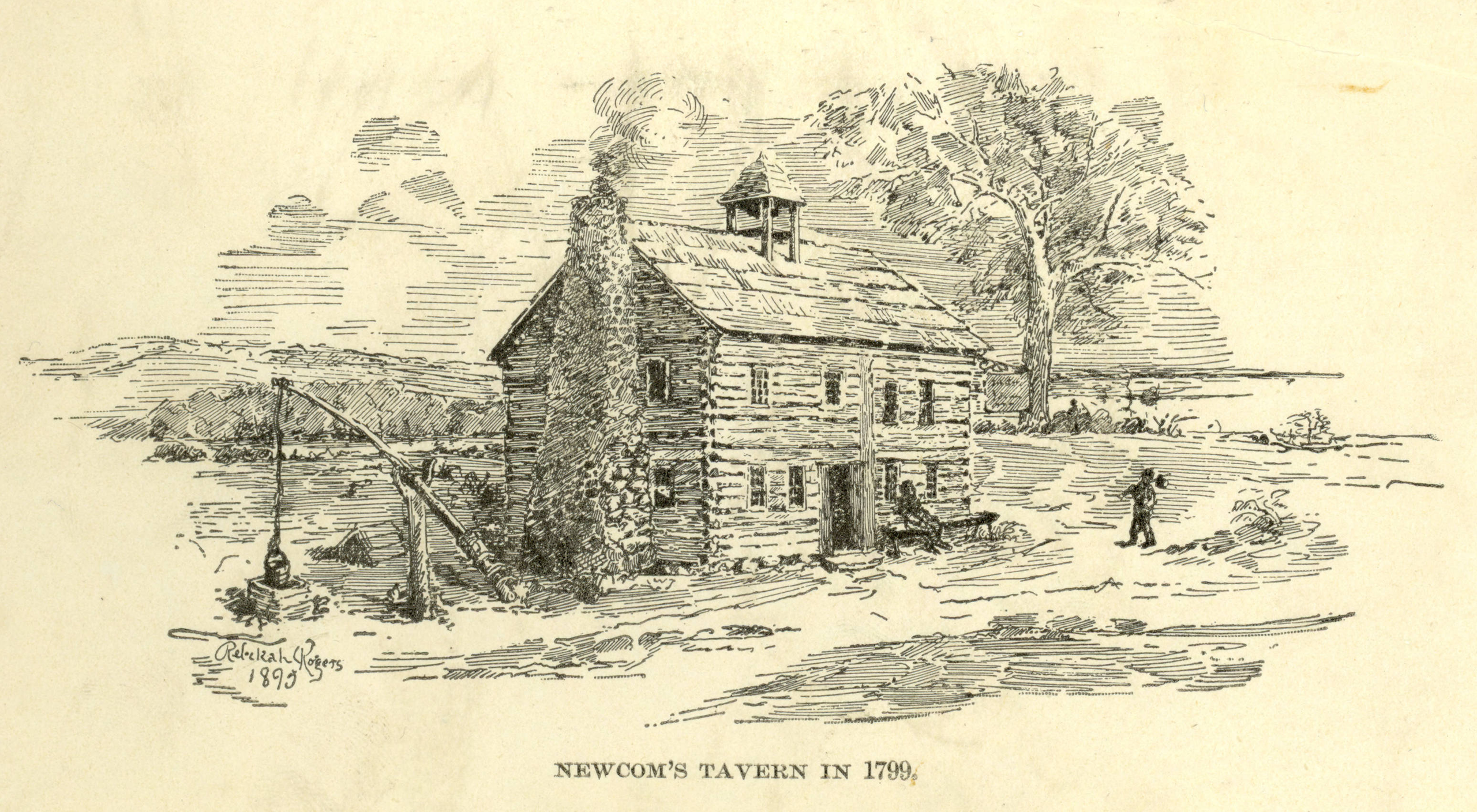
Newcom Tavern, the well-known early building that is the oldest that still stands in Dayton, is also usually given a construction date of 1796.
The history books, however, say that its first version was a single-room cabin, which was replaced and later expanded in 1798-99, giving it its present form (two stories tall with four rooms).
Read more about Newcom Tavern’s journey to its present location in Carillon Park as well as the other early homes that still survive in Dayton.
The First Church Built in Dayton
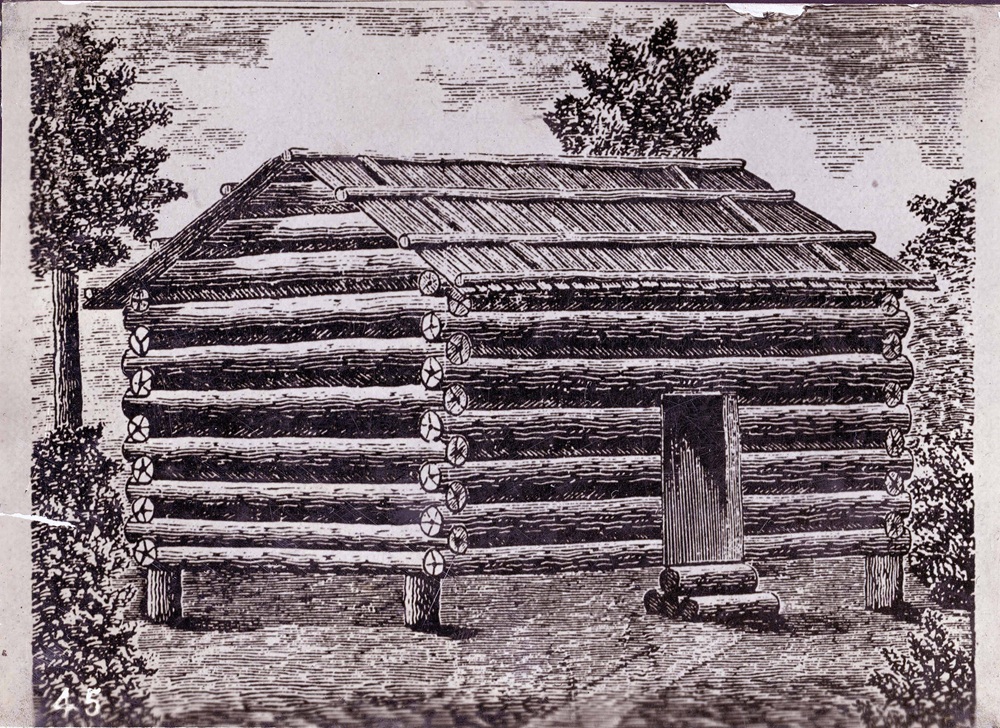
The first church congregation to be organized in the new settlement was First Presbyterian Church in 1799. Five years later, in 1804, they built this structure at the northeast corner of Third and Main streets (which was lot number 134).
The modest church was “18 ft. x 20 ft., seven logs high, had a slab flooring and was log seated.” Much later in the 19th century, the Callahan Building would be built on the same corner.
The First Brick House in Dayton
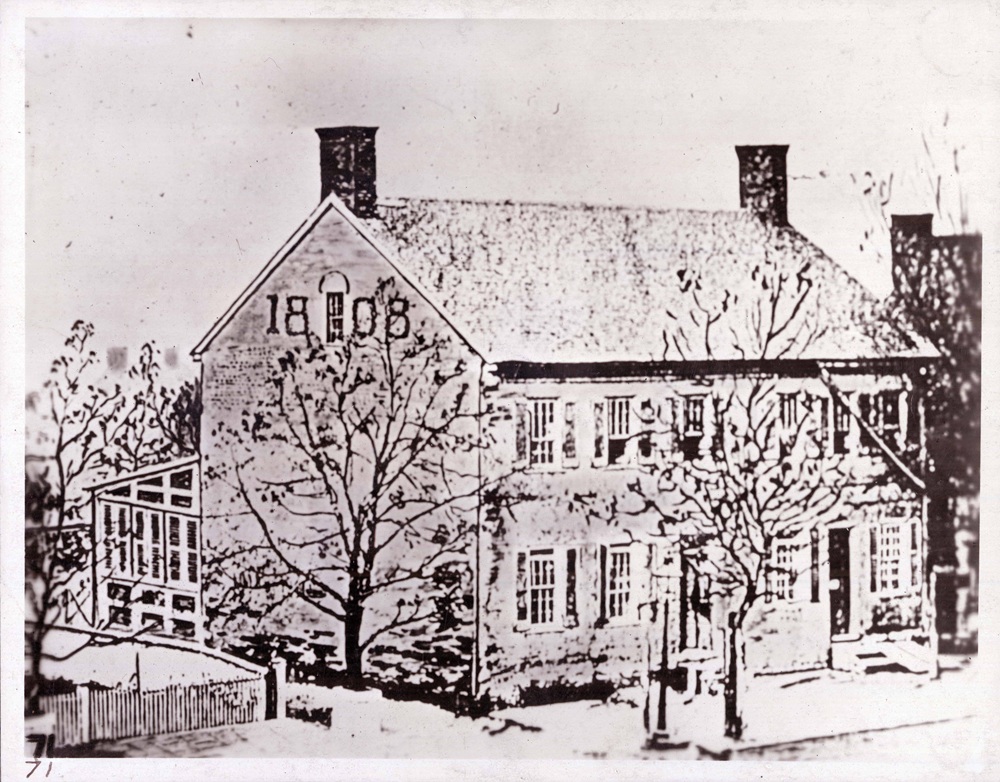
As Dayton began to attract more settlers, it would graduate from building solely with wood. Like the very first house, the first brick home to have been built in Dayton is also documented.
It was built in 1808 at the corner of Main Street and the Court House alley. It served as a residence until 1863 when it became the offices of the Dayton Journal newspaper.
And by that point, Dayton had grown up considerably, from a modest pioneer settlement to a full-fledged city that was poised to become an industrial powerhouse.
Historic images courtesy of Dayton Metro Library
Leave a Reply