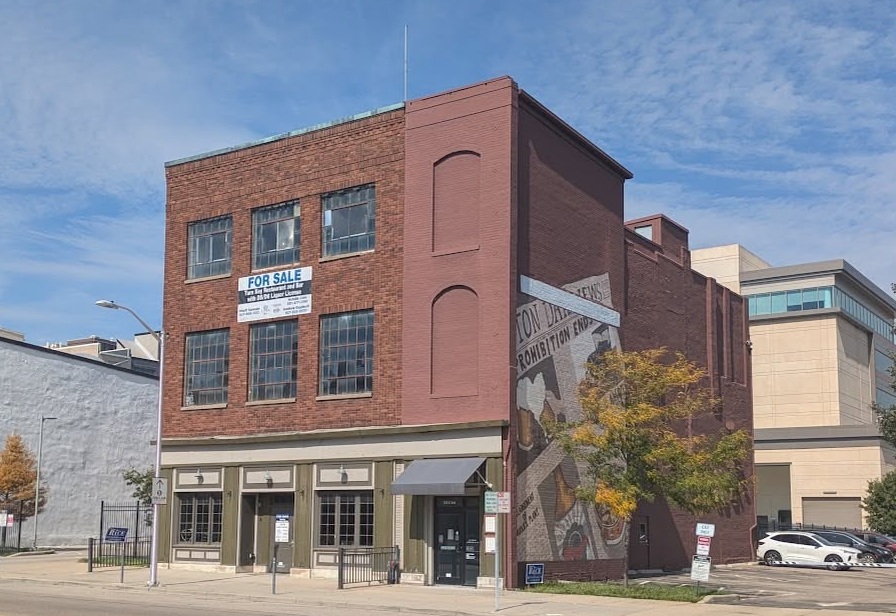
The downtown building that housed Mudlick Tap House from 2017-2025 recently sold.
135 East Second Street has been empty since the bar and restaurant moved to Uptown Centerville.
A post by Andrew Gaydosh & Associates, Exp Realty announced that they had successfully sold the 3-story, 14,800 square foot property after the owners “experienced disappointing results with their previous real estate team.”
A close look at the building reveals an interesting curiosity: the painted bay on the east side of the building does not match the rest of it, including a completely different window shape.
It looks this way because it is actually a small surviving piece of a separate industrial building on the NW corner that was demolished in the 1980s.
And the story involves several prominent Dayton companies and even a lost historic home that once stood on the same site as the current building.
Online property listings have 1900 as the construction date for 135 E Second, but research quickly reveals that this is incorrect for both portions of the structure.
The main surviving building was built in 1923-24, and its former neighbor to the east was completed in the late 19th century.
The corner building was originally the home of George W. Heathman’s Cracker Bakery, which can be seen in the following 1898 map.
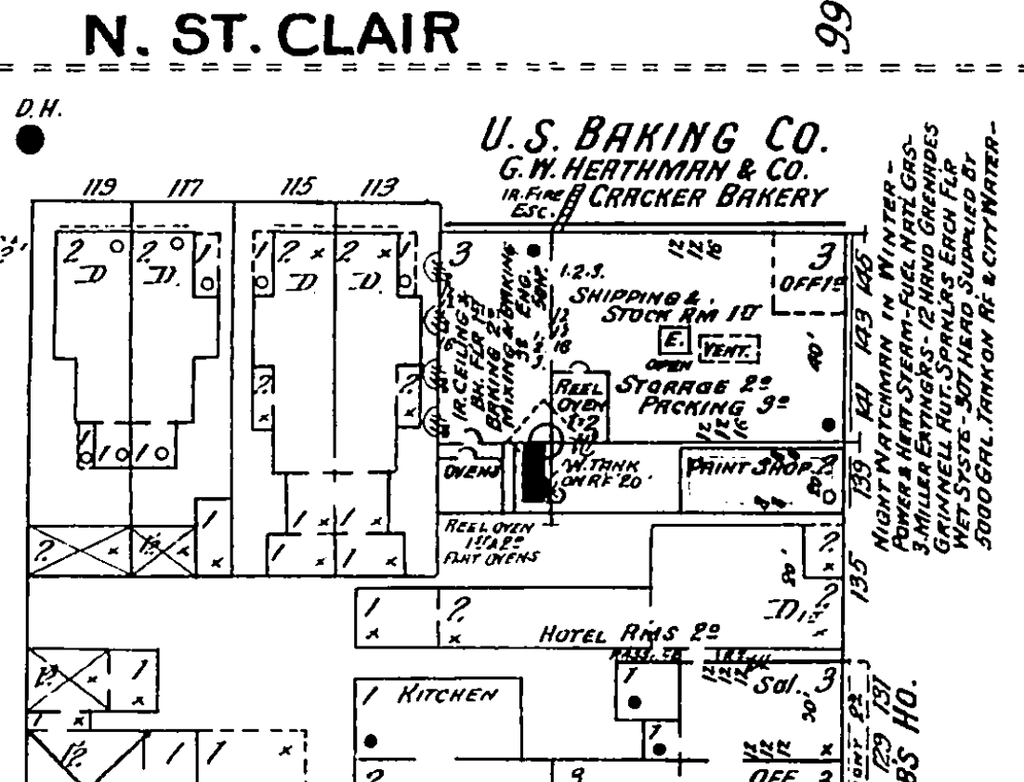
One article reminisced about how “for a nickel one could buy a great big sack full of broken crackers or cookies” (JH 12/19/41).
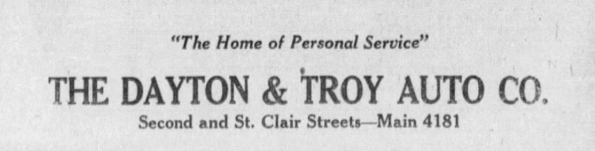
By the 1910s the former cracker factory had been remodeled for the Dayton & Troy Automobile Company Ford dealership.
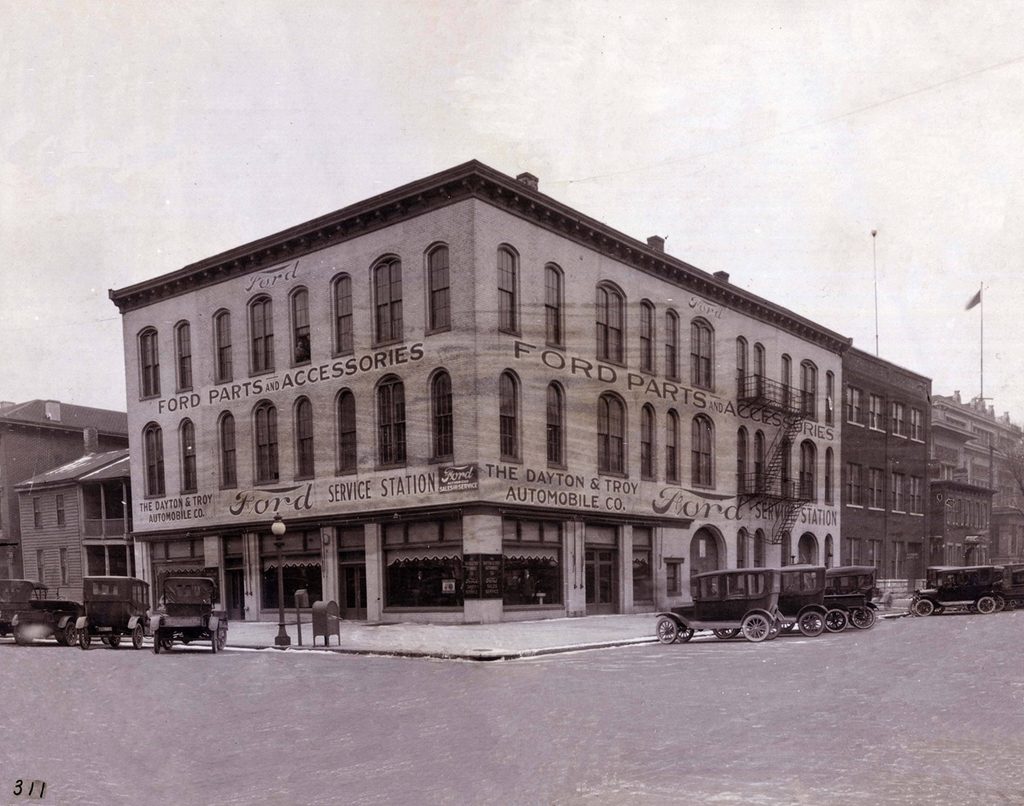
By the 1920s, the company employed 140 workers, sold around 50 Fords a week, and handled roughly 3,800 general repair jobs each month, as well as about 3,500 “free minor adjustments.”
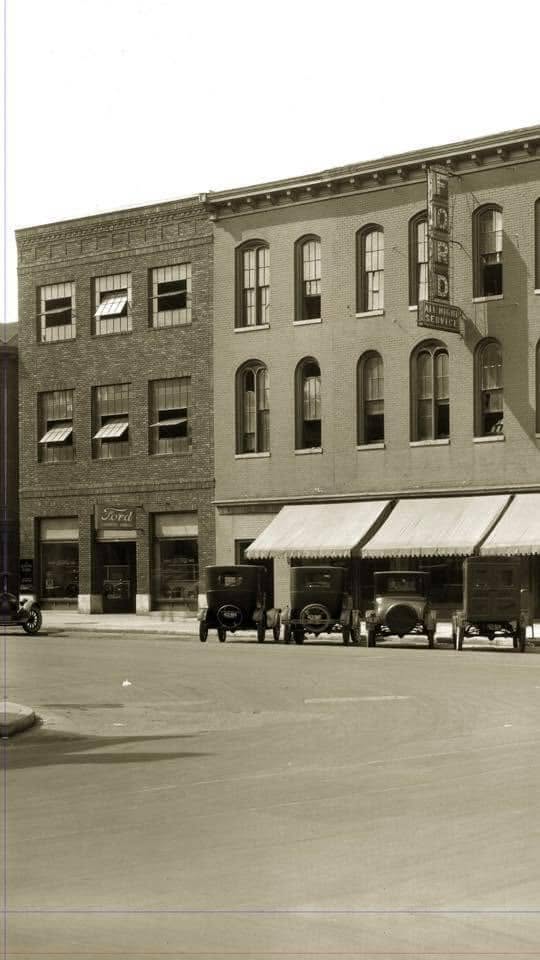
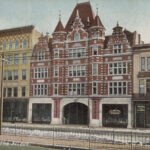
Visible in the historic photo above to the right of the main building is an addition on the St. Clair Street side which the company added in early 1923. It was 3 stories tall of brick and concrete fireproof construction and was even called “one of the finest industrial buildings in the city.”
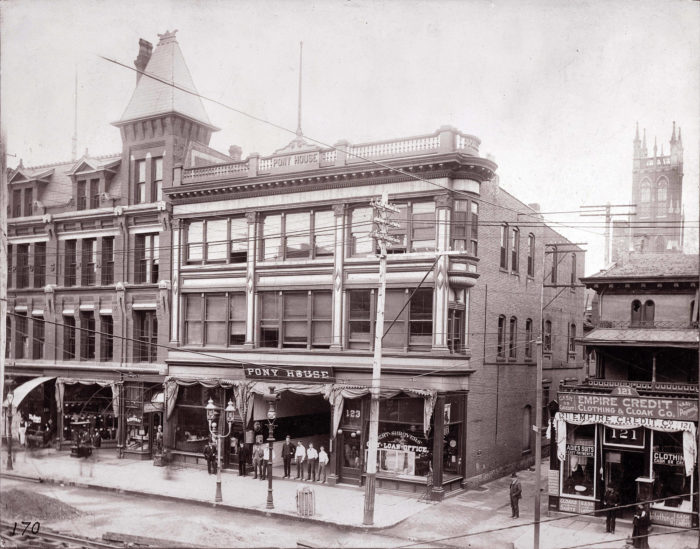
It is very similar in look to the surviving building on the other side, where the old home is located on the left in the historic image.
Later that same year in September 1923, an article announced that the Dayton & Troy Auto Co had purchased that home and was embarking on another expansion totaling $500,000.
The home was razed quickly. It was known as the Sacksteder homestead, one of Dayton’s oldest houses which had been built of logs in 1819. By the 1920s it had already been partially rebuilt “to conform with the more modern houses” and after it was sold by Adam Sacksteder to Dr. Jewett, the latter opened Dayton’s first sanitarium there.
After the home was demolished, construction began on the addition that forms the main part of the remaining building today.
Interestingly, the September 1923 article said the addition would be 4 stories, and also shared that the company planned to raze the corner building and replace it with a more “modern” fireproof structure to complement the two additions.
But the new building would be 3 stories tall, and the former cracker bakery building remained at the corner instead of being replaced. One factor may have been that the president of the Dayton & Troy Auto Co, Charles Emrick, passed away in 1924 at the age of 59.
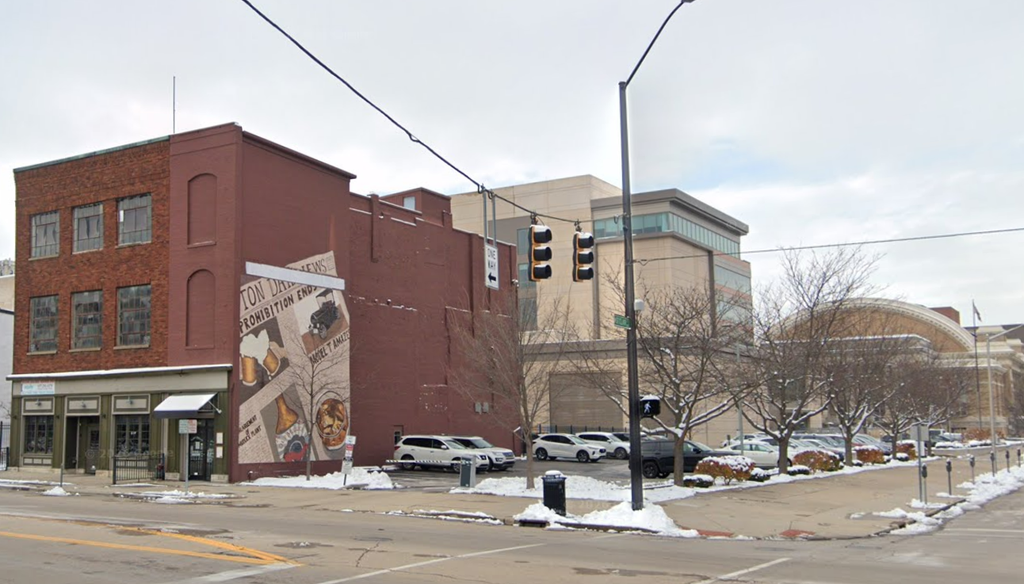
The surviving addition is visible in the following photo to the left, with the older corner building on the right.
After the auto company, a few other tenants called the building home in the 1940s and 50s, including the Dayton Amateur Radio Association and the Stotts-Friedman Co.
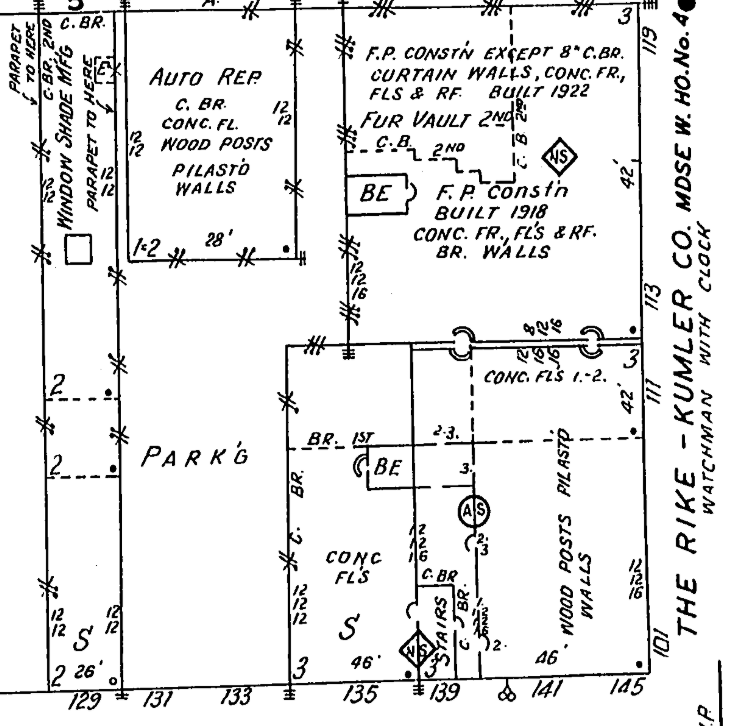
By 1950, the corner building and the St. Clair Street side had become a warehouse for the popular Rike’s Department Store located just a couple blocks to the west, as can be seen in the following map.
In 1960, the 135 E 2nd building was donated by the foundation of Dayton industrialist Frank M. Tait to the local Junior Achievement group. Junior Achievement is a national organization created to educate students in business, financial literacy, and leadership.
During the building’s dedication, the group cheered for Tait while a band played “For He’s a Jolly Good Fellow.” When the 87-year old Tait “mildly protested to his well wishers” that “you overdo it,” one member responded by saying “We could never overdo it. This building means too much to us” (4/24/60).
After Rike’s, the corner building would be sold to Malone Camera Stores, Inc.
And in 1981, Junior Achievement would raze the building in order to create a parking lot next to their offices at 135 E Second.
The single bay that survives today was kept because it contained the staircase for the two connected buildings (visible in the map below).
Before it hit the wrecking ball, however, Emrick’s daughter Marjorie Emrick Irwin wrote a letter to the editor of the Journal Herald sharing her memories of the building back where she had spent much time during her childhood while her father ran the auto company.
“Today I mourn a building,” she began. And although “most who go by never give a thought to its history and probably will be glad to see its emptiness no more,” she recounted happy times there a child “‘helping’ the secretary by keeping busy at her typewriter”, walking across the street to the old downtown library, and riding in a Ford touring car during parades.
But she concluded that “the building will be gone, gone with aroma of glistening cars, the shine of the tile display room floor, and the whir of the service men’s tools as they readied the cars for delivery.”
This demolition was also cited in another Journal Herald opinion piece titled “Downtown needs fewer lots, more buildings” where the author ran through a long list of similar buildings razed for parking around the same time.
He wrote that “in all of these instances, available parking was less than two blocks away” and that “the problem stems from a suburban mentality … The Downtown area won’t survive with a parking lot next to every building” (JH 5/12/82).
Junior Achievement remained in the building into the mid 1990s.
In 1998, the Dayton Theatre Guild put a bid on the building as they planned to return downtown from 2330 Salem Ave, but withdrew it after “estimates for converting the structure came back much higher than expected.”
In spring of 1999, a Dayton Daily News article shared that a group of entrepreneurs led by James George, the owner of two Ohio Surf and Skae Shops, would open El Diablo Lounge, a swing-dance club, in the space.
At the time the news was cited as evidence that “downtown is becoming more of an entertainment center” and the location was “only a block from Phase One of the riverfront development project” (which would become Riverscape by 2001) and about 2 blocks from the ballpark which was also being built at the time. It was called a key part of an effort to “breathe new life into the downtown district” (DDN 3/5/99) and the club would also become a fondly-remembered mainstay for Dayton’s gay community.
In 2004 the building became home to Boston’s Bistro and Pub after it was evicted from its location at 101 E Second St.
By 2008 the building had become the Aquarius nightclub. After a night in 2013 when police and fire crews removed “at least 400” people from the building despite a capacity that had been temporarily reduced to 49 due to previous incidents, the building owner evicted the club as a tenant.
Three years later in 2016 the building was auctioned off, and Mudlick officially opened on July 22, 2017.
Now that it has sold once again, the building awaits a new tenant to build on the fascinating history it has seen over the past century.


Leave a Reply