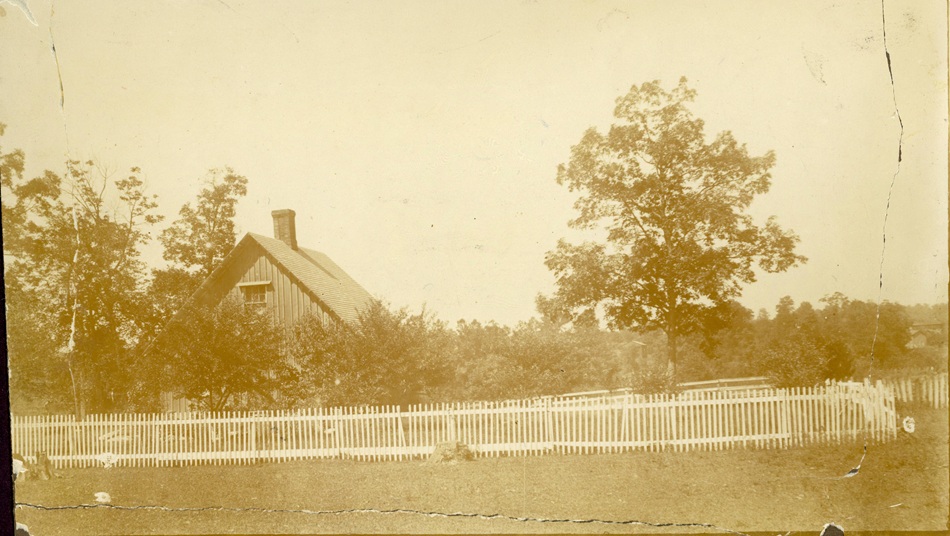
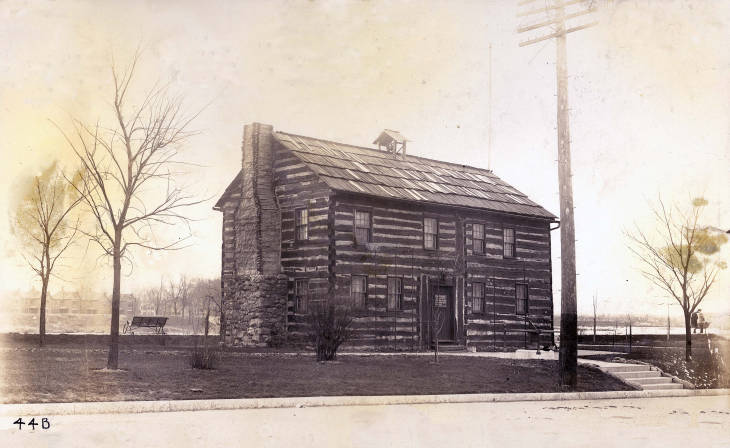
Recently I found an image of an old farmhouse house in Dayton (above), which I learned after some digging actually connects two different Dayton stories I’ve written and talked about in recent months.
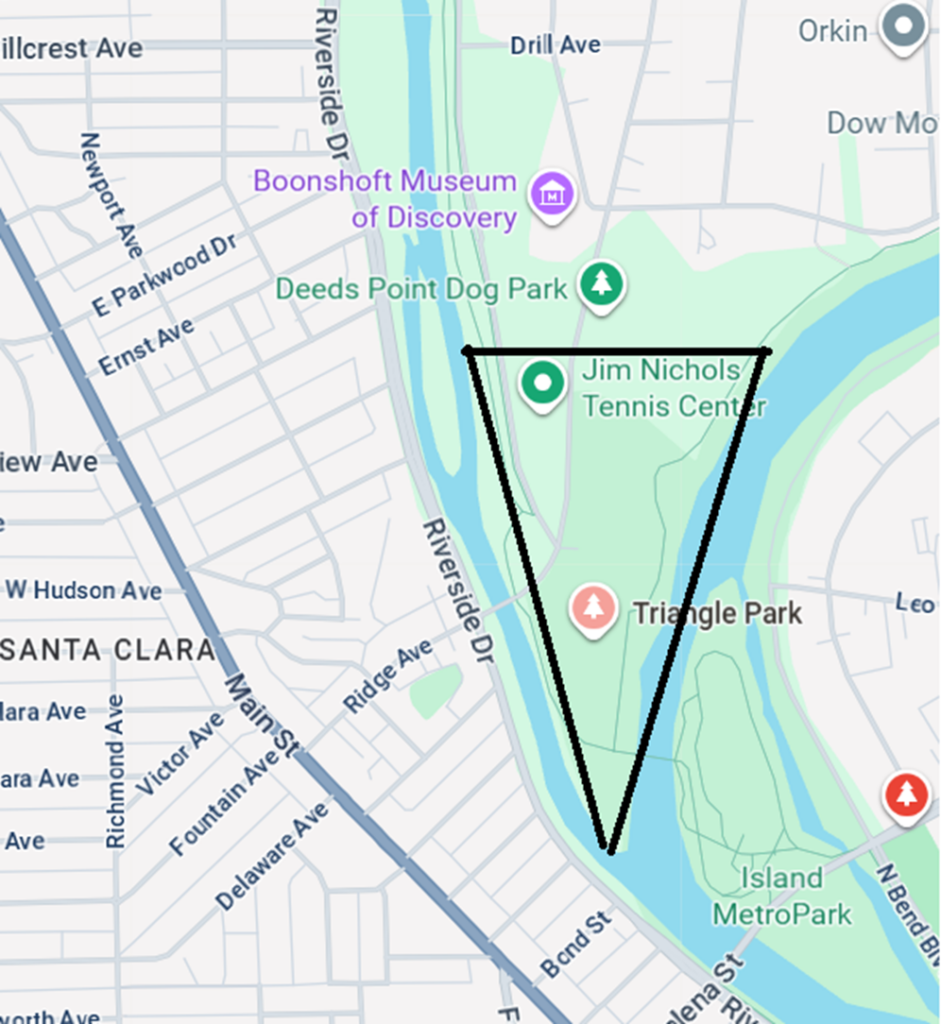
One was the home of Daniel Eldridge Mead on West First Street, which later gave way to the First Street Garage in 1926. The other is Triangle Park where the NFL’s Dayton Triangles played.
Daniel Eldridge Mead lived on West First Street in what I’ve called Dayton’s Park Avenue, alongside other prominent early business and civic leaders.
But there was another large Mead estate located north of downtown near a summer retreat area for wealthy Daytonians.
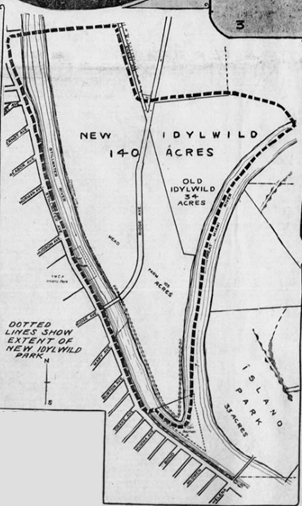
The Ohio historical marker for Triangle Park itself states that industrialists Charles F. Kettering and Edward A. Deeds purchased the “Idylwild” estate of Daniel Mead and adjacent land in 1916.
The following year, the grounds formally opened as Triangle Park with a large July 4th picnic.
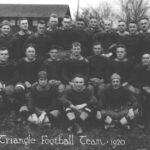
Soon after it would become famous as the home of the Dayton Triangles football team and the site of Dayton’s foundational role in NFL history (which I’ve also explored in a YouTube video).
But the larger area already had a long history before that.
Before European settlement the area was a “favorite spot” of the Shawnee people, who “maintained a permanent camp near the confluence of the two rivers.”
One old article even speculated that chief Tecumseh may have been born here, and that Shawnee lore “he at least spent most of his boyhood day at the present park site” (DDN 8/27/1916).
This history resurfaced in 2019 when the NFL planned to construct a new turf football field at Triangle Park, but pivoted to a new location due to its proximity to Native American burial grounds.
After its use by the Shawnee, the land went through some major changes.
From Farmland and Woods to Embury Park
Long before Triangle Park existed, part of the area had been known as Embury Park, on land that was farmed for many years by Josabad Ensley.
Methodist camp meetings were also held there beginning in the mid-1800s after Ensley leased 33 heavily-wooded acres featuring “cottages, a speaker’s stand, wells, and seating for roughly a thousand people.”
One early account described how to get to the area in the mid-to-late 1800s:
“As there were few street cars in Dayton at that time and they ran east and west, the express wagons would put seats in their wagons and drive up and down the business streets drumming up business.
When loaded they would drive north on Main to Water street (now Monument avenue), east to Keowee, north across Mad river through the old covered wooden bridge and on to the old wooden bridge across the Miami just beyond the present Leo street, and then following the river to the gate of Embury park. From there the passengers would walk up into the grounds.
Another way to get there would be to go out North Main street and across the old hydraulic (now the Great Miami boulevard), then east to the river where a boat could be had to carry you to the grounds. One Sunday when I was there, it seemed to me that all the small boats in the world were hauling passengers up there to the camp grounds” (The Journal Herald 2/2/41).
Idylwild Park: Dayton’s Bar Harbor
After the camp meetings faded in the 1880s, the site evolved into Idylwild Park, a summer retreat area for wealthy Daytonians.
A well-known landmark at the entrance to the park was the “famous old summer home” of Edwin Best, a jeweler who was described as “part owner and prime mover in all Idylwild park.”
Other prominent residents including lawyer Charles Swadner and manufacturer W. E. Crume established summer cottages there to escape the heat of the city.
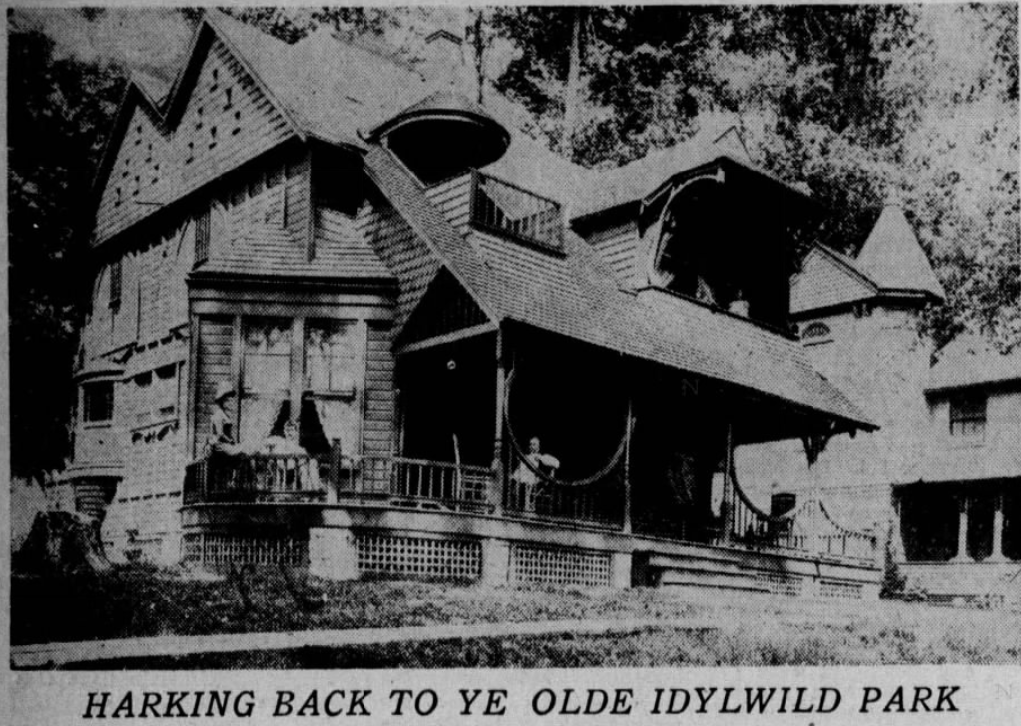
The area became known for social gatherings, horseback excursions, boating, and even winter recreation, earning the nickname “the Bar Harbor of Dayton.”
The residents were described as “most hospitable” and “kept open house almost constantly.”
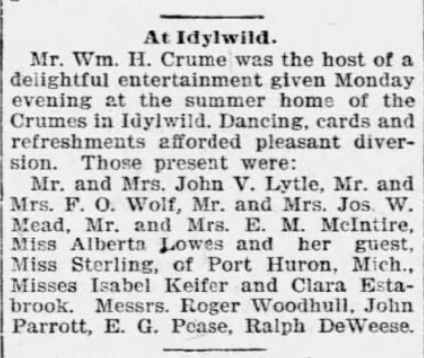
The following item in the “Social and Personal” section of The Dayton Evening Herald in August of 1899 describes one gathering at the Crume cottage:
The Mead Estate and the Olmsted Vision
The area would be highlighted for its potential as a city park in a report created by the Olmsted brothers in 1911: “Triangle park was visualized as a city park under the name of ‘Up-river park’ (and) Old River park was also so visualized in the same survey.”
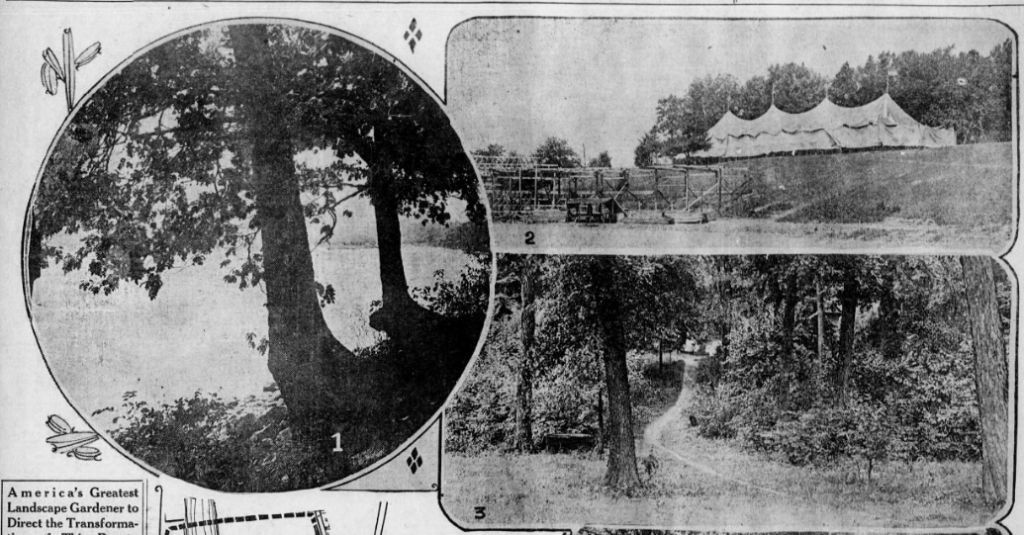
The Mead land had been purchased by Daniel Mead in 1858. 66 acres of it along the river in addition to Idylwild park would be purchased by Deeds and Kettering absorbed into the Triangle Park project. Much of the Mead estate land became DeWeese parkway.
That old farmhouse image that started this research turned out to be a thread connecting a variety of Dayton stories, and a reminder that the city’s most interesting history is hiding just beneath the surface of the places we pass every day.
Leave a Reply