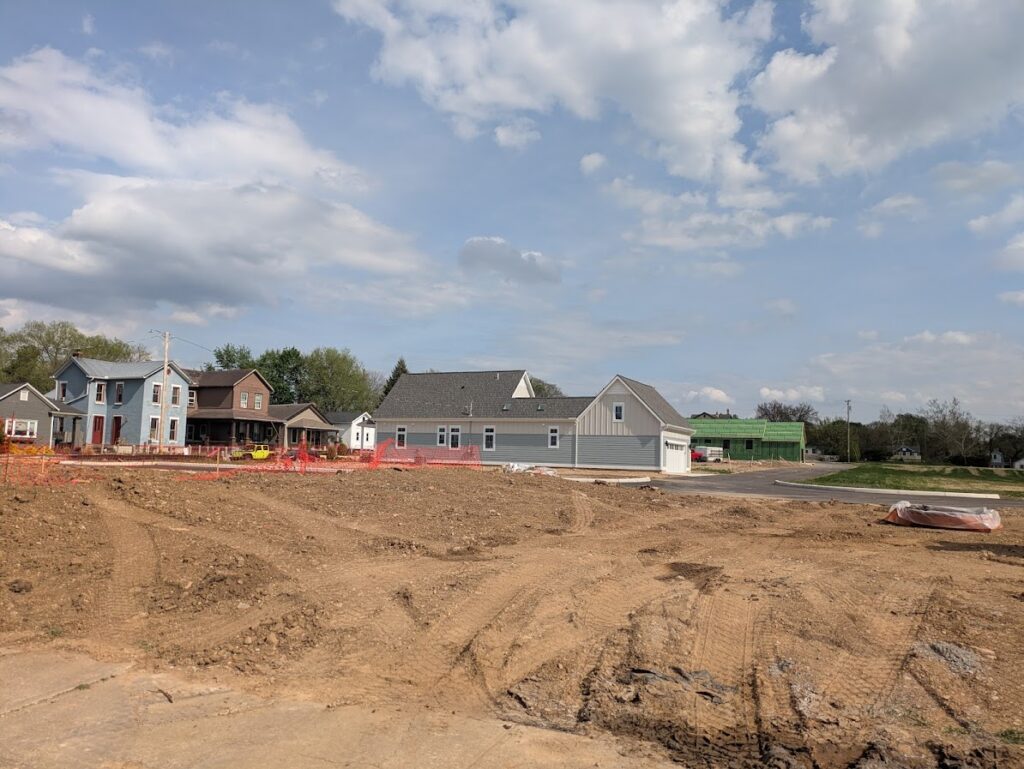
A residential development in the South Park neighborhood that has already added apartment buildings to a busy corridor is now on its third phase which consists of smaller townhome units.
The first phases of the Flats at South Park added two large apartment buildings on Warren Street in South Park, a key area connecting the University of Dayton to Downtown.
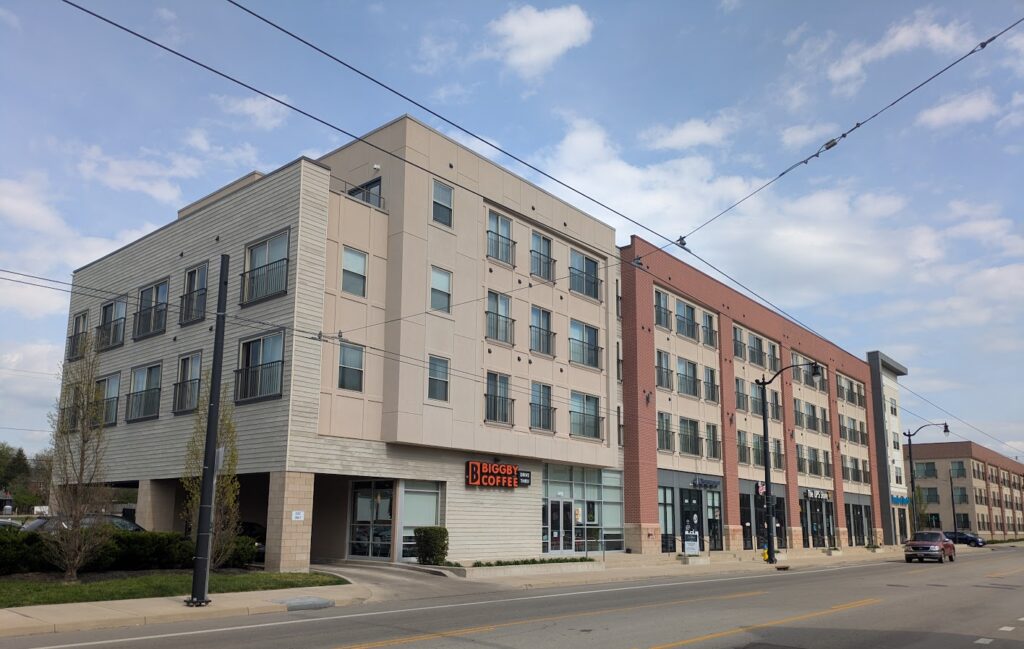
The 1st building was 4 stories tall with commercial spaces on the ground floor including Biggby Coffee, Cassano’s, a UPS store and a couple other tenants.
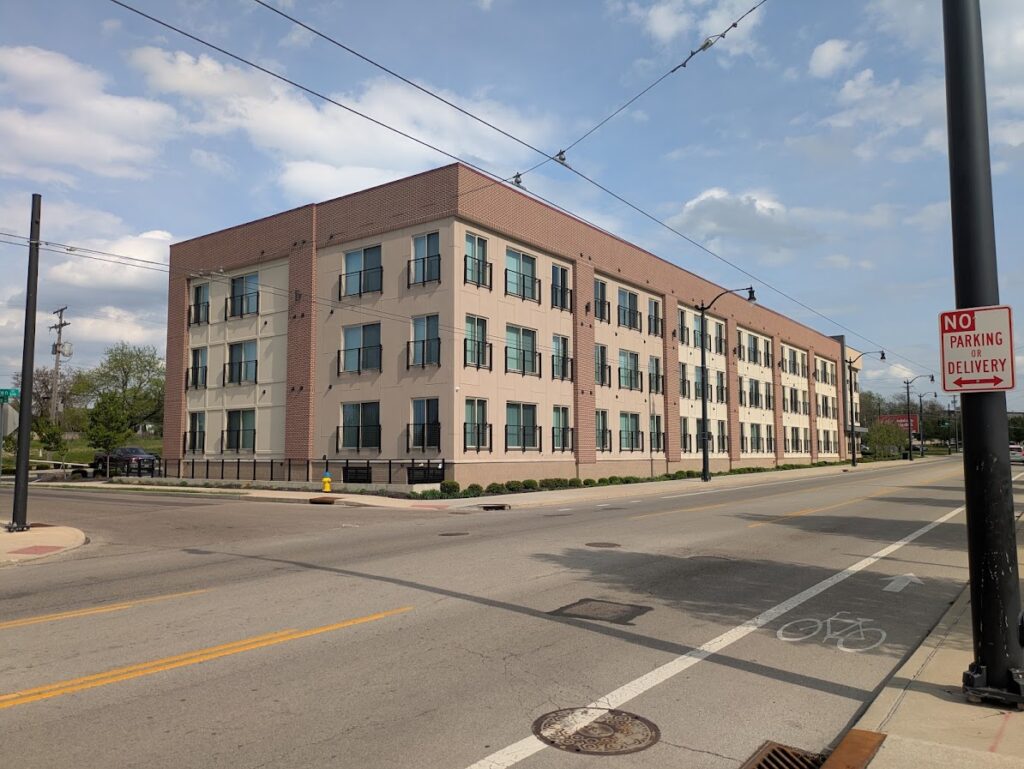
The second building is 3 stories tall and located immediately to the south of the first building. It is solely residential.
South Park History and Neighborhood Context
Overall, I think this is a really key infill project for Dayton, and the interesting history of the area helps explain what’s happening today and put it into context.
In particular, two roadways help tell the story. First, highway US-35 a couple blocks to the north of the Flats site is a major force that significantly reshaped the area, but Brown Street is also key to understand its trajectory.
Before 35 was built, South Park was seamlessly connected to the Oregon District, which functioned as one large neighborhood.
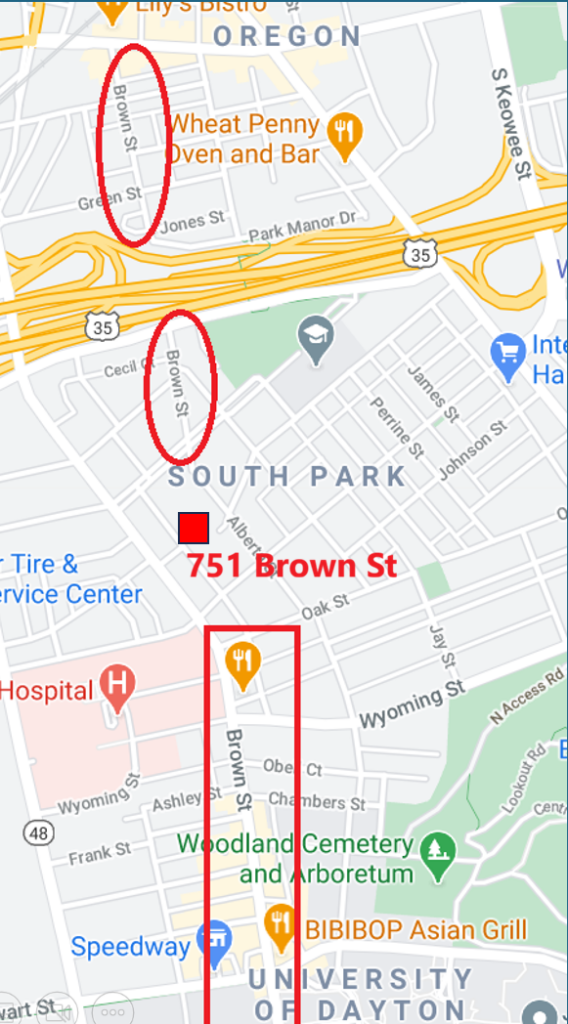
And Brown Street was totally differently in this context. Today it ends near the Flats site and veers off to become Warren, but it once continued straight through, uninterrupted, all the way north to Fifth Street in the Oregon District and was one of the major thoroughfares entering downtown.
I have a full article on the History of Old and New Brown Street that has maps and more history if you’d like to read more.
The land where the townhomes are being built is right where Brown Street used to run through, and it has already been radically transformed twice.
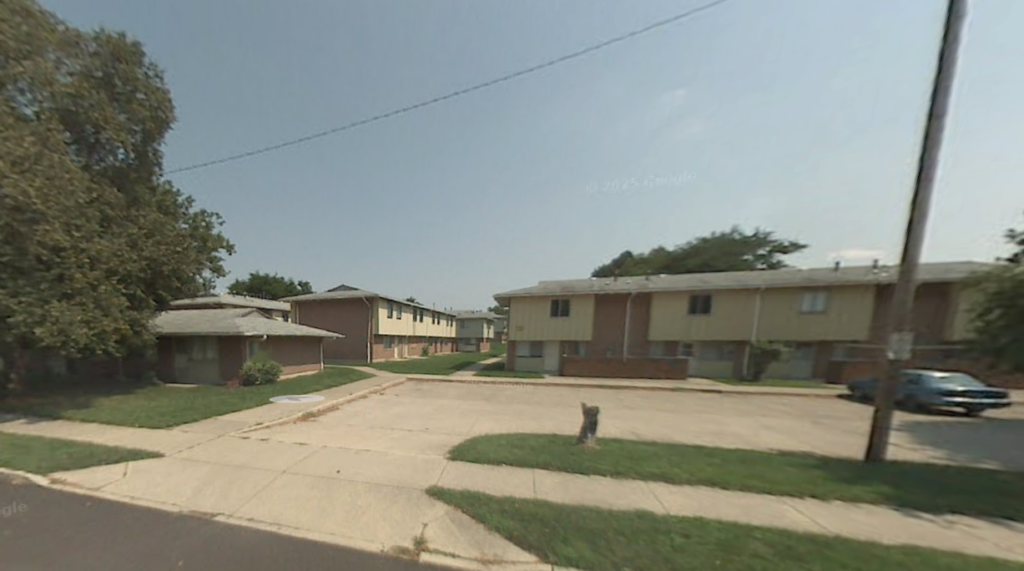
First, all the original homes and entire streets were cleared to make way for the Cliburn Manor public housing complex, which was built in 1969 and later demolished in 2008.
Brown and Warren Streets were also once lined with active neighborhood business districts, with shops, entertainment, and the kind of historic commercial buildings that were once common throughout Dayton, but today survive in only a few scattered pockets after being steadily demolished over the past few decades.
Those lost residential and commercial areas come together in a really personal way in the story of one famous Daytonian, Martin Sheen, whose childhood home was right in this area behind Warren Street, on the part of Brown that no longer exists.
Martin Sheen’s History in Dayton

Sheen’s childhood home stood at 751 Brown Street. His father, Francisco Estévez Martínez, worked at National Cash Register, whose founder John H. Patterson made major efforts to develop these residential areas surrounding his factory.
And just a short distance away from the the home near the Brown and Warren split was the Sigma Theater, which Sheen later pointed to in his memoir as a major influence.
He said “When I was about 5 or 6, I started going to movies at the Sigma Theater, a second-run movie theater on Brown Street between a fire station and a bar. The people on the screen there felt familiar and comforting, and gradually it began to dawn on me: I was one of them. That was the feeling I’d always had about myself. I was an actor”.
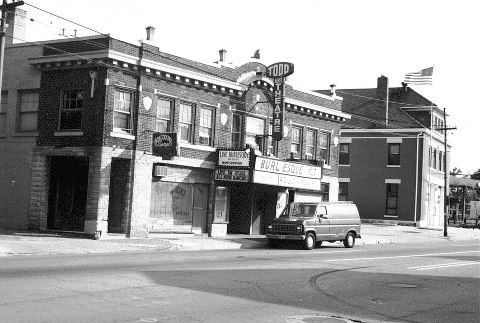
It would later become the Todd Art Theater, shifting to adult films and eventually operating as a burlesque house. It closed in 1992 and was demolished 2 years later.
Read more about the theater and the lost business district.
The entire block around it was razed too, aside from one structure that still survives today, the old fire station that Sheen mentioned, now home to the Jimmy’s Ladder 11 restaurant.
And if we bring the story back to the present day, after being vacant land for almost 2 decades, the Flats project is bringing residential back to the area that was the Cliburn Manor, and before that the lost stretch of Brown where Sheen’s home stood.
New Townhomes Under Construction Where Cliburn Manor and Sheen’s Home Once Stood
Construction is underway on 15 townhomes, which could be completed within about 6 months, with home prices starting in the low $300,000s.
Originally the third phase was also said to involve more apartments and single family homes, so it will be interesting to track how it fills the large site footprint.
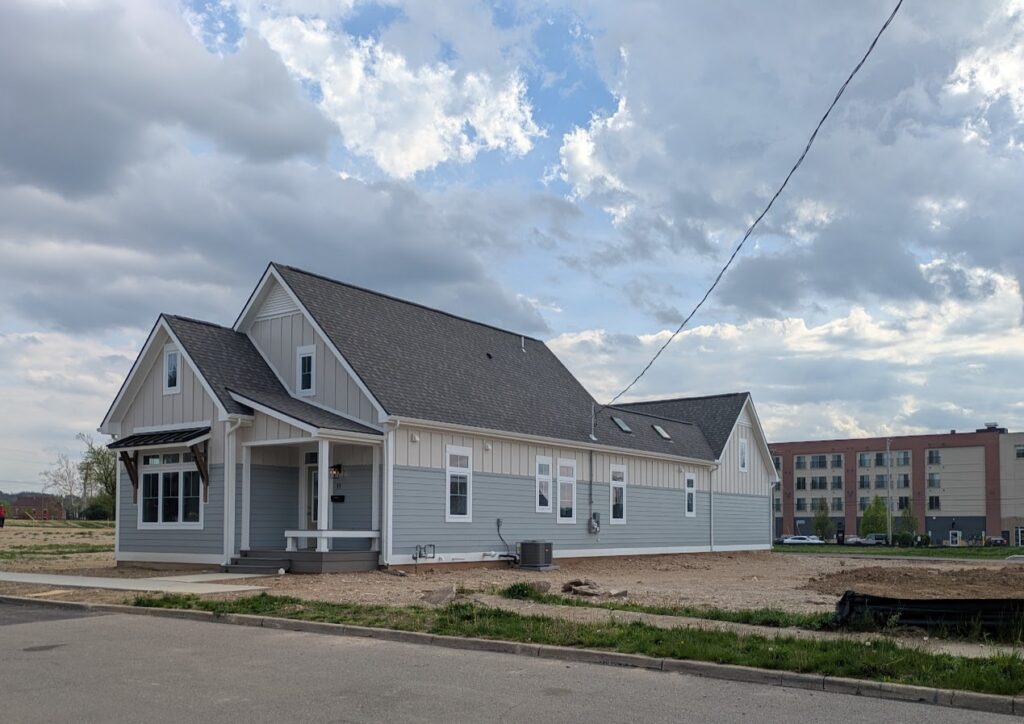
The larger Flats project is key infill for connectivity between the University of Dayton and downtown. For years, the vacant land was a major gap in the urban fabric in an important area.
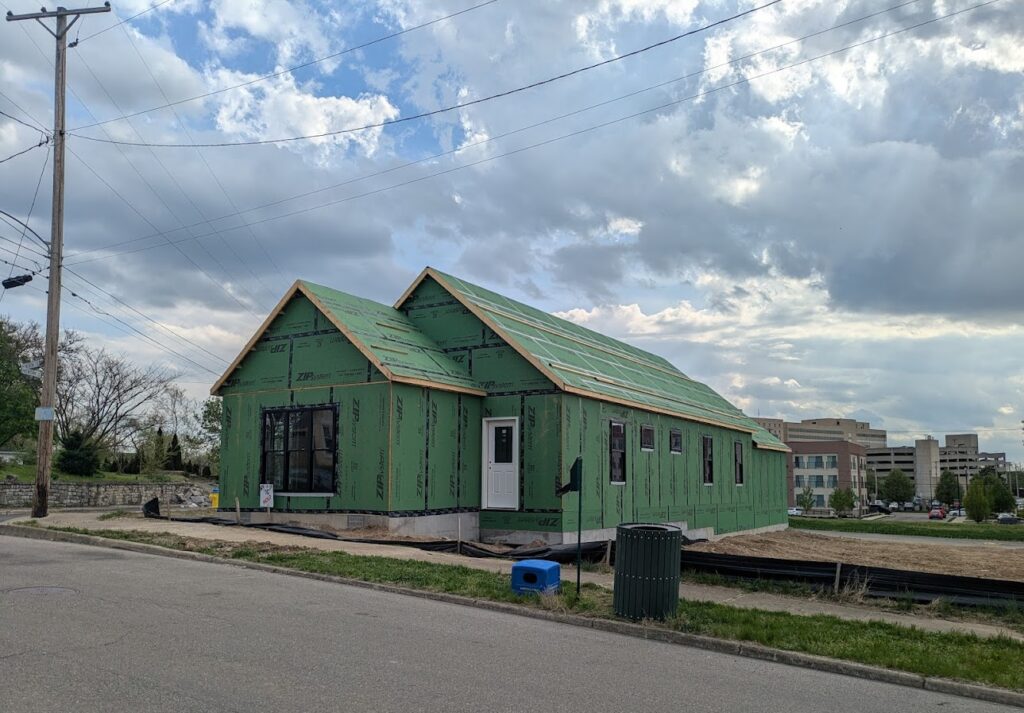
If we return to the original reporting on the project when it was just a proposal, it was presented as a major strategic initiative.
One article said “a major part of the city’s redevelopment focus has been on bridging the gaps separating various community assets, hot-spot destinations and entertainment and residential districts to create a seamless urban experience.”
It also discussed investment on Brown and Warren Streets to improve connectivity. Warren specifically was reconfigured to add bike lanes and reduce the number of lanes to make wider ones with a dedicated left turn lane, with a goal to make it easier to get downtown whether walking, bikes, or driving and really paying attention to making it easier for pedestrians to traverse neighborhoods.
Leave a Reply