At the SW corner of Main Street and Monument Ave downtown, you can find an interesting historic building of a type that is relatively uncommon in Dayton today: a 19th century multistory apartment building.
The Insco Apartments Building was built in 1894 and designed by Charles Insco Williams, who also did about a dozen other major Dayton projects including Sacred Heart Church, the original Reibold Building, and the Algonquin/Gibbons hotel downtown, the Lexington apartments on Lexington Ave near Salem Ave, and Stivers High School.
Williams was a real estate developer in addition to an architect and owned the apartment buildings he designed to help earn capital for his next ventures.
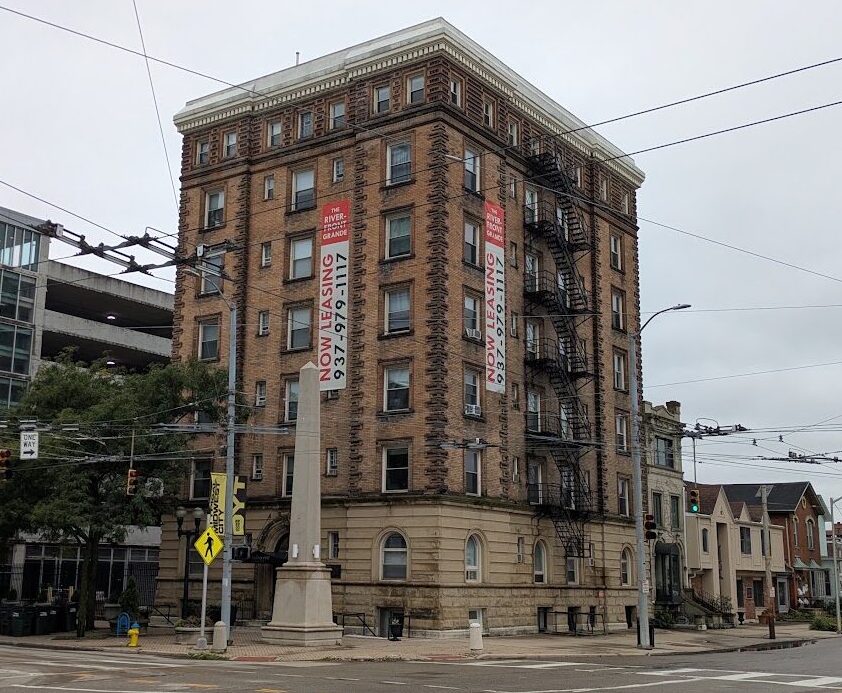
The Second Renaissance Revival style structure is 7 stories tall with the ground floor clad in limestone, the upper floors finished with brick, and the top floor has rusticated stonework and decorative brackets on the cornice.
Insco got the basics of the design from a particular apartment hotel on Fifth Avenue in New York City (Jennings).
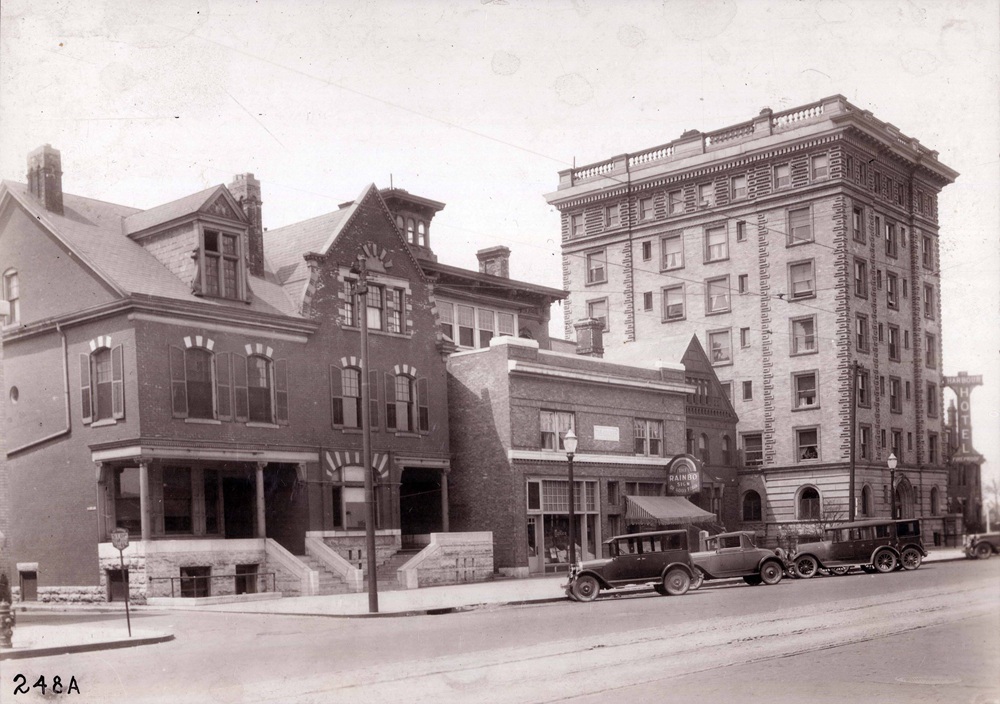
The building has survived downtown’s evolution over time when so many other buildings of its era have been lost, but before it was even constructed it was central to a preservation controversy over Dayton’s oldest residence, Newcom Tavern, which had previously stood on the same site. Its significance was forgotten until the original logs were discovered under the wooden clapboards while the home was being prepared to be demolished for the Insco building. Fortunately, money was raised to move the historic cabin to Van Cleve Park, and today it stands in Carillon Park, as I recount in my full history article.
As for the apartment building, it took on a few different names after Williams’ ownership. It was purchased by William Harbour in 1931 who renamed it the Harbour Hotel. But litigation followed and the building went into foreclosure, and by the late 1930s it was sitting vacant.
In 1943 it was converted into 33 apartments for “war working women” following major modernization efforts undertaken by the Federal Housing Authority. One Journal Herald article called the building’s transformation “only a bit short of phenomenal.”
At that point the building took on the name of Newcom Manor, a nod to the aforementioned Newcom Tavern history on the same site.
The building was added to the National Register of Historic Places in 1994.
In 2018, the apartments were renamed the Riverfront Grande after it was bought by real estate investor Charlie Samaan who invested about $800,000 on improvements.
Sources
Jennings, Jan. Cheap and Tasteful Dwellings: Design Competitions and the Convenient Interior, 1879-1909.
Journal Herald 12/9/1944, 9/12/1943
National Register of Historic Places Nomination Form
Leave a Reply