• Skip to primary navigation
  • Skip to main content
  • Skip to primary sidebar

Dayton Vistas

A Look at the Past, Present, and Future of the Gem City

Connect with Dayton Vistas

  • Facebook
  • Instagram
  • TikTok
  • YouTube
  • Home
  • Contact Me
  • Hire Me
    • Dayton History Presentations
    • Walking Tours
    • House and Building Histories
  • Browse Articles
    • Historic Homes
    • Commercial Buildings
    • Industrial Buildings
  • Historic Dayton Building Catalog
  • My Dayton Book
  • Events

The Paul Laurence Dunbar House and Museum

October 17, 2018 By Andrew Walsh Leave a Comment


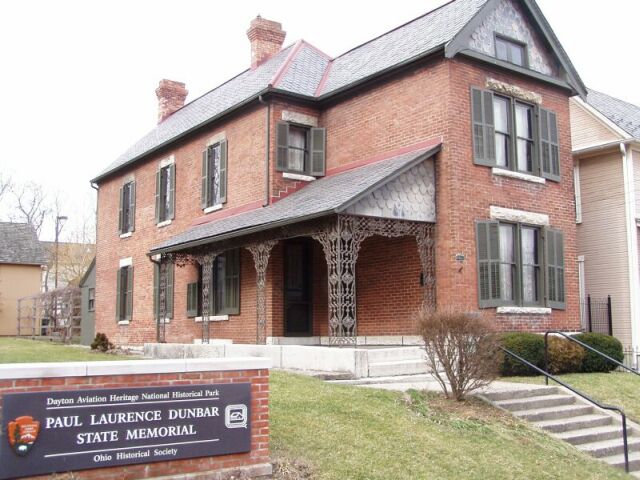
paul laurence dunbar house state historic site museum

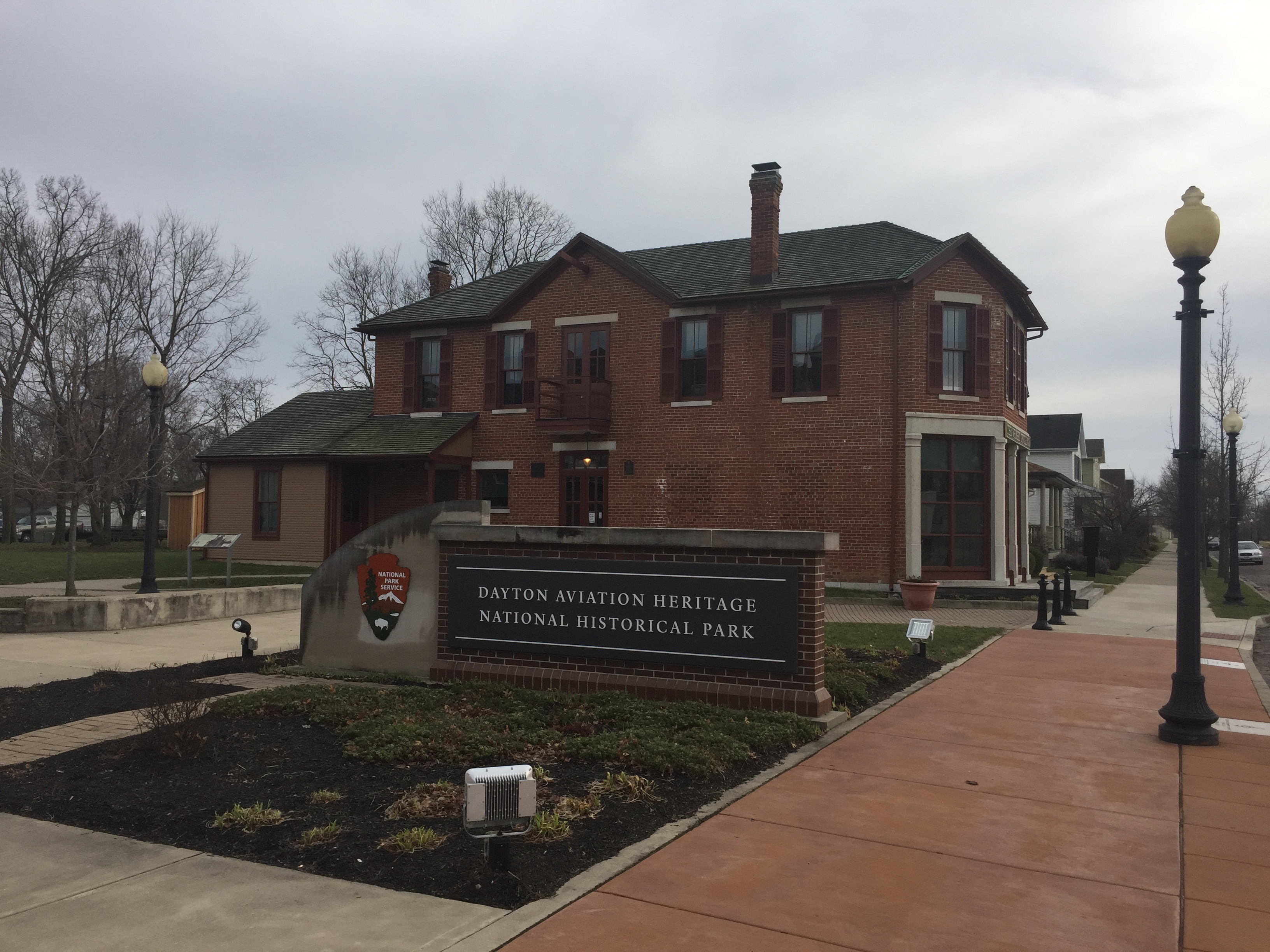
In a previous post, we introduced the Wright-Dunbar Interpretive Center, one of the sites on the Dayton Aviation Heritage National Historic Park.

The original home of the family that gave the neighborhood half of its name, the Wrights, is long gone, having been moved to Greenfield Village in Michigan by Henry Ford. But you’ll still find the Dunbar home just a few blocks away in the same West Dayton neighborhood.
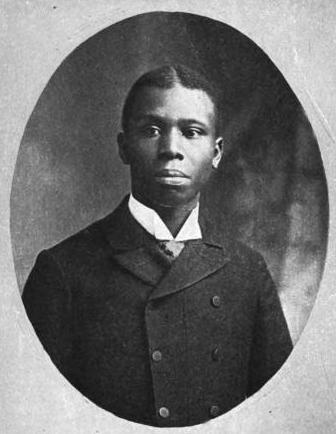
paul laurence dunbar portraitPaul Laurence Dunbar, the highly-acclaimed poet and writer, was born in Dayton on June 27, 1872 but actually only lived in this home for two years at the end of his life.

He bought the house in 1904 for his mother Matilda after Paul had been diagnosed with tuberculosis. She took care of him until he passed away on February 9, 1906 at the young age of 33.

Despite his short life Dunbar was prolific in his writing, having produced over 400 poems, 6 novels, and numerous short stories, plays, and song lyrics. He is well-known for his dialect work and his use of conversational style in his writing.

His poetry made him the first African-American to gain international recognition, and Dunbar has been an inspiration for later writers ranging from Langston Hughes and Zora Neale Hurston to Maya Angelou and Toni Morrison.

Although the Wright-Dunbar Interpretive Center aviation museum at the corner of West Third and Williams Streets only came about in 1992 (the re-discovery of the fourth Wright Cycle shop at 22 S Williams St in the 1980s set things in motion), the Dunbar home had already become a museum decades earlier.

After Matilda Dunbar’s passing in 1934, the house was acquired by the Ohio State Archaeological and Historical Society (a precursor to today’s Ohio Historical Society).

It opened as a museum on June 27, 1938, on what would have been Paul Laurence Dunbar’s 66th birthday. The Dunbar home was the first state memorial established to honor an African-American.

The house was originally constructed in 1894, at what was then 219 N. Summit Street (since then it has been renamed Paul Laurence Dunbar Street.)

Visiting the Paul Laurence Dunbar House

The house has been maintained largely as it appeared when Paul Dunbar passed away. Guests can tour his bedroom and study on the second floor complete with his book collection and desk. The dining room and parlor downstairs are filled with the Dunbars’ furnishings.

Admission to the historic Dunbar house is free and visitor hours are Friday through Sunday. Guided tours take place throughout the day, and the visitor center entrance on Edison Street plays a movie on Dunbar and showcases additional artifacts and exhibits. For more information on visiting please see the National Park Service website.

In addition to tours of the home, the Dunbar Literary Circle, a collaboration between the National Park Service and ASALH (the Association for the Study of African American Life and History), also meets on a monthly basis.
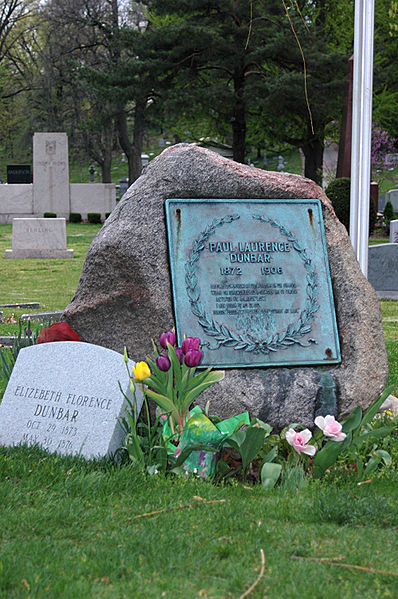
paul laurence dunbar grave at woodland cemetery
Paul Laurence Dunbar’s grave at Woodland Cemetery in Dayton

Sources: NPS.gov 

Photo credit Chris Light
Related Posts:

  • 2018-02-25 16.02.50
    What Can You Find at the Aviation Museum in Wright Dunbar?
  • hoover block
    The Hoover Block and the Wright Brothers' Printing Business
  • wright brothers house 7 hawthorn
    The Wright Brothers House in Dayton (And What Remains Today)
  • Wright Brothers Bike Shop 1127 W Third
    Where Was the Wright Brothers Bike Shop in Dayton?
Enjoy Dayton History?
I'm Andrew Walsh, a librarian and author. I wrote the book Lost Dayton, Ohio and on this site I've written over 230 articles. 

Explore articles by topic or neighborhood

In addition to my writing, I have a YouTube Channel and I also give talks and walking tours locally.

You can sign up to my Dayton Newsletter below to keep up with all of my work.

Filed Under: Historical Dayton Tagged With: Dayton Culture, Dayton Tourism, Museums, Paul Laurence Dunbar, Poetry, West Dayton, Wright Brothers, Wright-Dunbar, Writing

Reader Interactions

Leave a Reply Cancel reply

Your email address will not be published. Required fields are marked *

Primary Sidebar

My book explores a diverse selection of retail, industrial, entertainment and residential sites from Dayton's disappearing legacy.
Read More

Get New Articles via Email


Browse Historic Dayton

newcom tavern daytonA Catalog of Historic Dayton Buildings (with years, pics, type, area, etc.)

  • Historic Dayton Homes
  • Dayton Commercial Buildings
  • Dayton Industrial Buildings


Browse Our Article Archives

Search the Dayton Vistas Archives

Latest Posts

What’s Happening at the Dayton Fairgrounds and Nearby Housing, Office, and Commercial Projects

west side chevy dayton wright dunbar

West Side Chevy Building: Will San Marco Adaptive Reuse Move Forward?

cornerstone-wright-dunbar

$6M Cornerstone Project Advances on West Third Street in Wright-Dunbar

dayton eagles building

The Eagles Building: A Historic Fraternal Hall That Survived South Main’s Transformation

zion baptist church dayton

Historic Church Redevelopment Could Shape Wright-Dunbar’s Future

digital-transformation-center-dayton-construction-pic

Dayton Fairgrounds Redevelopment: The Historic Roundhouse and the OnMain Development

Recent Comments

  • Mike Wells on The Santa Clara Business District: History, Preservation, and Recent Fire
  • Christopher Joseph on West Side Chevy Building: Will San Marco Adaptive Reuse Move Forward?
  • Kathleen Durig on Dayton Fairgrounds Redevelopment: The Historic Roundhouse and the OnMain Development
  • Andrew Walsh on History of 2200 East Fifth St

Articles By Topic

Architecture Auto Industry Bars Churches Clubs and Societies Commercial Buildings Dayton Arcade Dayton Culture Delco Demolition Downtown Dayton East Dayton Features Fire Blocks District Great Flood of 1913 Historic House Histories Hotels Huffman Industrial Buildings John H Patterson Museums NCR Old Dayton Maps Old North Dayton Oregon District Preservation Rare Dayton Photos Restaurants Retail Rike's Sanborn Maps Schools Sports Suburbs Then and Now Transportation History University of Dayton University Park Urban Planning Urban Renewal Wayne Avenue West Dayton Windsor Companies Wright-Dunbar Wright Brothers

Copyright © 2026 · News Pro On Genesis Framework · Affiliate Disclosure and Privacy Policy · WordPress · Log in