I’ve been covering the ongoing redevelopment in and around the Wright-Dunbar neighborhood, located just across the Third Street Peace Bridge, a $17 million project that opened in late 2021.
There is a 17-foot wide multi-use trail on the bridge, but right across it at the gateway to the district, one finds a very busy auto-centric intersection at Third and Edwin C. Moses, near where an old residential area was removed long ago for an urban renewal project.
Some work has been completed to help strengthen the sense of place at Third and Edwin C. Moses, like the new Wright Flyer sculpture on the SW corner and a new planned park space on the NE corner.
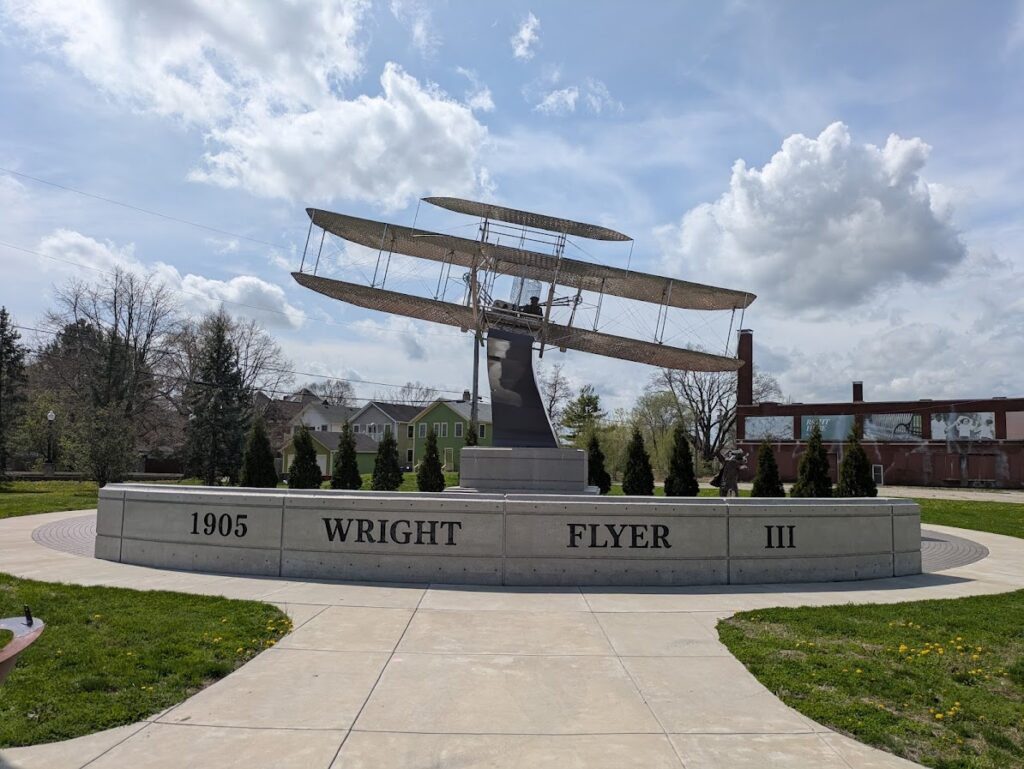
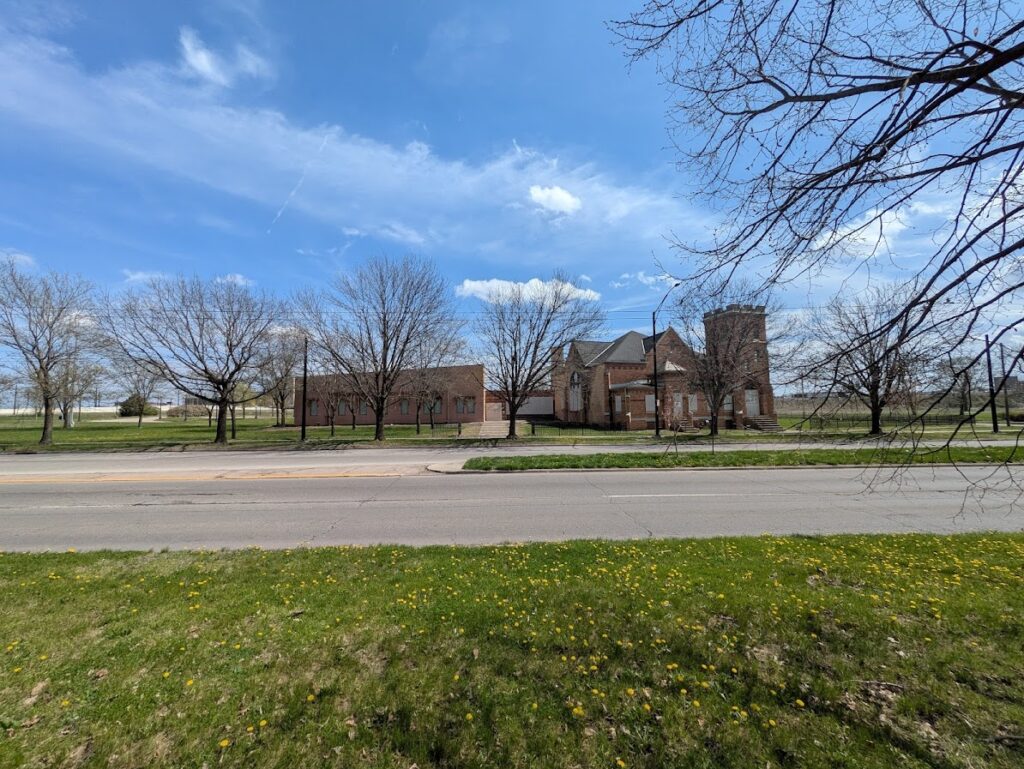
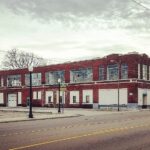
On the SE corner of the intersection there is a large tract of vacant land near the river and surrounding a surviving historic church building.
The City of Dayton has been eyeing a redevelopment here that could greatly change the feel of this area just west of the river.
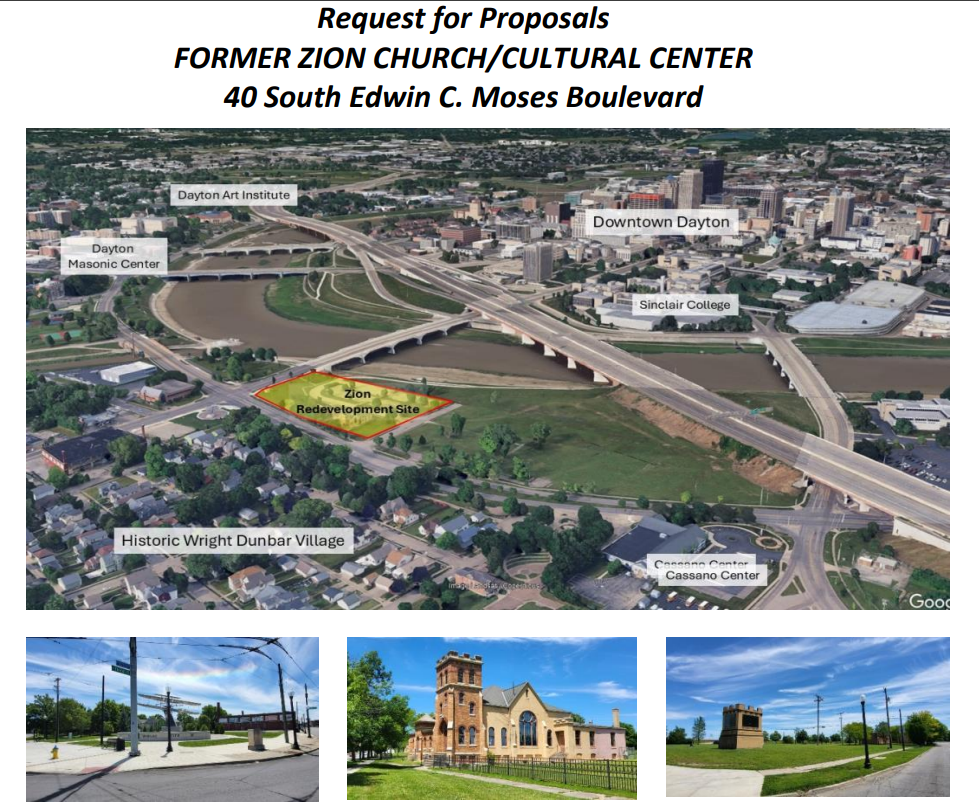
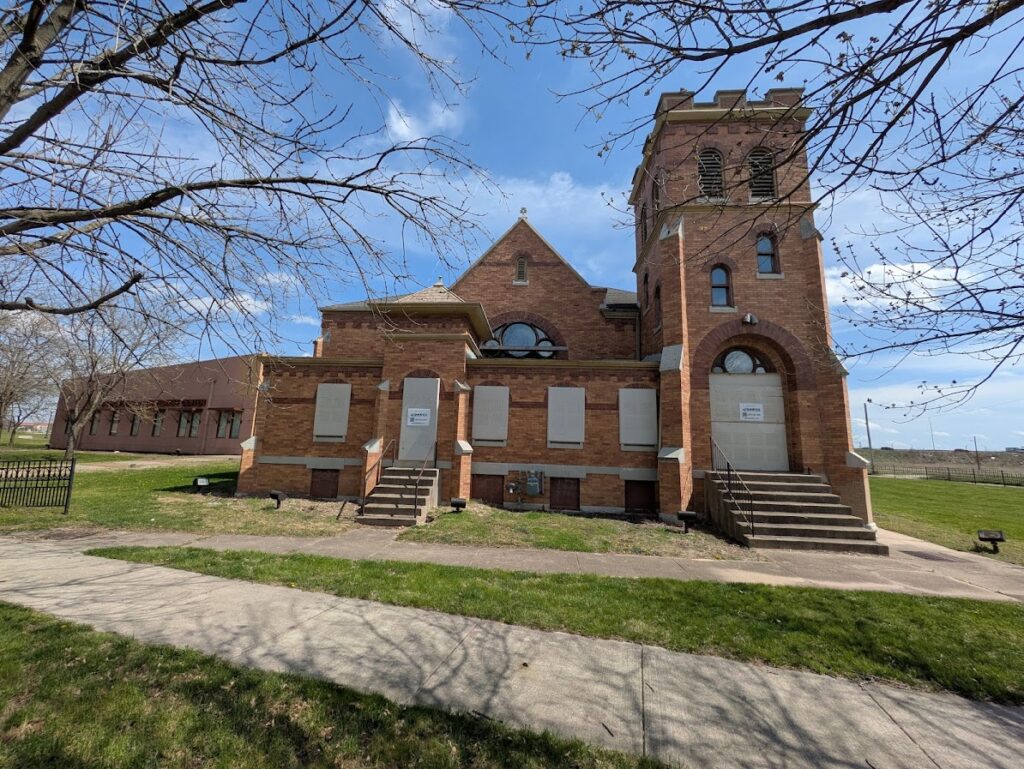
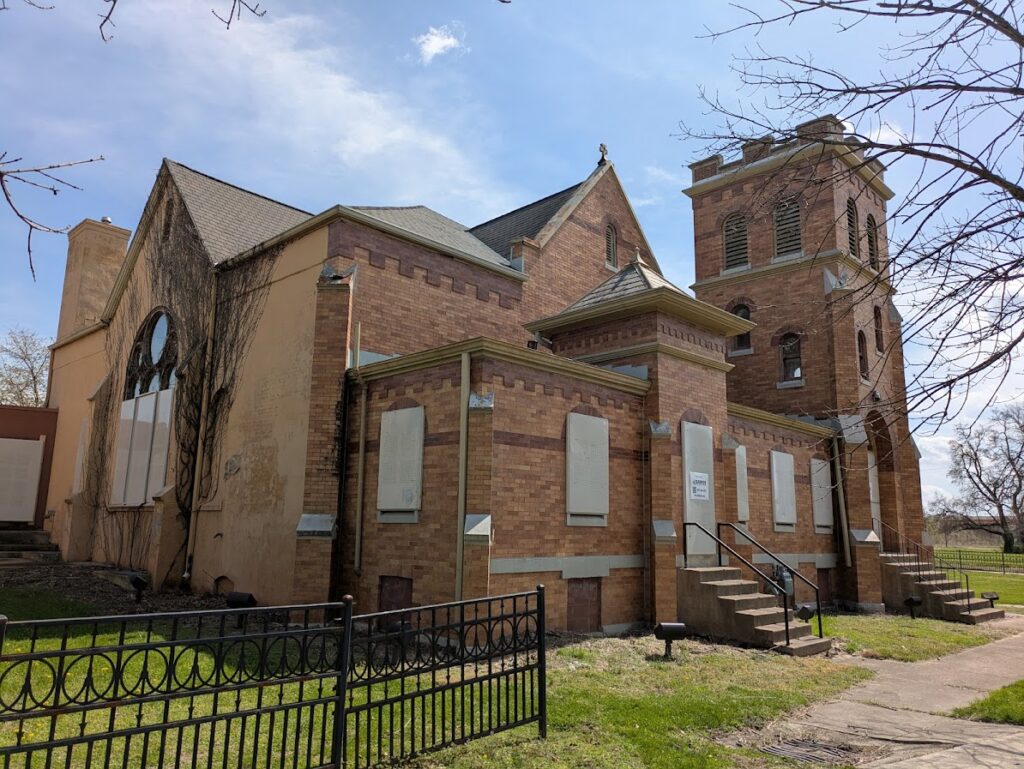
It’s Zion Baptist Church, the only survivor from the lost residential area which later became used as a museum and cultural center.
The church has been called an “important spiritual and cultural center for the African American community.”
It’s Dayton’s oldest black Baptist church as well as the site where the local chapter of the NAACP was founded.
Read about the very first Black church in Dayton
In 2025, the city issued a request for proposals for a 3.4 acre site at the southeast corner of West Third and Edwin C. Moses. The city owns the site and at the time said it sought “a visionary, experienced development partner to deliver a signature, mixed-use redevelopment that respects the historic Zion Baptist Church and enhances the gateway to Wright Dunbar and West Dayton … The site’s prominence, visibility and proximity to downtown Dayton, the Great Miami River and major corridors make it a prime location.”
The RFP said the church is eligible for the National Register of Historic Places and would only consider projects that preserve it without significant modification (except for its northern wing which includes later additions).
The activation of the church is top of the city’s list of considerations, which also said that the site “possesses the opportunity to create a strong place-based corner presence to complement the impact of the four corners of the gateway. As the vision to build a vibrant, mixed-use development advance, provisions must strengthen safety and connectivity along the streets and sidewalks in the area.” It required submissions to “analyze and identify the fundamental place-based urban design genetics and design cues that make the character of each street corridor important and unique to this part of Dayton.”
The RFP indicated that the project might consist of office, residential, commercial, institutional, or “a combination of ‘lifestyle uses’ at the ground level.”
History of Zion Baptist Church
According to the church, it “was founded in Humphrey and Elizabeth Moody’s Mound Street living room on Nov. 30, 1870.”
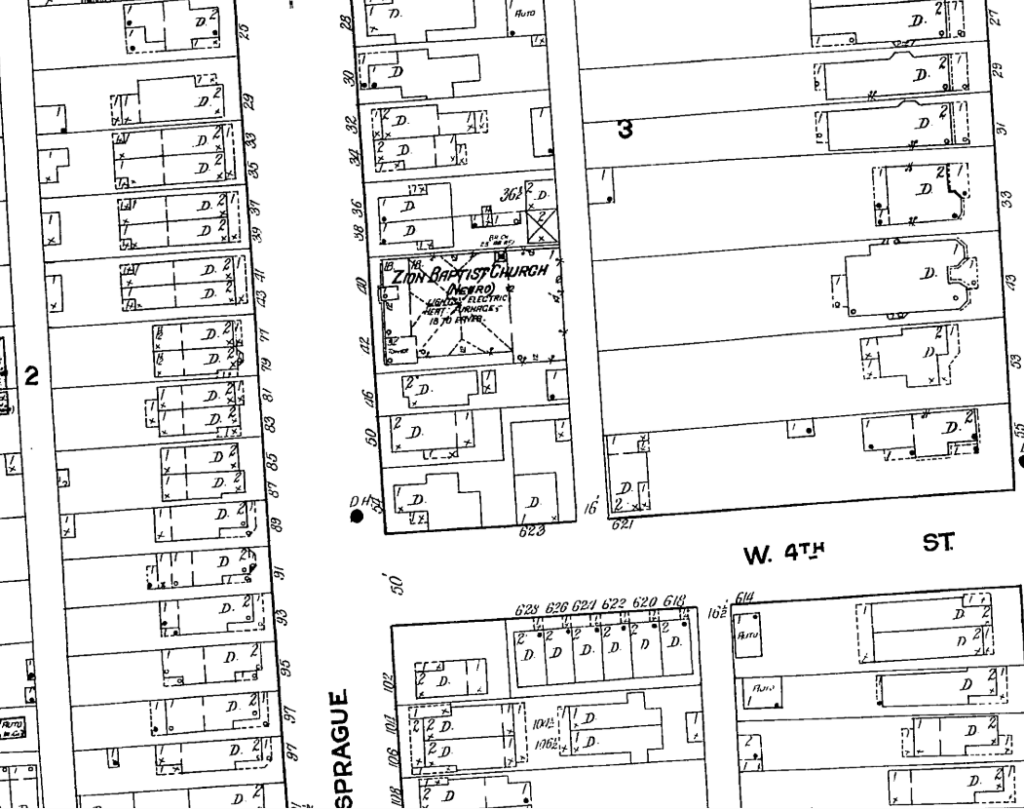
The congregation met in other locations around town before purchasing the lot at 40 Sprague Street for $370.
Initially, a small single-story church was constructed but as the congregation grew, it required a larger facility.
The new $20,000 church was designed by black architect E. J. Mountstephens to be “western style with a 12th-century Roman influence.”
The contractors W. L. Avery and William Daugherty were also black, and members of the church played a big role in the construction too, as “the men swung hammers while the women cleaned brick by lantern light in the evenings.”
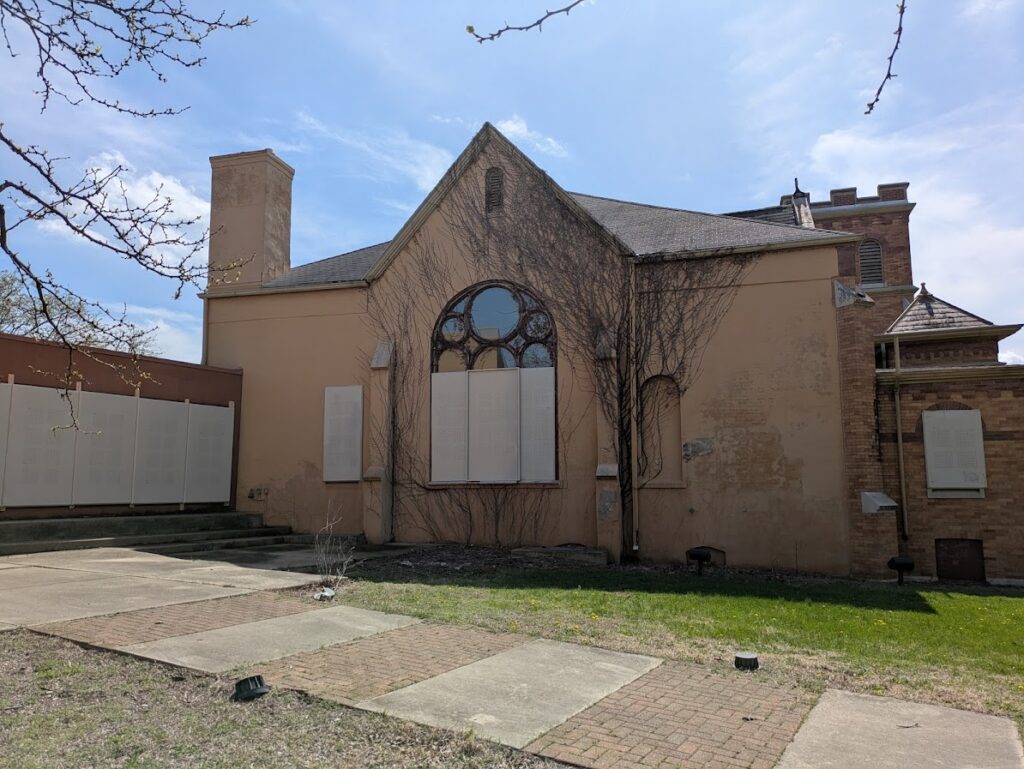
The finished church is a beautiful example of the Romanesque Revival Style. Preservation Dayton has highlighted its architecture: “Typical Romanesque features include the asymmetrical main facade with the raised entry and semi-circular lintels over the entry and windows. The small tower is capped with a battlement. The recessed gable wall dormer also emphasizes the main façade.” Another key feature was “a wood-raftered interior dome put together with wooden pegs.”
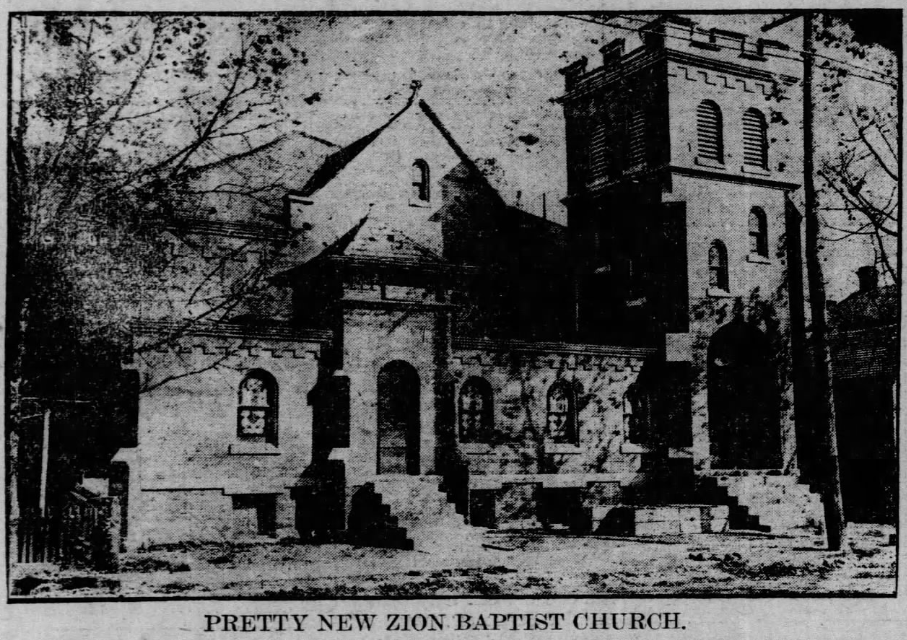
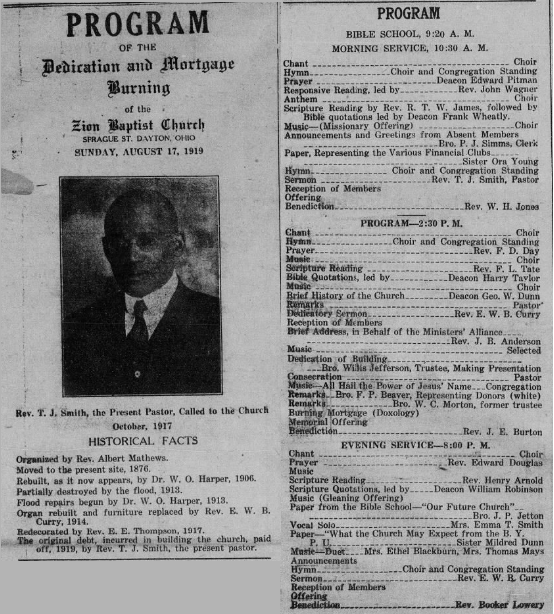
The new church was dedicated on Sunday October 20, 1907, with a special sermon by the pastor Rev. W. O Harper.
It originally had a seating capacity of 700, and contained an auditorium, Sunday school room, classroom, kitchen, dining room, reception room, and study. The auditorium featured “a beautiful carpet (and) a fine pipe organ.”
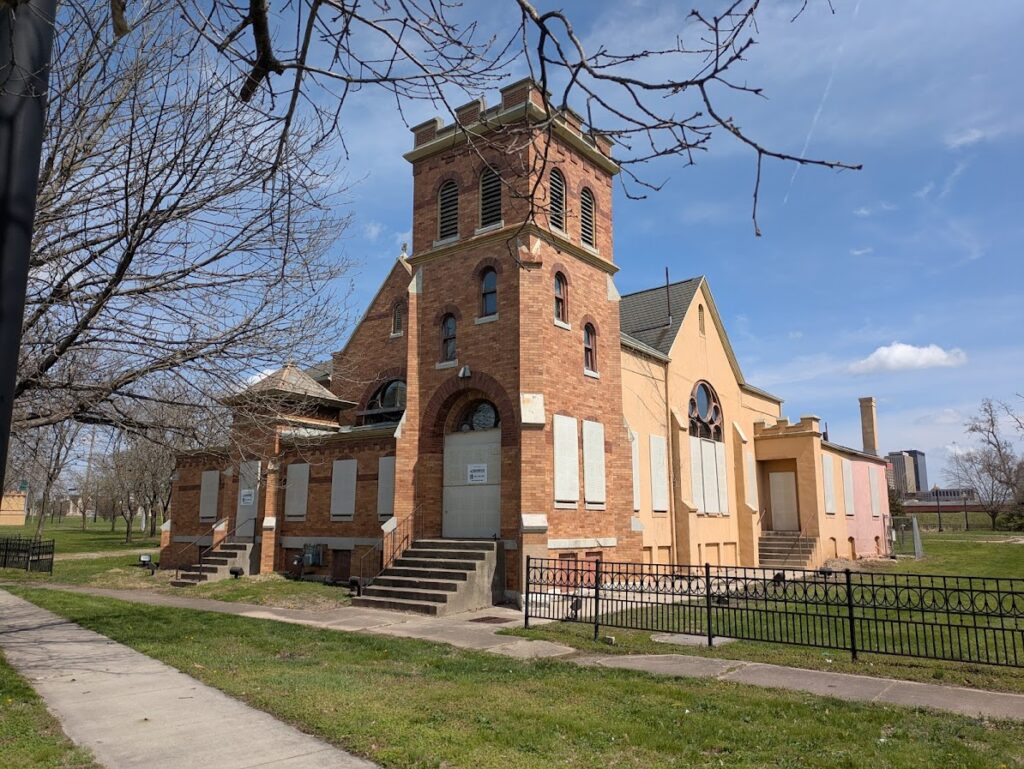
The Great Flood of 1913 did $3,500 in damage to the church and destroyed much of its equipment, but its members “responded sacrificially to buy new pews and do all that was needed to restore Zion to its former beauty.”
Not even 2 years later on February 4, 1915, The Dayton NAACP was formally organized at Zion Baptist Church.
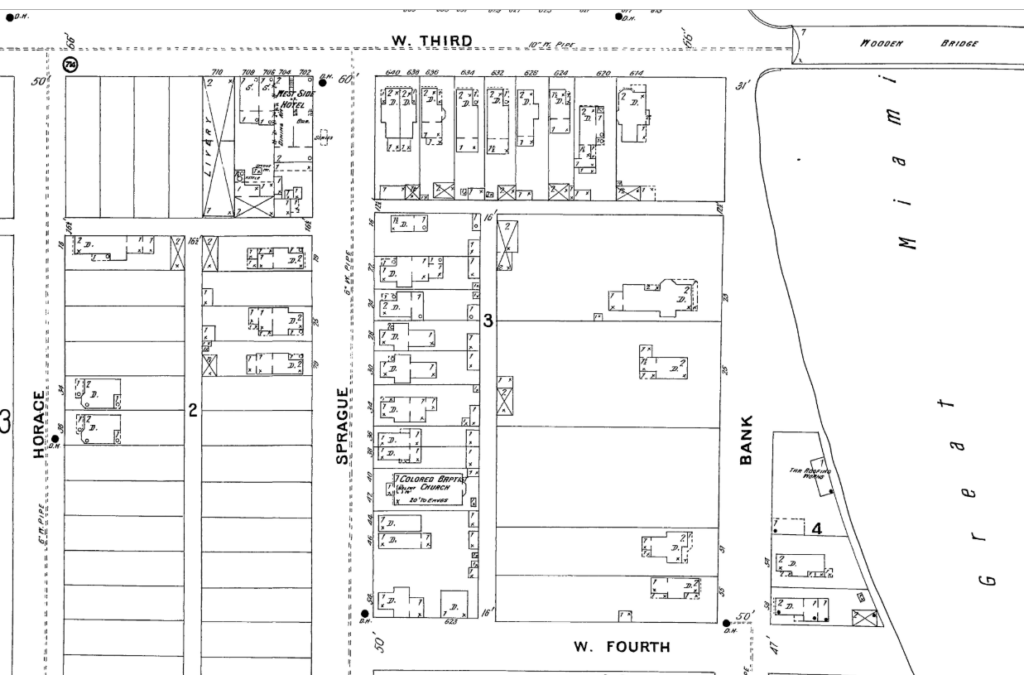
We can see the church and the surrounding streets that same year of 1919:
Urban Renewal and Edwin C Moses Boulevard
Zion Baptist Church moved to 1684 Earlham Drive in Dayton in 1984 and sold the church to the City of Dayton which was “eager to construct a new roadway through the area in the name of urban renewal.” An article explains that the church was “‘mothballed’ by the city while other buildings were razed.”
A city planner said that “we had no idea what we wanted to do with this building” but it was saved because “we had lost way too many landmarks in that neighborhood.”
But nevertheless, another article from that time said that “the extension of Edwin C. Moses Boulevard boxed in the church and made it a victim of urban renewal.”
I’ve previously written about the effects construction of James H McGee Boulevard on West Dayton, and these types of widening projects are not as widely discussed as interstate highway construction, but can still be an extremely disconnecting and destabilizing force on the neighborhoods around them.
After its closure, the old church was boarded up and the “soaring stained glass windows and distinctive curved pews were ripped from the building by vandals.”
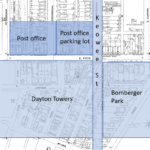
The wider view of the 1919 map below shows us that there was a whole neighborhood surrounding the church.
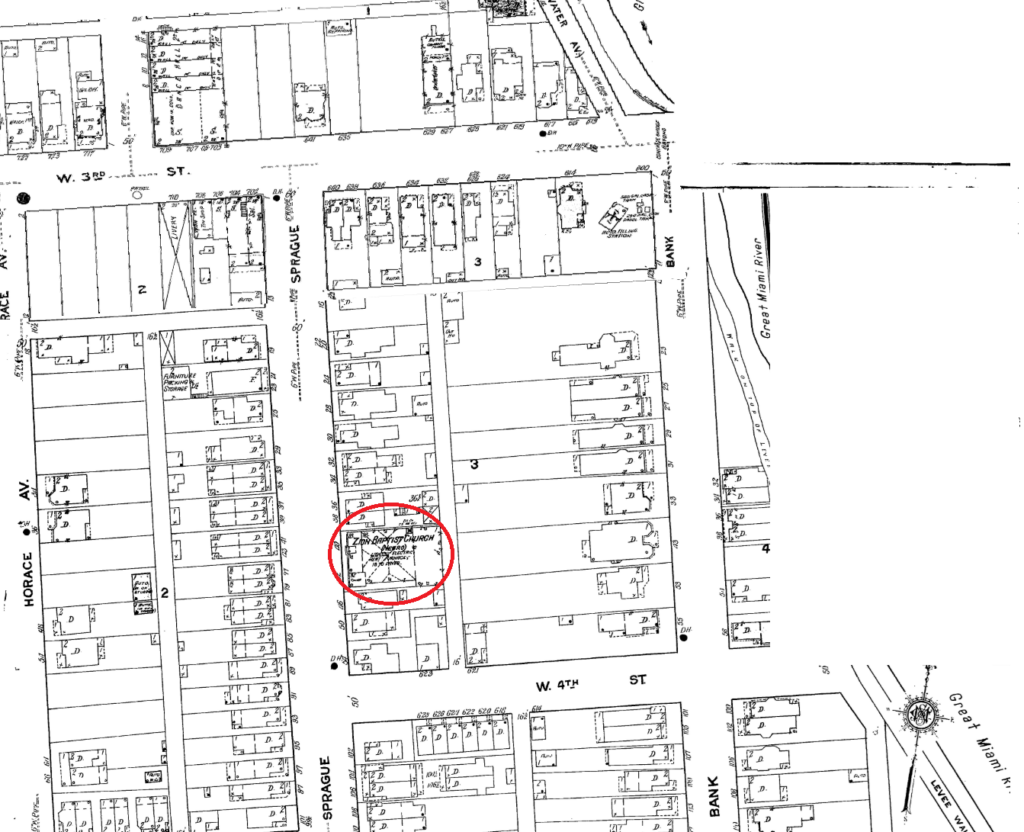
The current view shows the new road configuration and the isolated former church as the only structure remaining on the east side of Edwin C Moses.
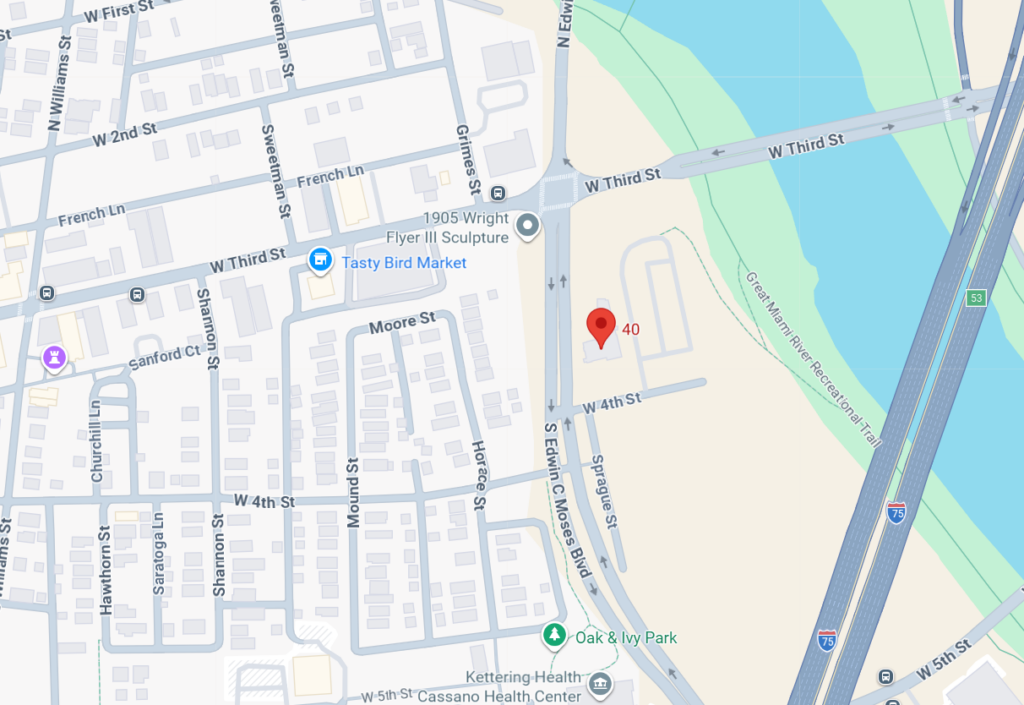
In 1996, the old church building became a satellite location of the National Afro-American Museum and Cultural Center, and a plan to add new housing and revitalize the West Third business corridor intended to help the location “once again find itself at the center of urban cultural life” (DDN 7/27/96).
Despite continuing challenges there has been steady effort toward those goals which in the last couple of years has really picked up momentum.
The church building later became the Dayton Cultural & RTA Transit Center.
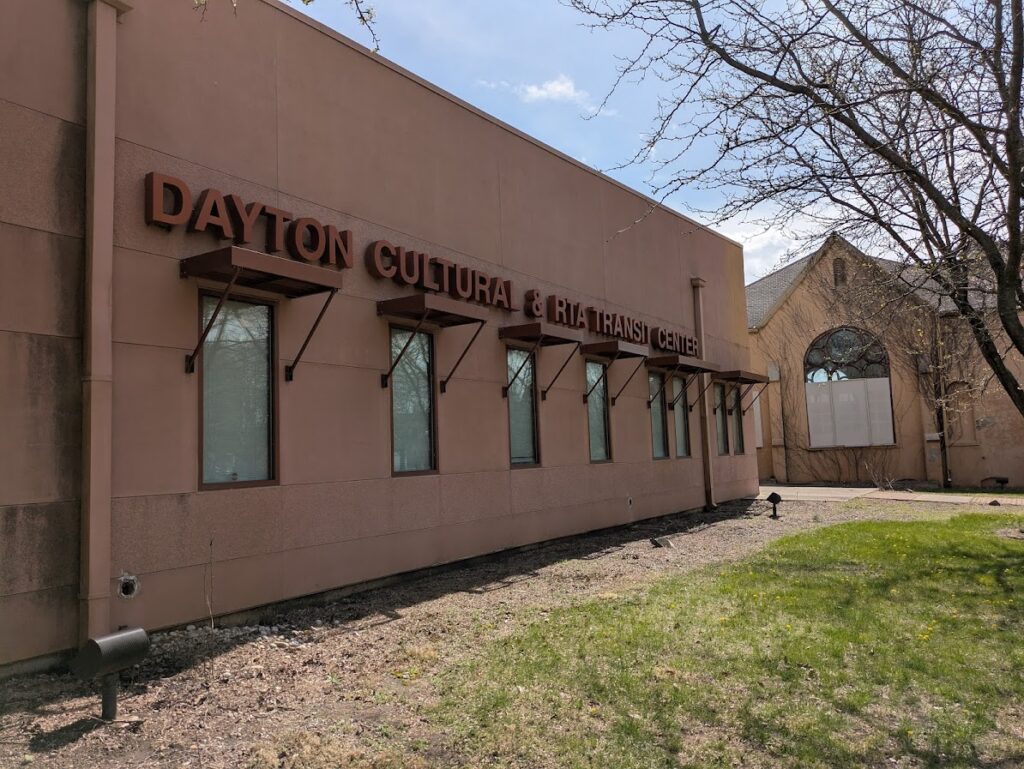
Just a few years ago the facility was still advertised as a reservable public event space. It had a 120-seat theatre, gallery area, and conference room.
In 2020 the relocated church marked its 150 year anniversary.
“We are proud of our heritage and the importance of Zion Baptist Church in the history of the city of Dayton, Ohio,” said senior pastor Reverend Rockney C. Carter.
And hopefully a new redevelopment will soon help chart a course for the next chapter of the key landmark that long served as its home.
Leave a Reply