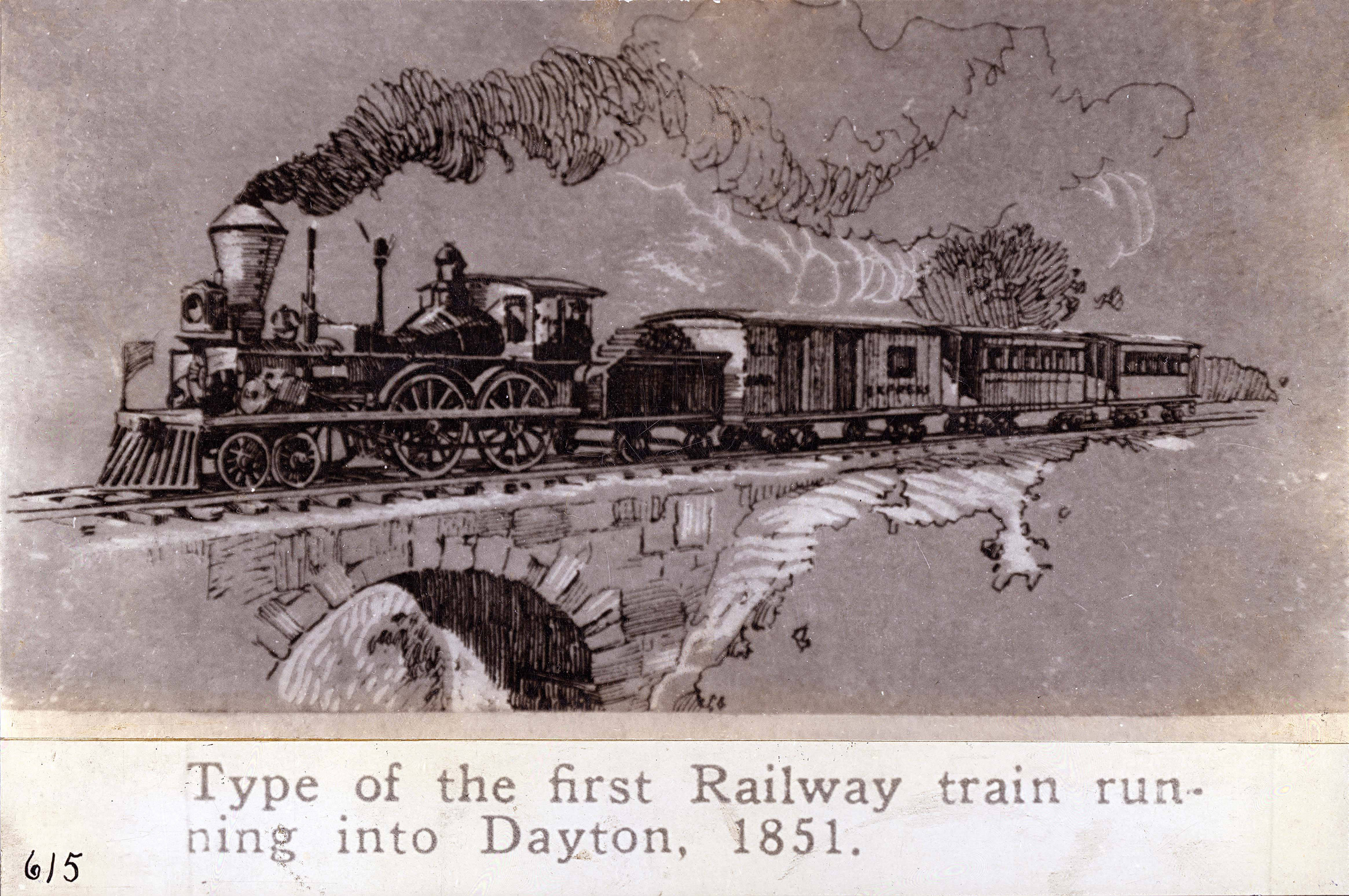
I’ve written about Dayton’s lost Union Station and early train history. Back around the turn of the century, however, this was only one element of an elaborate, interconnected transportation network.
That included an extensive streetcar network for local travel (like from one’s home to their job at a local factory).
But another interesting piece is interurban rail, which is often less well-known than the major intercity heavy rail routes that crossed the whole country.
What Were Interurban Railways?
Interurban trains acted more like streetcars in city centers but sped along dedicated rights-of-way to connect cities and towns and rural areas.
They offered faster and more frequent regional compared to steam railroads and also provided easy access to city centers for residents living out in the country.
The Interurban Station at Kenton and Third
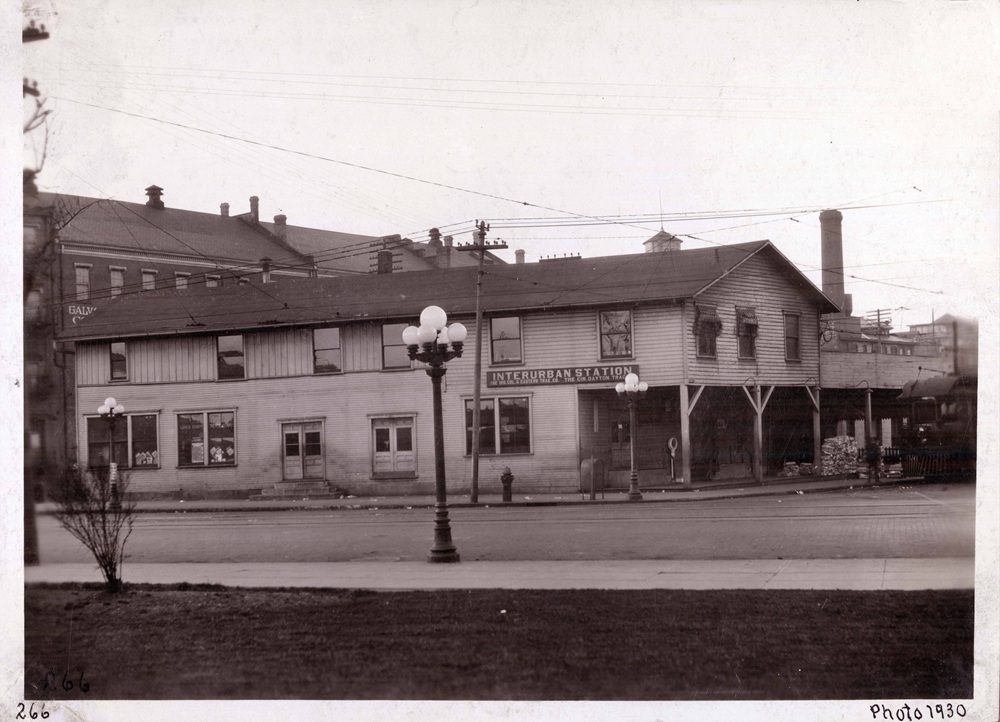
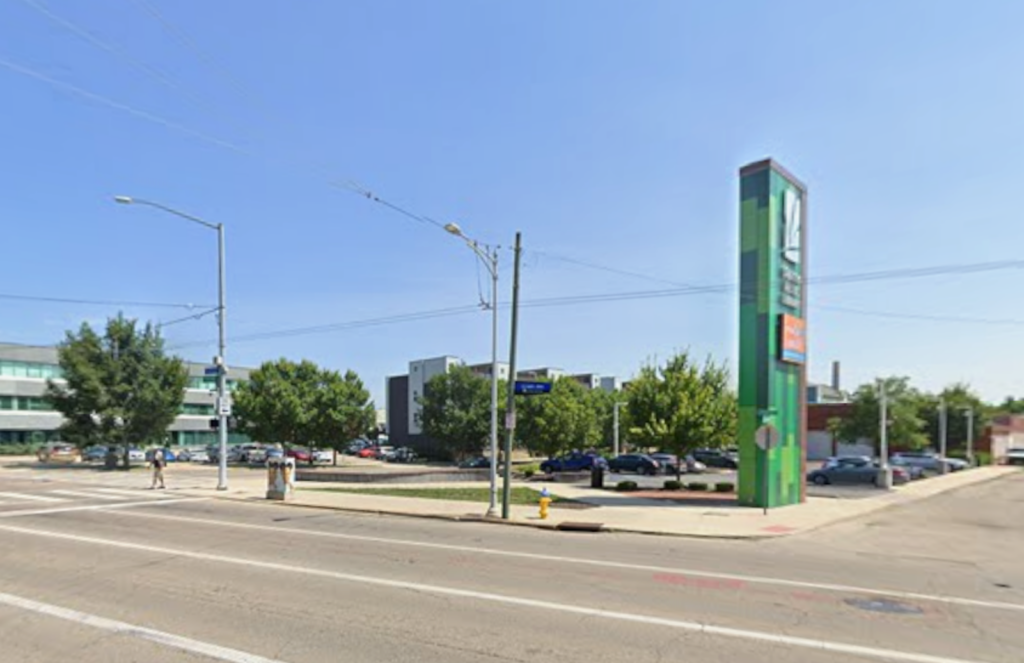
The interurban station depicted in the historic image above was located at Kenton and Third Streets across from Cooper Park.
Dayton at the Center of Ohio’s Interurban Network
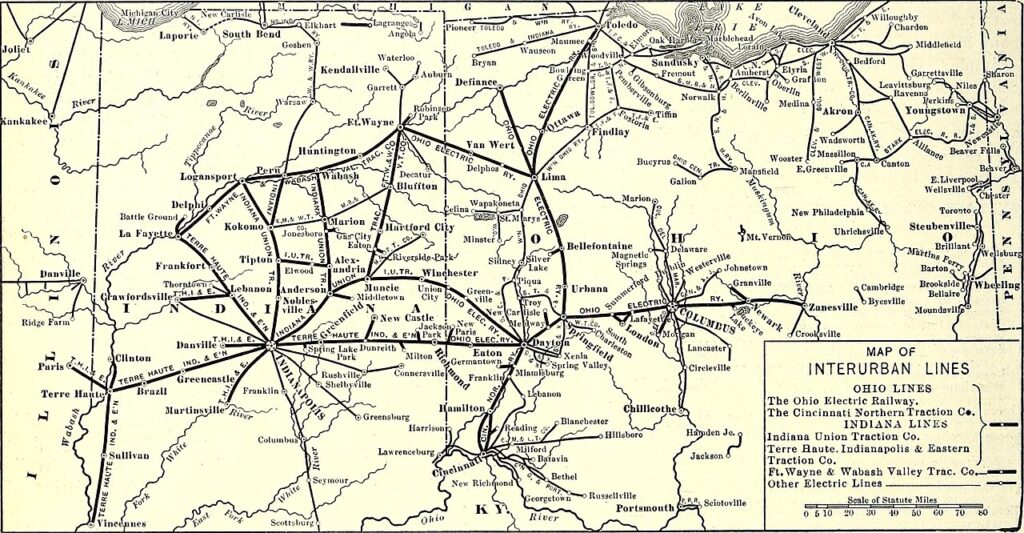
By the late 1890s, Dayton had became a hub for interurban railways. Dayton was also described as one of the premier interurban hotbeds in the United States.
Over the years, 9 distinct electric interurban companies operated lines right through Dayton’s streets, traveling to Xenia, Troy, Greenville, Springfield, Cincinnati, and more.
These included the Dayton-Xenia Traction Company, the Dayton, Miamisburg Traction Company and the Ohio Electric Railway.
One of the historic Barney and Smith rail cars that you can still see today inside Culp’s Cafe at Carillon Historical Park is a 1903 interurban car.
The interurban era wouldn’t last once automobiles and other forms of transportation began to dominate.
In 1939, the line between Cincinnati and Dayton was replaced by bus service.
And then during the subsequent decade, a bus depot replaced the interurban railway station. The building was later used as a restaurant but was eventually razed.
Today the same location is a parking lot and small grassy lot across the street from the downtown public library.
Hey Andrew! back about 15 years ago I got to tour the old interurban storage and repair building. It’s somewhere in West Dayton, but I can’t recall where. It might not even be there anymore. But I remember it being a large, red-brick building with barreled ceilings at least 15 feet high. It was completely abandoned when I went through it, but it was really cool to imagine it as a hub of activity during the interurban days!
Ah, that’s cool you got to tour that! I’m pretty sure I know the one you’re talking about (I think it was on James H McGee and was demolished just a year or two ago.) Now I’m going to try to dig up the details.