• Skip to primary navigation
  • Skip to main content
  • Skip to primary sidebar

Dayton Vistas

A Look at the Past, Present, and Future of the Gem City

Connect with Dayton Vistas

  • Facebook
  • Instagram
  • TikTok
  • YouTube
  • Home
  • Contact Me
  • Hire Me
    • Dayton History Presentations
    • Walking Tours
    • House and Building Histories
  • Browse Articles
    • Historic Homes
    • Commercial Buildings
    • Industrial Buildings
  • Historic Dayton Building Catalog
  • My Dayton Book
  • Events

A Trip from Dayton to Cincinnati (in 1818)

February 1, 2018 By Andrew Walsh 1 Comment


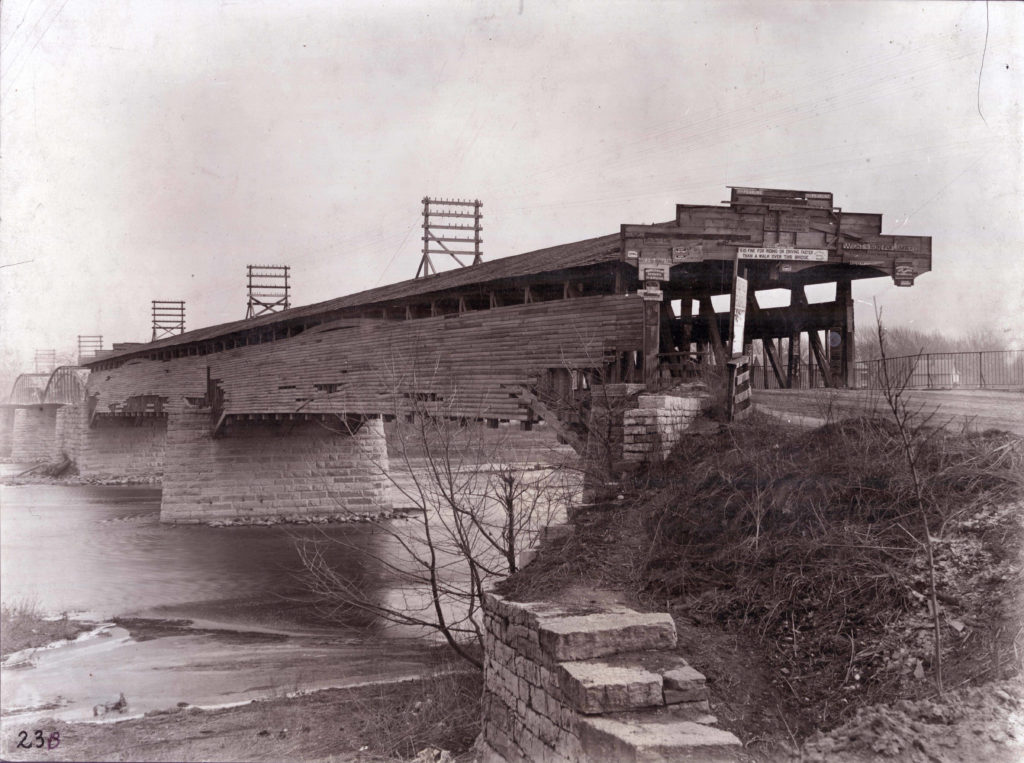
third street wooden toll bridge 1838
A wooden toll bridge at Third Street in Dayton. It would be replaced by a concrete steel bridge in 1903

The section of the Miami and Erie canal connecting Dayton and Cincinnati opened in 1829 and the railroads started to arrive in the 1850s.

But before then you could still travel between the Gem and Queen cities.

The details are described by Dayton biographer Charlotte Reeve Conover in her work Dayton, Ohio: An Intimate History, originally published in 1931.

As Conover describes, one of the visionary ideas of the early 1800s

was a weekly passenger and mail service between Cincinnati and Dayton … The roads were still bad but improving, as they always do under the inevitable demands of wheeled vehicles.

When passengers were exasperated to the proper pitch by the number of ribs they sacrificed to the jolting on the trip up from Cincinnati, the beginnings of the Dixie Highway were laid …

When enough passengers got wet crossing fords they demanded more and better bridges. In 1818 the first weekly coach service was started between Dayton, Franklin, Middletown and Hamilton and in 1819 the first bridge was built over the river at Stratford Avenue and Salem Avenue.

The roads were toll roads and the bridges were toll bridges. Tollhouses stood at equal distances which protected against violators of the law by leaning poles like a well-sweep across the road which the toll keeper could lower and raise at will.

In those years the journey to Cincinnati was a long one. Conover continues:

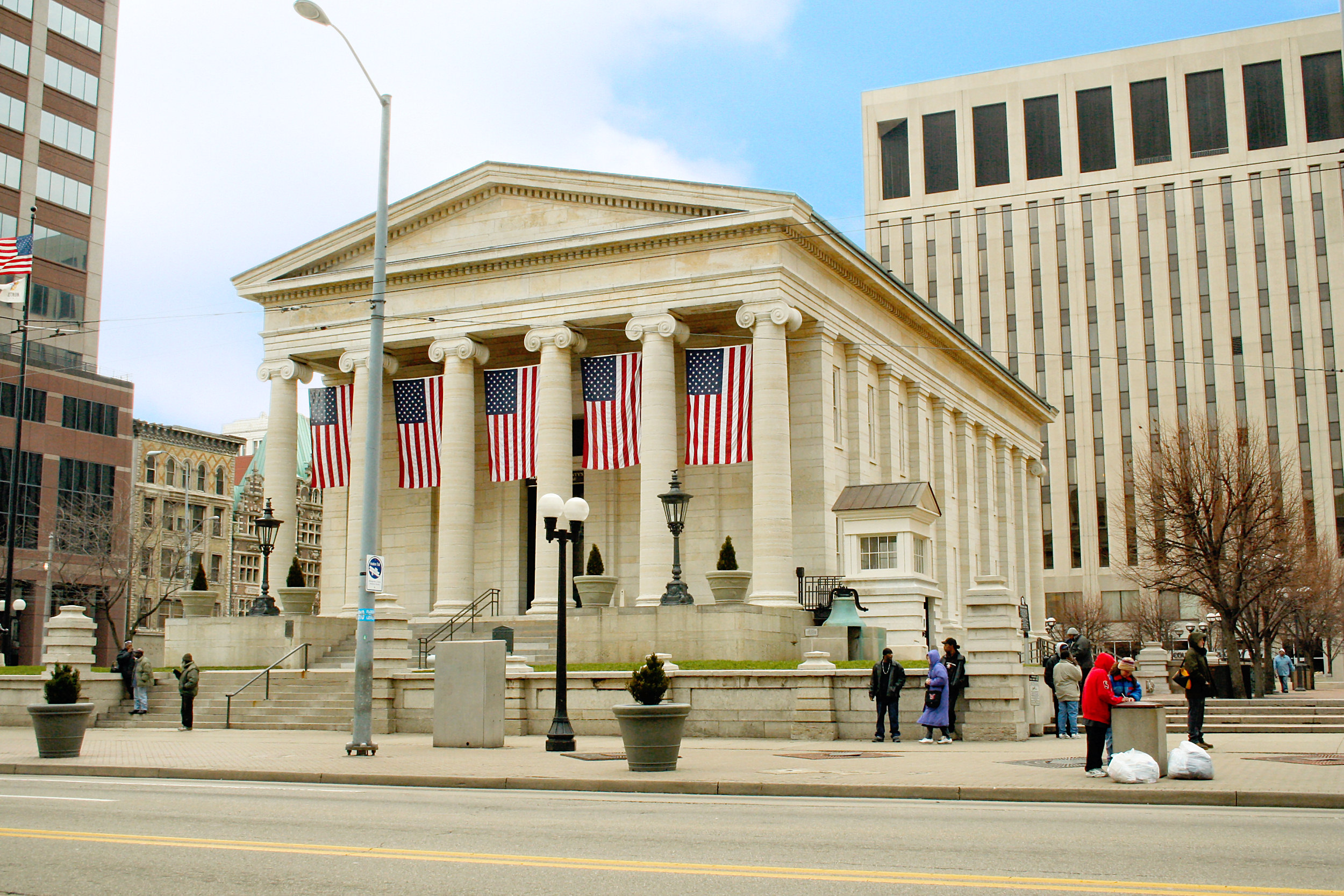
On Third Street in front of the courthouse (which in 1818 was a two story building flush with the sidewalk) was the starting and arriving place for the Cincinnati stages.

Twelve persons could be accommodated in each vehicle; three on the back seat, three on the front, three on smaller seats between the two and two beside the driver. At first there were no springs, later these were supplied.

Eight cents a mile was the fare and fourteen pounds the allowance per person for baggage. The Cincinnati coach left Dayton at five o’clock Friday morning and arrived at its destination late on Saturday evening, Friday night being spent at Hamilton.

Today we might complain about traffic on I-75, but at least we don’t have to leave at 5am, sit with eleven other people, pay tolls to cross bridges and make an overnight stop on our way.

Photo credit Dayton Metro Library
Related Posts:

  • street carnival dayton elephant canal
    Miami & Erie Canal History: When and Where Was…
  • first train in dayton 1851
    Dayton's Lost Union Station and Early Train History
  • first house ever built in dayton
    The First House Built in Dayton and Early Settlement History
  • dayton old courthouse
    All About Dayton Formation Limestone: A Key Historic…
Enjoy Dayton History?
I'm Andrew Walsh, a librarian and author. I wrote the book Lost Dayton, Ohio and on this site I've written over 230 articles. 

Explore articles by topic or neighborhood

In addition to my writing, I have a YouTube Channel and I also give talks and walking tours locally.

You can sign up to my Dayton Newsletter below to keep up with all of my work.

Filed Under: Historical Dayton Tagged With: Canal, Charlotte Reeve Conover, Cincinnati, Early Settlement, Trains, Transportation History

Reader Interactions

Comments

  1. Bruce Windsor says

    October 16, 2022 at 6:41 pm

    You spoke of a journey from Dayton to Cincinnatt by canal boat and train but your photos are only about the portion
    Of the route in Dayton. Are there remaininh structures between the two cities or have these been lost to history? What obstacles were encountered along the way? Did they build any tunnels? Were parts of the canal route above ground level on bridges? Are there any surviving canal houses or locks? How many men worked on the pfoject? Were they native born, Irish of Chinese? There is so much more to know about this early achievement

    Reply

Leave a Reply to Bruce Windsor Cancel reply

Your email address will not be published. Required fields are marked *

Primary Sidebar

My book explores a diverse selection of retail, industrial, entertainment and residential sites from Dayton's disappearing legacy.
Read More

Get New Articles via Email


Browse Historic Dayton

newcom tavern daytonA Catalog of Historic Dayton Buildings (with years, pics, type, area, etc.)

  • Historic Dayton Homes
  • Dayton Commercial Buildings
  • Dayton Industrial Buildings


Browse Our Article Archives

Search the Dayton Vistas Archives

Latest Posts

dayton ohio demolition

Three Historic Buildings Lost in Dayton in 2025

santa clara dayton

The Santa Clara Business District: History, Preservation, and Recent Fire

national cash register aerial during its heyday

Appalachian Migration to Dayton, Ohio: Where Families Lived and Worked

notre dame academy chaminade high school

History of Chaminade Julienne Catholic High School in Dayton (Notre Dame Academy)

Dayton Gym-Cadets and the Dayton Gymnastic Club

Centre City Building (The Mainline) Redevelopment Overview

Recent Comments

  • Evan Foster on History of a Dayton Church Tucked Away (Sadly Demolished)
  • Dave Hulme on The History and Architecture of 1922 and 1918 Brown Street
  • Dave Hulme on The History and Architecture of 1922 and 1918 Brown Street
  • Lynn on History of 2200 East Fifth St

Articles By Topic

Architecture Bars Churches Clubs and Societies Commercial Buildings Dayton Arcade Dayton Culture Dayton Daily News Delco Demolition Downtown Dayton East Dayton Features Fire Blocks District Great Flood of 1913 Historic House Histories Hotels Huffman Industrial Buildings John H Patterson Museums NCR Old Dayton Maps Old North Dayton Oregon District Preservation Rare Dayton Photos Restaurants Retail Rike's Sanborn Maps Schools South Park Sports Then and Now Transportation History University of Dayton University Park Urban Planning Urban Renewal Wayne Avenue West Dayton Windsor Companies Wright-Dunbar Wright Brothers

Copyright © 2026 · News Pro On Genesis Framework · Affiliate Disclosure and Privacy Policy · WordPress · Log in