Hewitt Soap is another example of a Dayton industrial company that may not be a household name, but was once a dominant force in its industry and a major presence in the neighborhood surrounding it. And like many others, its decline and eventual closure brought significant challenges, but the site is now close to being redeveloped into a major new anchor for the area.
The company was founded in 1884 as Hewitt Roever and Co. Its first location was on East Sixth Street next to the Miami and Erie Canal. The business grew each year and in 1900 it moved to a “handsome new plant” located on Linden Ave adjacent to the tracks of the Pittsburgh, Cincinnati, Chicago and St. Louis Railroad.
At that time the factory buildings were described as being built “of brick and stone, 128 feet frontage by 40 feet in width; three stories in height, having in addition a well-ventilated basement with a cemented floor extending under the entire plant.”
The firm was also referred to as the Hewitt Brothers, for George A. and Archibald Hewitt who had immigrated from Ireland.
Their early product lines featured a variety of brands including Easy Task and King of the Laundry Soaps.
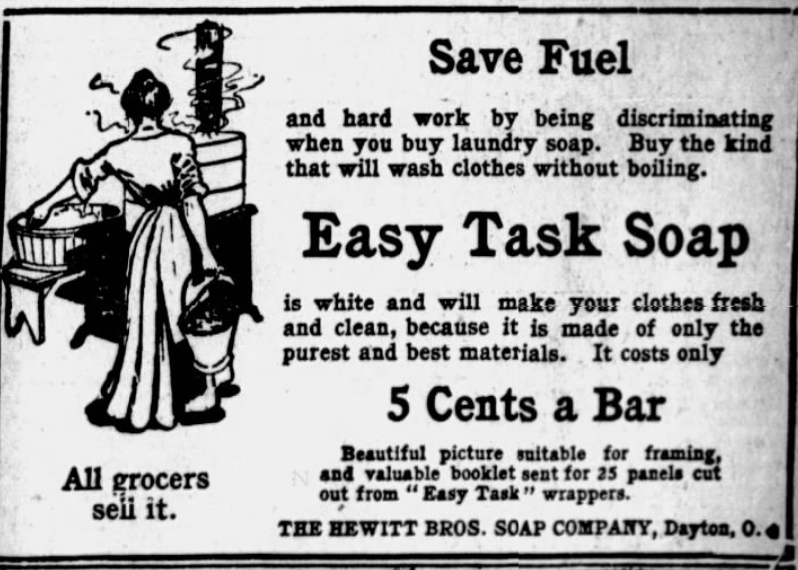
At its Linden Ave location the company “quickly became the nation’s second largest specialty soap maker; dealing primarily in the more compact soap bars used by hotel chains all over the country.”
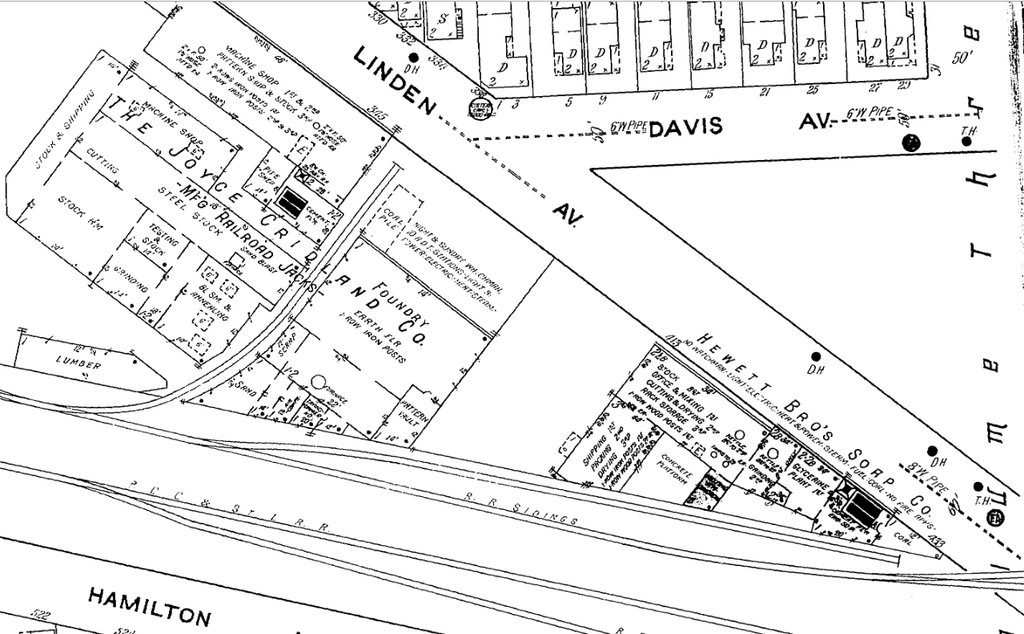
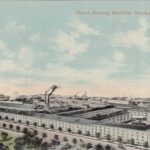
The Hewitt Soap Co factory in 1918. You can see it occupied the buildings near the intersection of the railroad tracks and Linden Ave, while the Joyce Cridland Co, manufacturer of railroad jacks, was next to it.
In 1933, Hewitt Soap became a subsidiary of Proctor & Gamble. Under the corporation the company expanded and once totaled more than 400 employees, including 300 who worked in general production.
Neighborhood residents would later recall the unique smells that emanated from the factory. “Every day you could smell the soap factory working,” said one man who lived around the corner, while a relative of an employee said “I’ll never forget the way my sister would smell when she came home from work. It was a very distinct smell. It’s almost hard to describe.”
In 1980, P&G sold the Hewitt Soap Company to American Safety Razor.
Then in late 2003 the company was bought by a competitor, Bradford Soap International, who soon laid off the white collar office staff, but still insisted publicly that it would keep the plant running and eventually expand it, bringing in new business and adding new jobs.
But one scathing article said that “it was soon apparent that Bradford was merely gutting Hewitt out of business, firing 171 workers just seven months later, and finally shutting down and auctioning the building just eighteen months after the acquisition, turning a ‘good solid business’ into an abandoned warehouse. Bradford left behind a rotten husk for the Dayton community.” https://www.daytonhistorybooks.com/page/page/3659346.htm
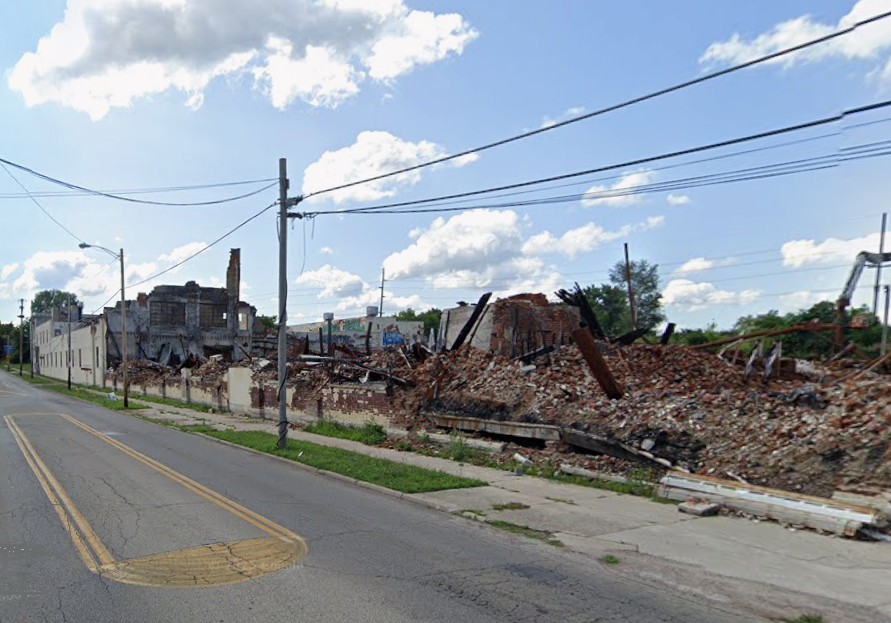
After mostly sitting empty for a little over a decade, a major fire hit the complex in 2016, which was followed by another a year later. The debris and badly damaged buildings remained for years, which were frequently commented on by neighborhood residents who said “it’s outrageous it has taken this long to clean up the property.” It was also called the “worst eyesore” in the whole city.
A business owner across the street, Mike Stacy of Fiber Dry Carpet & Upholstery Cleaning, said the last fire also did $10,000 of damage to his building, and he was concerned that if the remaining structures caught fire again, his own business might be destroyed.
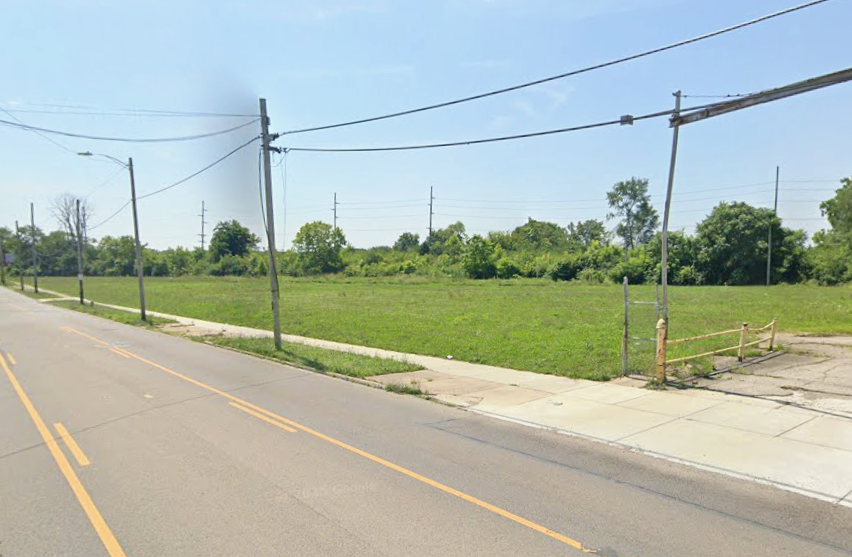
The former Hewitt factory’s site’s owner, who owned a machining business nearby on Linden Ave, was eventually cited with a misdemeanor of public nuisance. But he reached a deal with the city and the demolition and abatement work were finally completed in 2021.
Now, five years later, there is a plan to bring new life to the complex.
Dieringer Development Group, the owner of the Davis-Linden Building across the street (once the Davis Sewing Machine Company and the first facility making Huffy bicycles) bought a 3.1 acre site for $155,000 in early 2026, and have assembled a roughly 5-acre area that does include some surviving Hewitt buildings.
They are planning for a major redevelopment project involving a “brewery/taproom, restaurant space, coffee shop, 20-plus shops for local vendors, events space and more.” A Dayton Business Journal article revealed the name may be The Hewitt District
To kick things off, Dieringer has planned a block party for September 12 with vendors and food trucks.
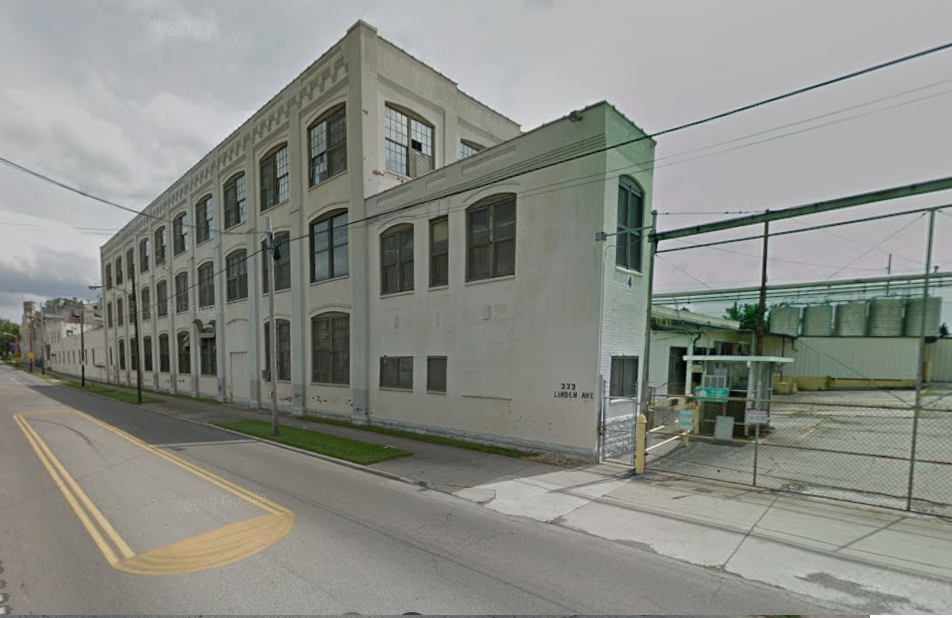
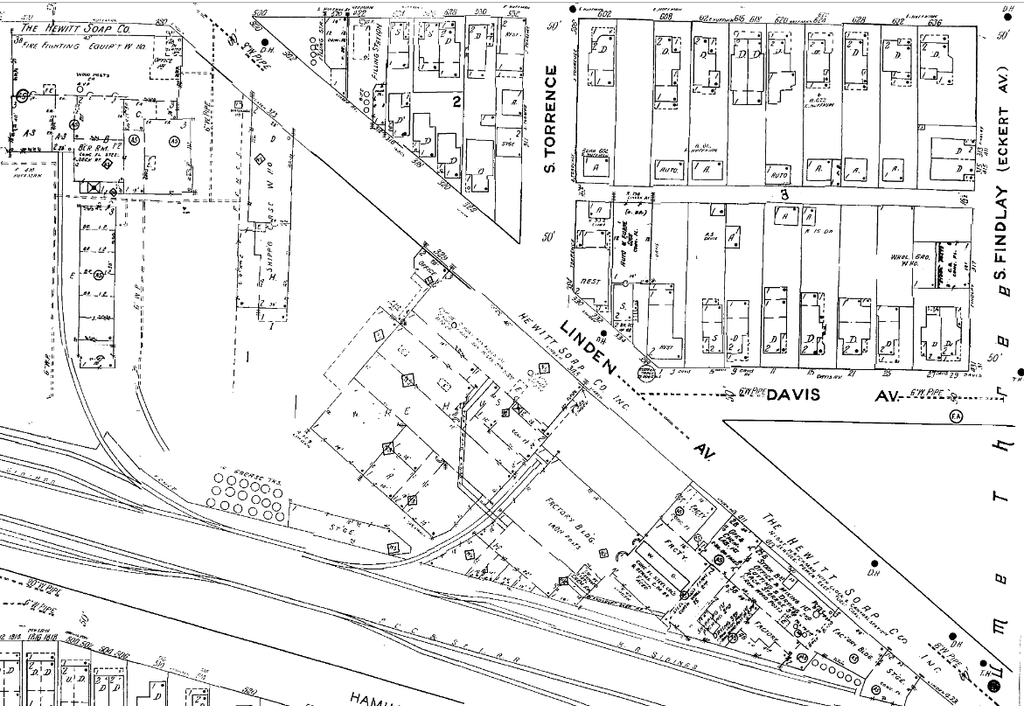
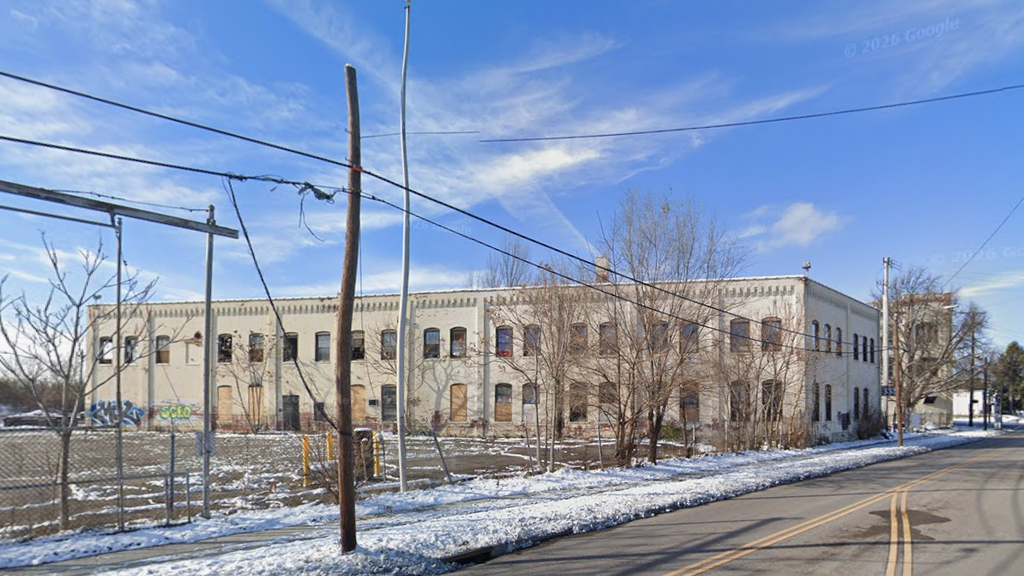
One of the remaining buildings on the site is below; it was used by Hewitt as a warehouse and shipping facility, as can be seen in the 1950 map above.
My great grandparents lived in the Burkhardt-Gerlaugh area and had a gorgeous back yard, filled with fruit trees and lots of roses and other kinds of flowers. Because there was never ever any indication that a self-respecting bug would land on the plants, my parents always said that the protection came from the soap factory. When we visited, we could smell the perfume in the air in the yard, and it would seem reasonable that enough of the fumes settled on the plants to make them unpalatable to any living creatures. No peaches available to buy these days could in any way compare in flavor to those that we ate from those trees, which were, planted around the turn of the LAST century! I also remember how many of the Dayton high schools sold tall jars of bubble bath from Hewitt as fundraisers. They made great gifts.