A pair of interesting buildings on Brown Street forms part of one of the more intact blocks of neighborhood commercial structures in Dayton, and also help tell the story of the surrounding area.
Recently these buildings were sold, and online posts have advertised the commercial spaces as available for lease.
This article features their history, which I originally wrote in 2022, along with architectural details of the buildings, current photos, and some ideas for their renovation by Alex of Dayton Architecture
The Architecture of 1922 and 1918 Brown Street
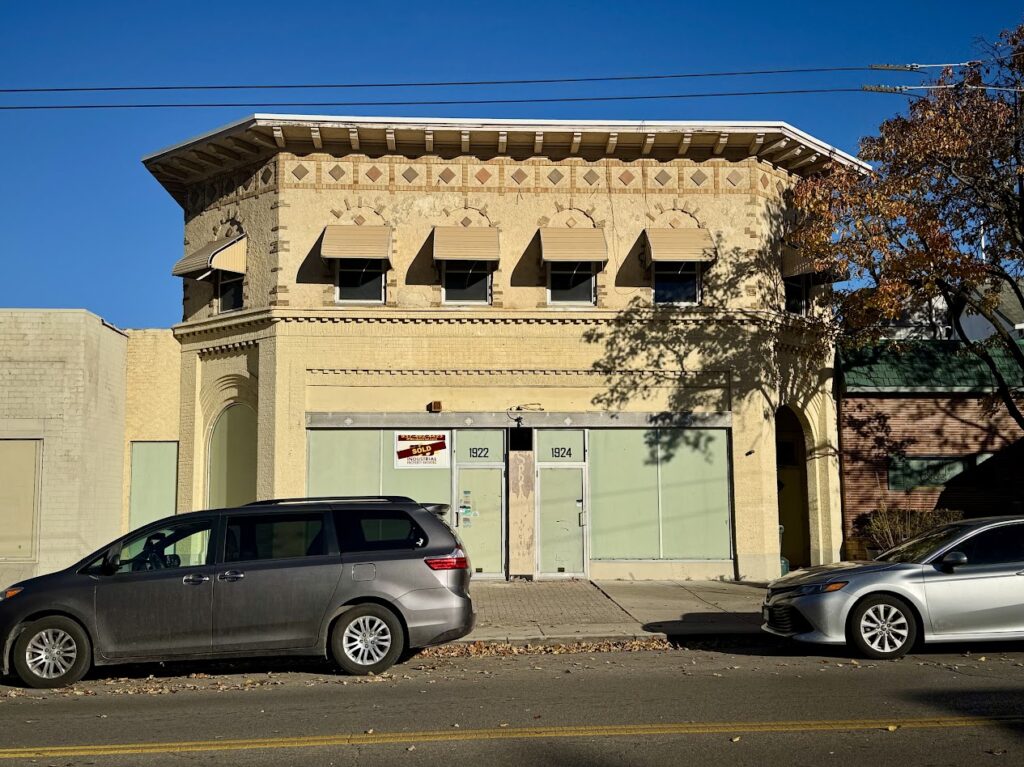
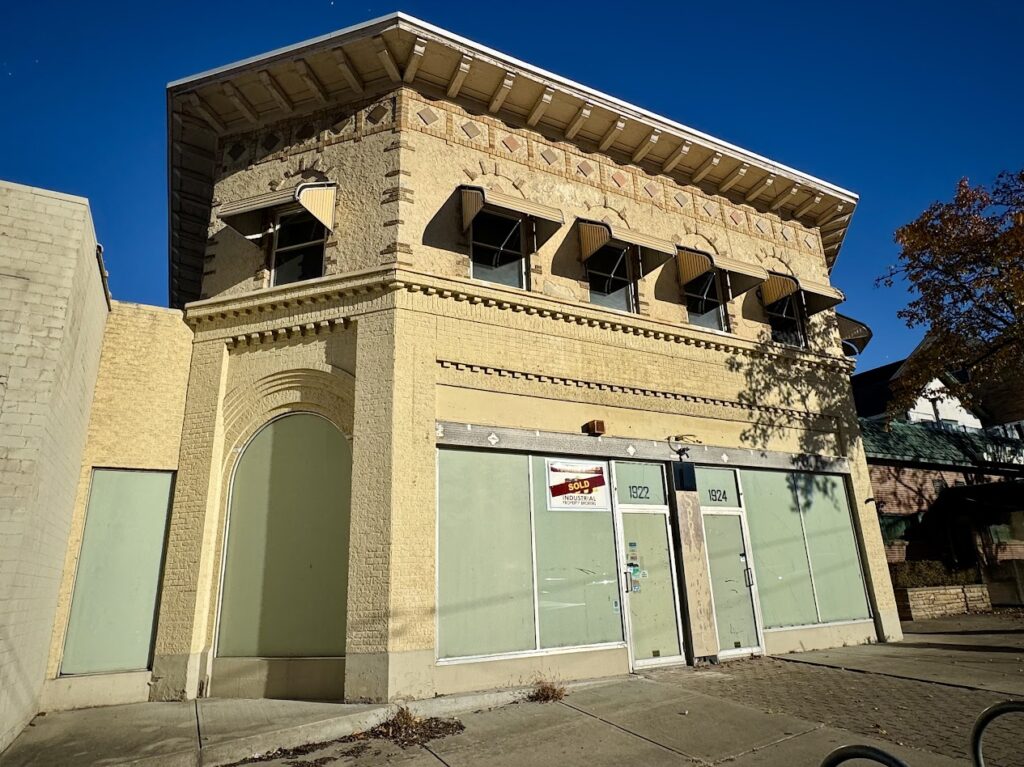
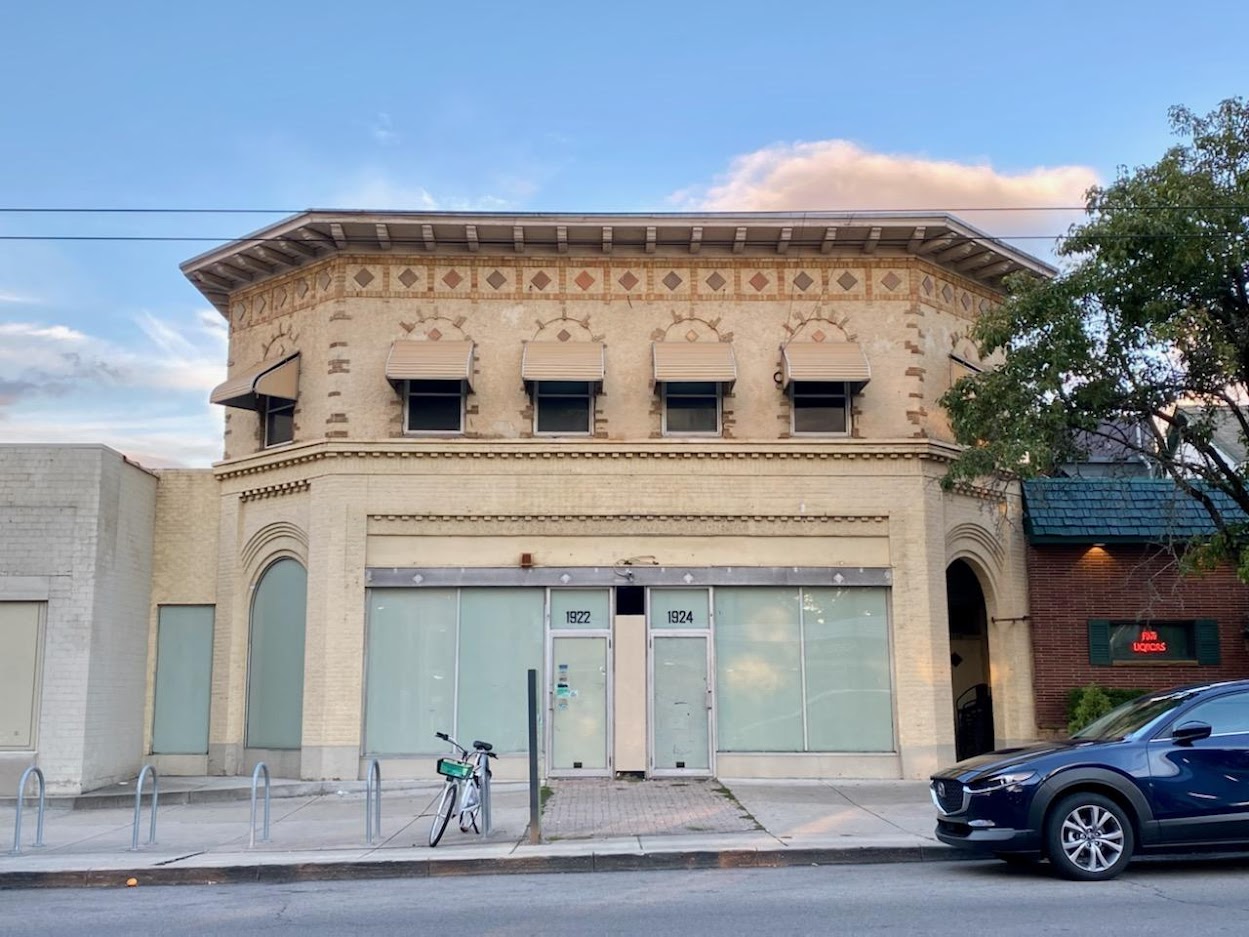
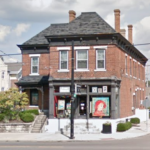
1922 Brown St. is an example of Renaissance Revival architecture, which was very popular during the 1920’s.
What stands out most is the use of stucco with the decorative brickwork and terracotta tiles at the top of the building, with large hanging eaves and ornamental brackets.
While the bottom portion of the building has been painted, we can assume that the same decorative brickwork pattern is carried throughout.
There is an opportunity for the new owners to revitalize this building, perhaps stripping the paint, and highlight its unique architectural characteristics. This will help maintain the integrity of the historic feel in this block of Brown Street, while adapting the building for modern day use.
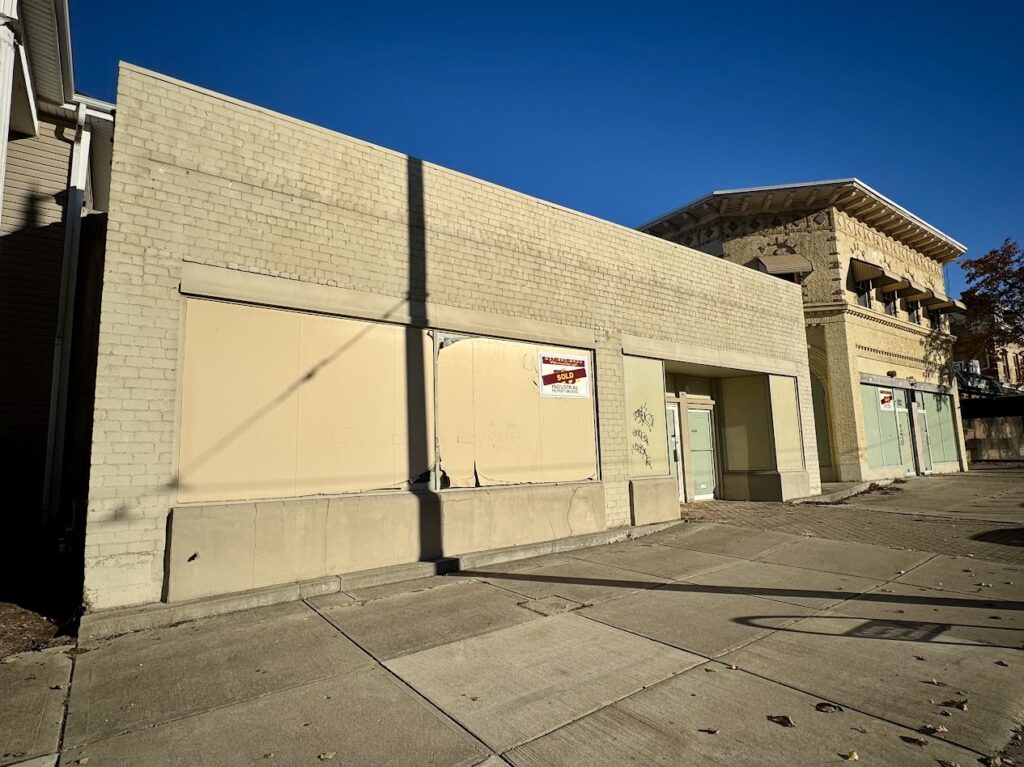
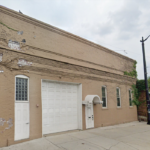
1918 Brown St. is a prime example of how commercial architecture started to change during the 1940’s to function and efficiency, with an emphasis on a modern, yet welcoming aesthetic.
The large, streamlined front windows allowed for ample light inside, as well as an opportunity for pedestrians to do some window shopping.
Once again, there is an opportunity for the new owners to lean into the mid-century architectural characteristics and breathe new life into this building.
History of These Brown Street Commercial Buildings
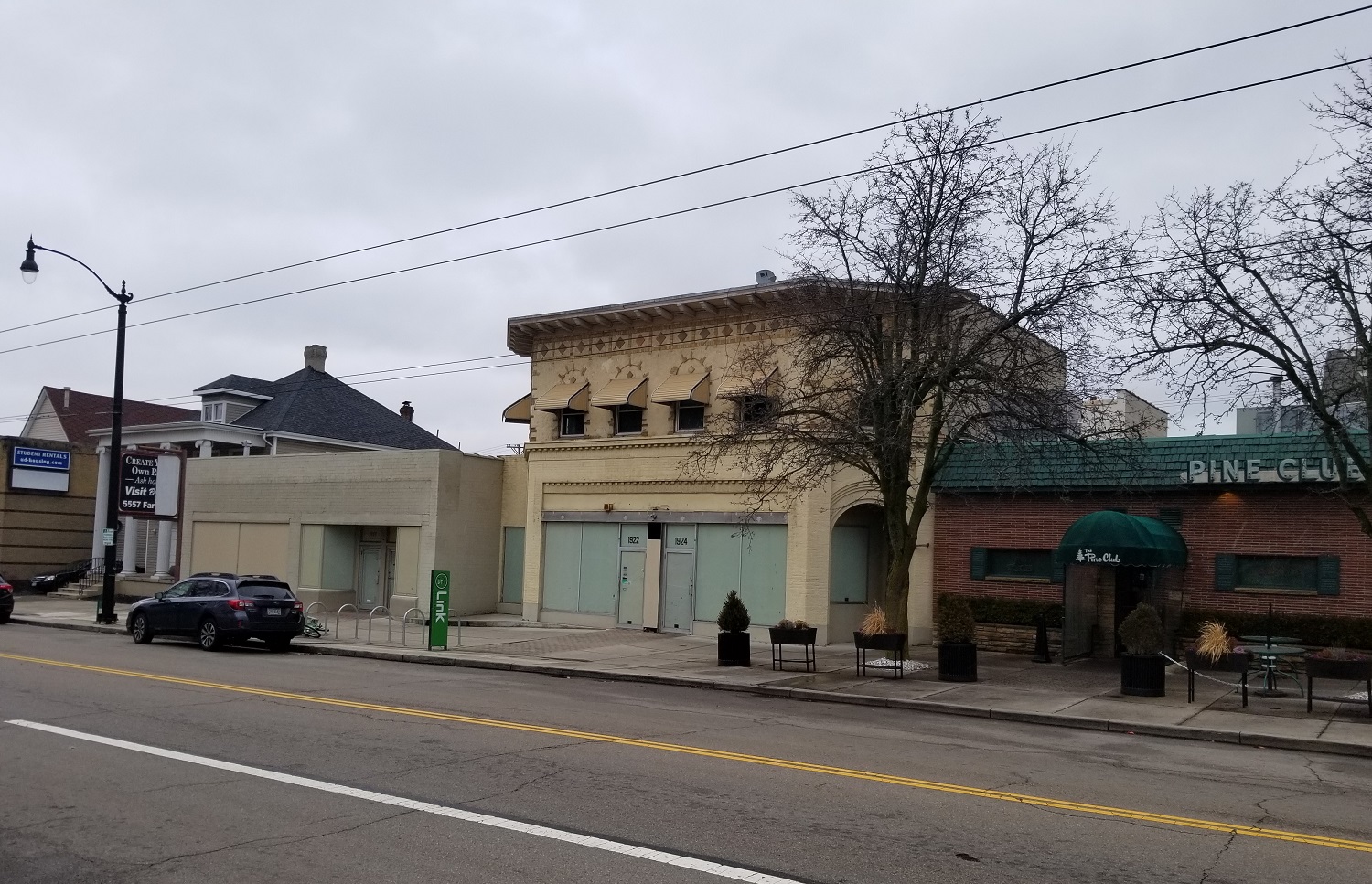 1922 Brown Street is a two story structure built in 1928. It was originally called the “Federation Building” having been built by the Federation Realty Company at a cost of $125,000.
The Federation Realty company also built other significant Dayton buildings during the same era; two examples include the Federation Block on Xenia Ave and the Riverdale Theater on North Main in Santa Clara.
The first story of the new structure was built to contain storerooms while the second floor featured apartments that were “all equipped with modern fixtures.”
The announcement for the Brown Street project said that “this location is one of the most desirable in that section of the city.” The neighborhood business block on Brown Street at that time was evolving into a bustling commercial area to serve nearby residents who could easily walk to the shops. Many Daytonians were settling nearby in the “Lowes and Brown sts. residential section” and the site was also just across Irving Ave from Oakwood, which boomed in population in the 1920s.
Some of the stores were commercial storefronts added to older homes, and one property (1906 Brown), features a two-story addition in front of a church built in 1904.
The oldest building built as commercial is the 1908 former drug store at the corner of Brown and Irving.
This section of Brown Street cuts through land that was once part of Rubicon Farm, owned by the Patterson family. The remaining Patterson Homestead is across the street from the business district and the beautiful 1816 home is currently a museum.
Brown Street was a prominent thoroughfare due to its proximity to two important institutions: National Cash Register (NCR), whose factory complex was on the west side of the street and the University of Dayton which was located just to the east.
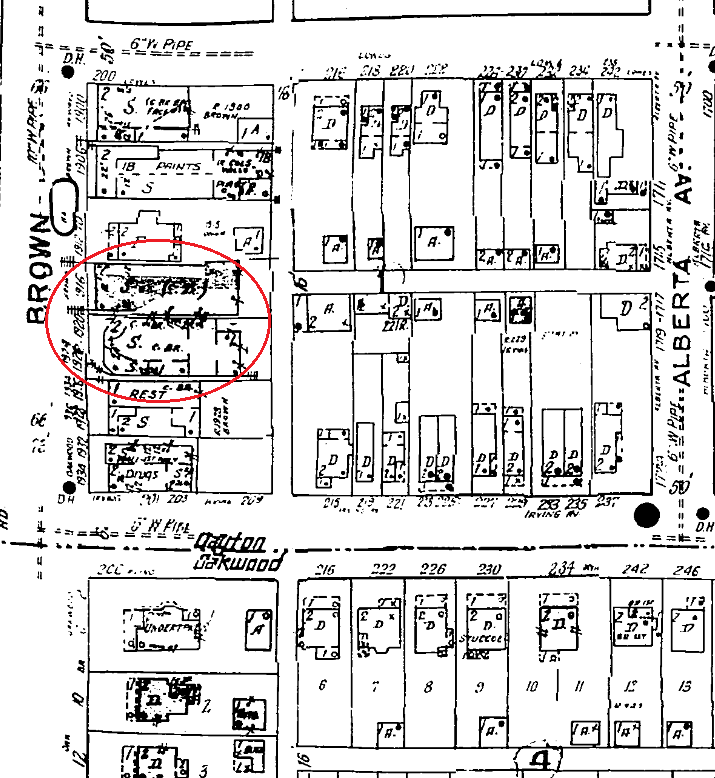
This historical map depicts this block as well as some of the surrounding residential area; compared to other Dayton neighborhood commercial districts it is remarkably preserved.
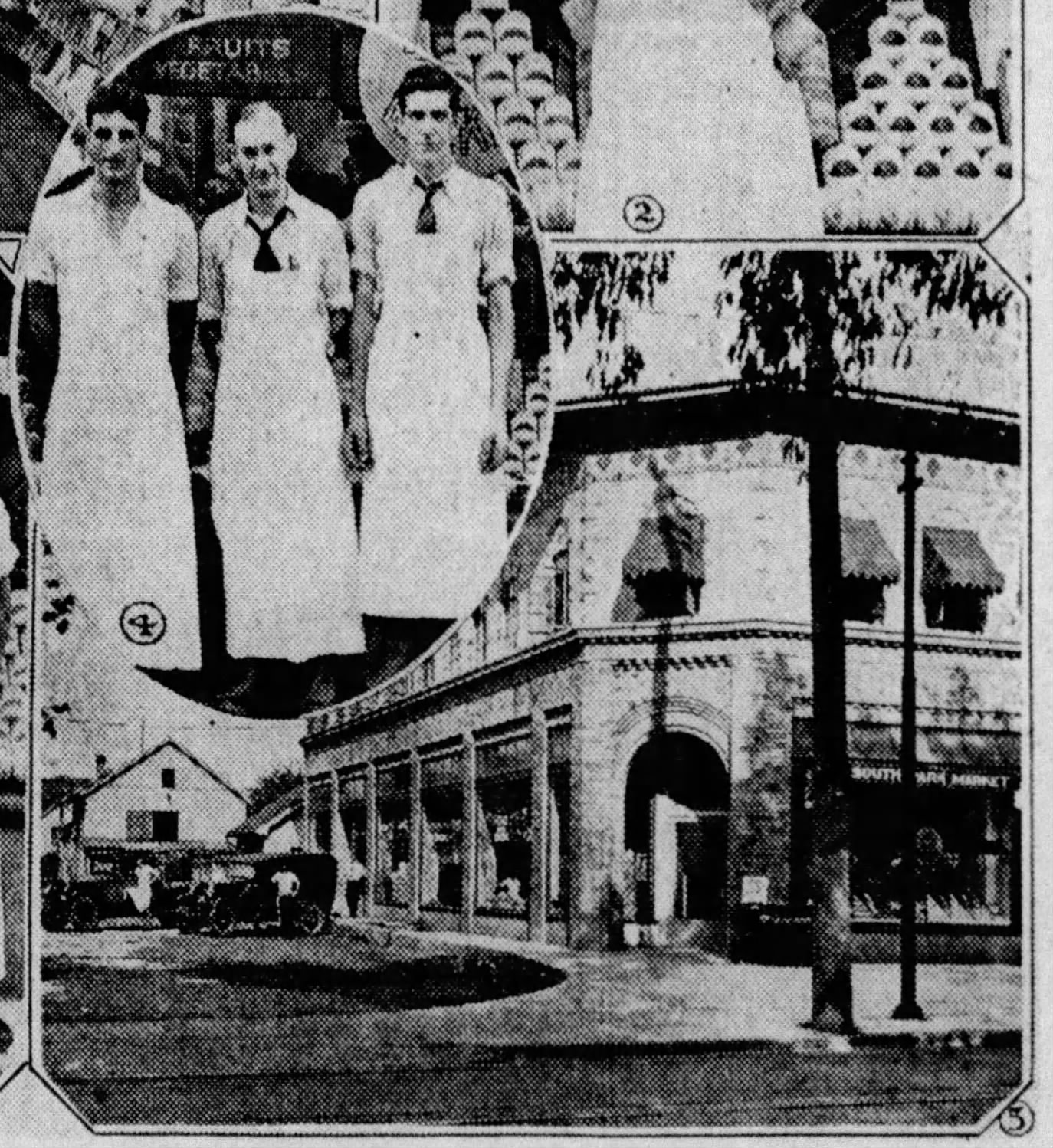
At 1922 Brown St, it was initially reported that Kroger was interested in leasing retail space for a grocery store, but instead it ended up becoming a new location for the South Park Market, which moved from 932 Brown St next to the Engine House that is today Jimmy’s Ladder 11.
The move to the new building gave the store more than double the space as its old location. Owner Joseph T. Clayman worked hard to maintain low prices, “personally undertaking the purchasing of wholesale fruits and vegetables” which in many cases required “trips to distant points.”
The meat department also expanded upon the move, installing modern facilities for meat preservation and hiring as its butcher Charlie Mack, a 45-year veteran (including 20 years at the Arcade Market) who was incredibly popular around the city. The store’s main clientele was described as the “Oakwood and South Dayton populace,” but the low prices “have attracted buyers from every Dayton locality.”
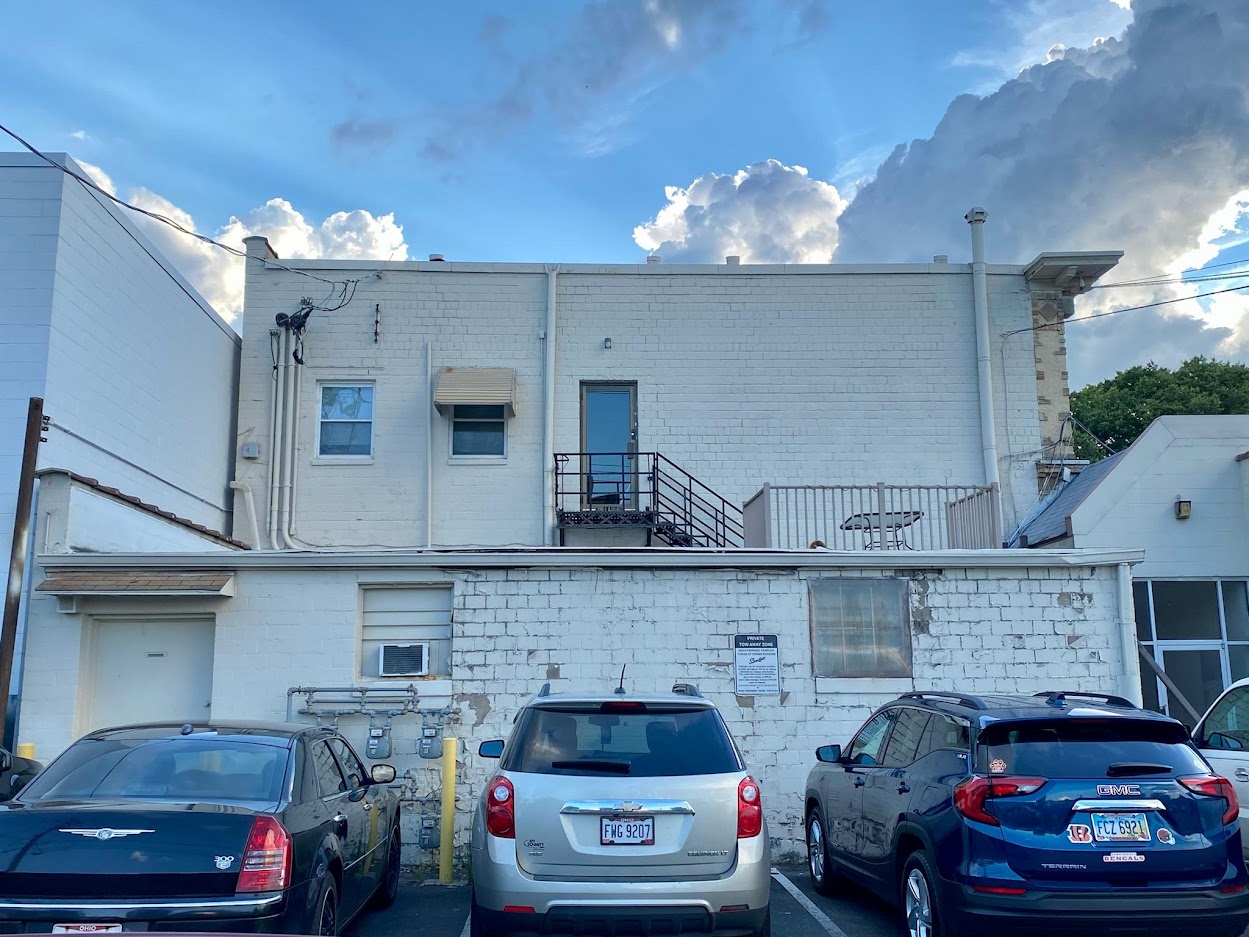
At the same time, the apartments on the second floor of the building featured a large living room, dinette, kitchenette, bedroom, tile bath, hallway and three large closets.
The South Park Market opened in 1931, but incredibly, it wasn’t the only grocery on the block to open that year. King’s Market also moved to a new building on the corner (today’s Buffalo Wild Wings), giving neighborhood residents an impressive array of options for their everyday needs.
In the Fall of 1939, the Gallaher Drug Co. leased the Federation Building for a drug store and it would give the space a major remodeling in 1955. A variety of tenants occupied the building in later years. The Bockrath Carpet Shop in the 1970s offered oriental and accent rugs. In 1975, the “Denmark Health Club” adult store was located there. In the 1990s, it housed the “Digital Gallery.” One exhibition in 1995 featured computer-enhanced photographs by Daytonian Hugh M. Stephenson.
1918 Brown Street
The single-story building next door also adds to the district’s grocery history.
In January 1941, Kroger opened a new supermarket in a newly-constructed single-story building at 1918 Brown Street, directly adjacent to the Federation Building.
At that time Kroger closed its last Piggly Wiggly location, and the new store was “operated on the self-service basis with a one-pay plan checking out system.”
By the late 1960s, Custom Electronics Inc. was located at 1918 Brown Street.
Previous Redevelopment Plans
In more recent years, there was a proposal in the works for a three-story mixed-use building on the site, but that did not move forward. Instead, the University of Dayton bought the buildings for $650,000 in 2018. In March 2022, the iconic Pine Club restaurant located just one door down from 1922 Brown purchased them from the university.
It is undoubtedly still an active area, with multiple restaurants, an ice cream shop, a barber shop, a nail salon, and an art studio and wellness center on the block.
In other parts of Dayton, demolition for highway construction and urban renewal have hollowed out neighborhood commercial districts and the residential core that once flocked to them.
But in this case the area is intact (save for Brown Street itself to the north), and there are still multiple residential neighborhoods, from UD student housing to Oakwood, in easy walking distance.
And what’s more, transportation infrastructure easily connects Daytonians from farther out, as the (free) Flyer bus travels down Brown Street to downtown just as the streetcar did in the early 20th century.
I thoroughly enjoyed reading about Brown St and all the history. I lived on Rubicon Rd near Schantz Ave and as a 6 or 7 year old I walked alone or with a friend to visit Rubicon Pharmacy (Ben & Jerry’s) for bubble gum and candy. I also sat at the soda fountain in Gallagher’s. That was deemed safe for children in the mid fifties! My mother shopped at King’s Market for many years. I took piano lessons from Don Hageman in a very old lovely home in the same block. I wonder what other uses that home was used for besides residential use. Thank you so much for all this historic and nostalgic information!
You’re welcome! And very cool, thanks for sharing. It must’ve been a fun street to walk as a kid then, especially with so much on the same block including piano lessons! This is such a rare case of a commercial block in Dayton in that all of the buildings remain standing, although of course they date to different time periods. Hopefully these buildings are poised to see new life soon that might bring back more neighborhood amenities like from your childhood.
Andrew- Great job with your Brown St. memories. I owned and operated The Pine Club for 40+ years, as well as the corner building at Brown & Irving. (Rubicon Drug store and the Kidd Tullis Saloon). Many fabulous memories of the people and places along ‘South Brown St. begining in 1974. Dave Hullme
Hi Dave, thanks so much for commenting! Very cool that you were such a big part of the fabric of the street for so long. I definitely still enjoy a good meal at the Pine Club! I also wish I could have seen the Brown Street of decades ago too.
Thanks for a walk down memory lane! I lived on Lowes Street and knew that block well! I still remember the day a woman fainted at Gallahers and they called an ambulance.
The big house with white pillars was a doctors office. One of my brothers had fallen at the bus stop at Oakwood and Irving and his forehead started bleeding which would not stop. We ran to that office and they helped.
There was also Hubble’s Variety Store next to Kings Market. I found the best witches costume in there one year!
We moved when I was 10 years old but never lost my love for those years. The new neighborhood had its own interesting place but never the same.
Dianne- very good memory. If I recall properly, that was Dr. McDonald’s office on Brown St.