Photos for this article were taken by Alex Parks, professional photographer/videographer and drone pilot. See more of Alex’s work at parkspromedia.com.
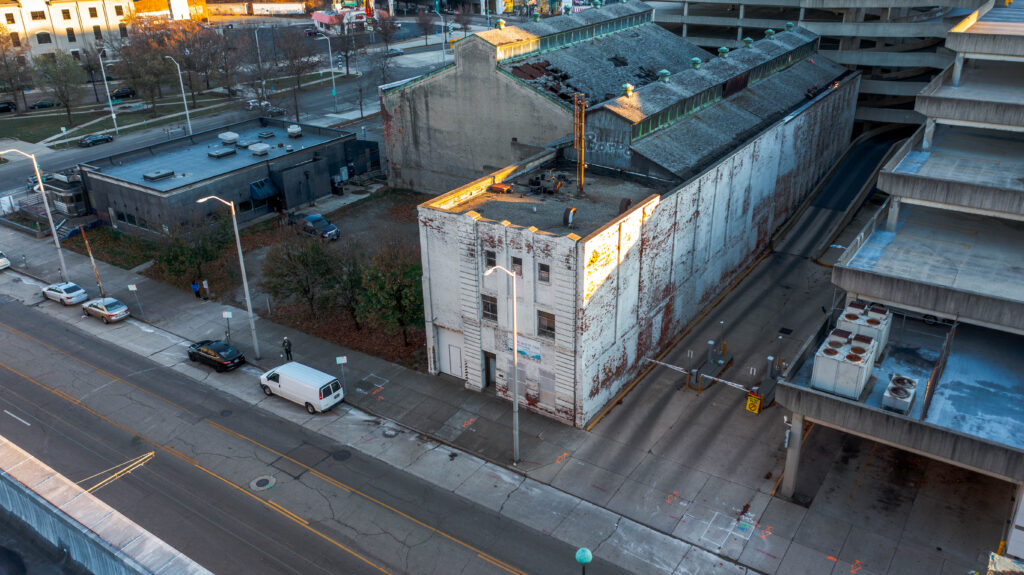
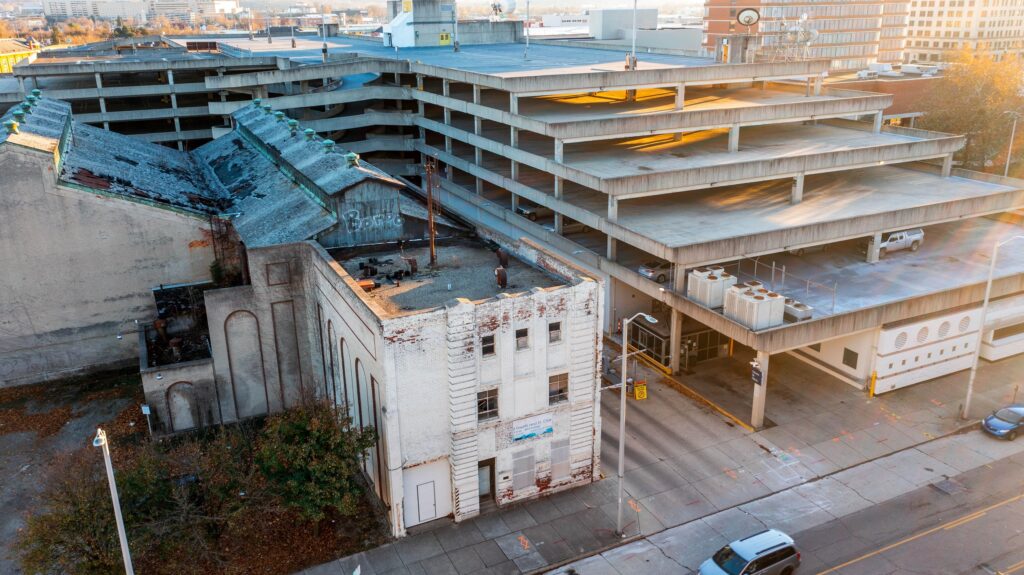
According to recent reports and funding requests, Infinity Labs, a “fast-growing defense contractor” is planning a major redevelopment of a vacant complex at 118 E. 4th St.
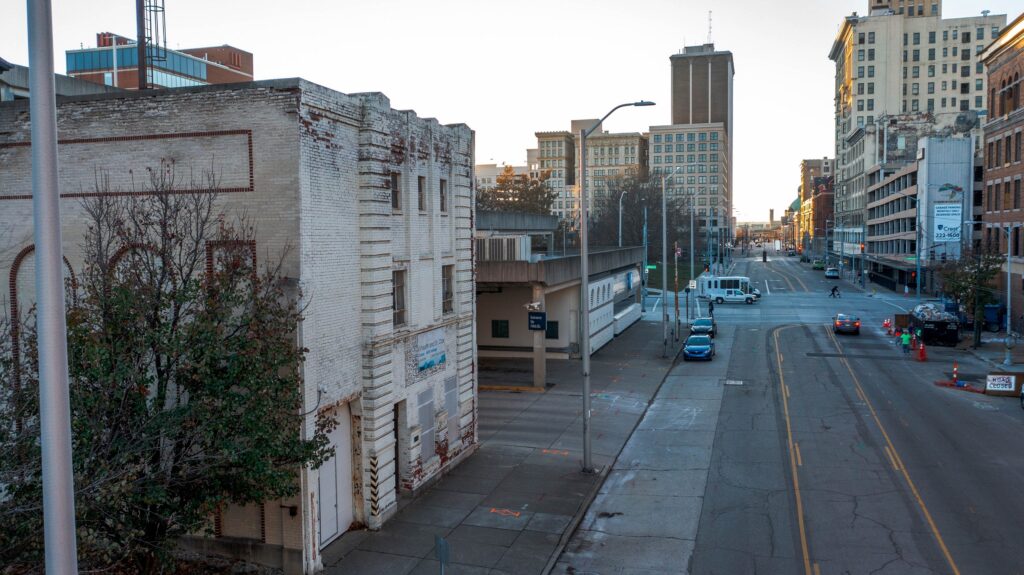
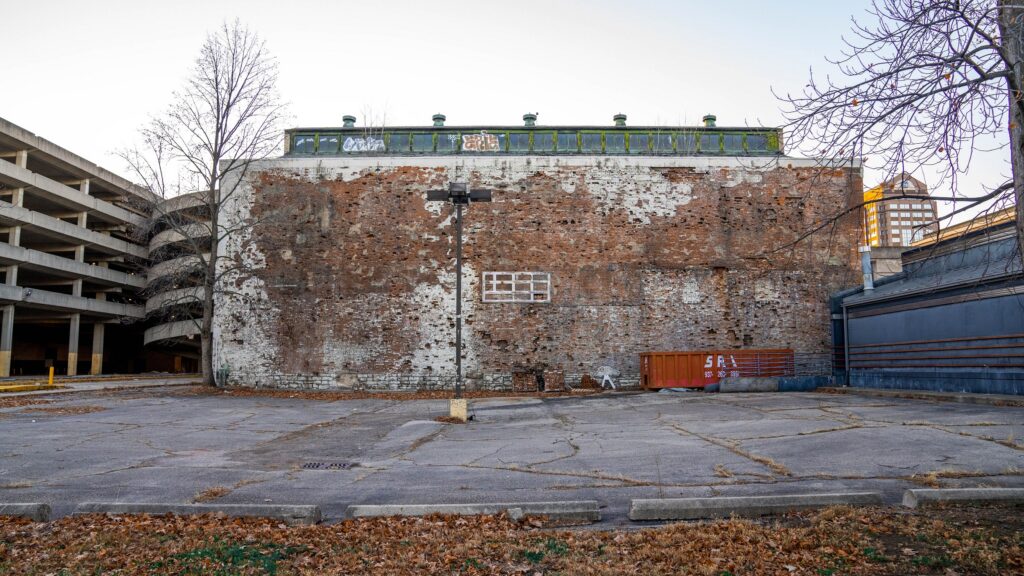
The site is a former DP&L power station and the only property that survived a 1960s urban renewal project that leveled the surrounding blocks for the convention center, transportation garage, hotel and park that today features the Levitt Pavilion.
If it moves forward, the Infinity Labs project would be a major one that brings back a nearly forgotten landmark, and the development’s name, “Power House,” is a nod to the site’s history.
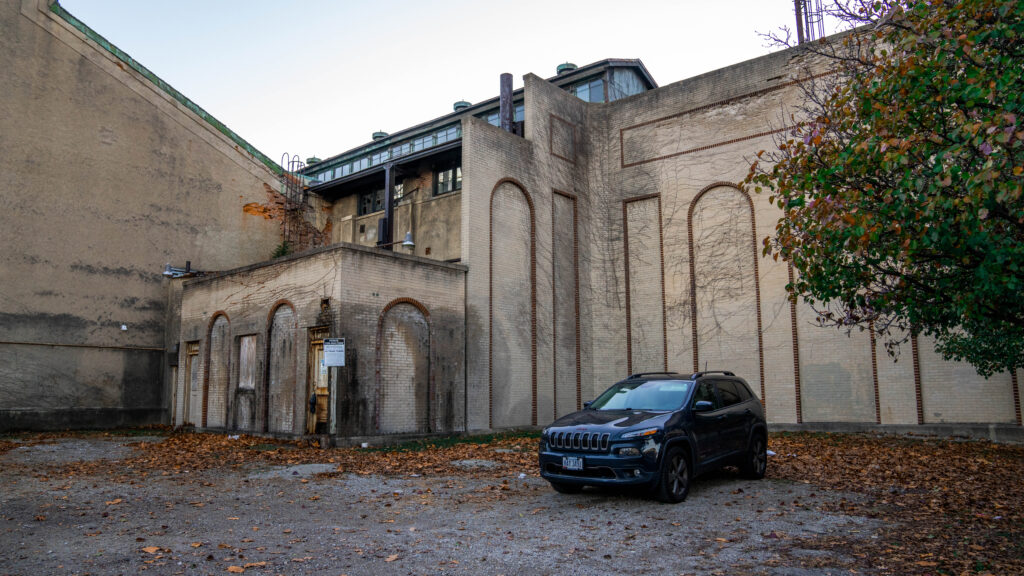
The main buildings on the site were constructed in 1887, at a time when electricity generation was just starting to become a viable business.
The company was the Dayton Electric Light Co, which in 1911 would become Dayton Power and Light as the result of a new entity purchasing and merging two competing firms.
Construction was done by the Morrow Construction Company of Pittsburgh and initially installed at the new station were four Edison 50 Kw generators, which were belt-driven by two 150 H. P. Taylor steam engines.
Just three years later, business had increased so much that additional capacity was needed. The company added more generators and bought the Hanna Cigar Company building next to it to be used as a boiler room.
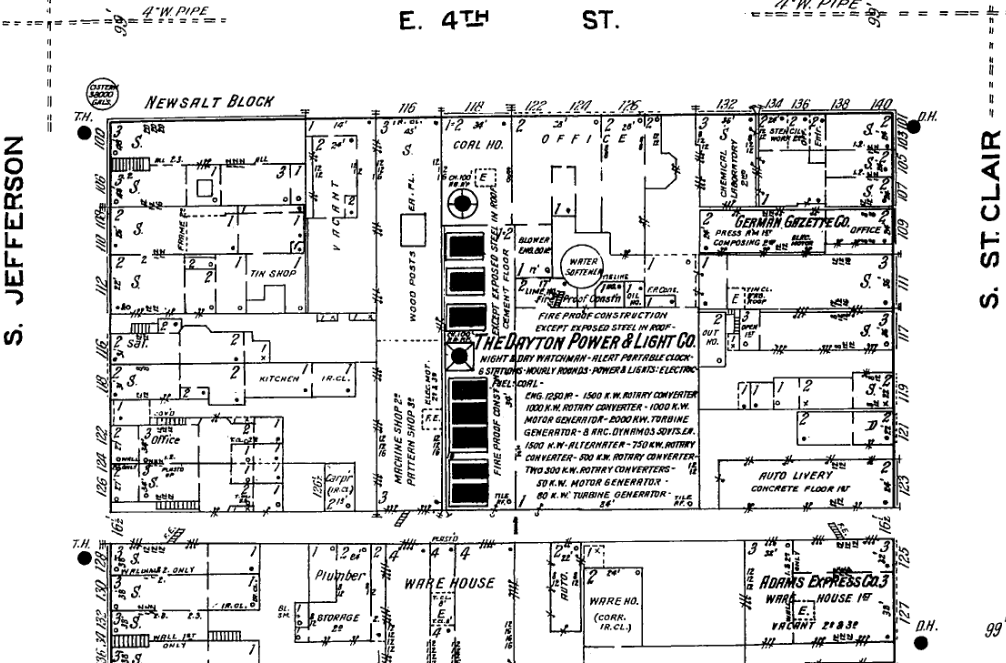
After it opened this station was the company’s only power generating plant in Dayton until approximately 1910. At its peak, the Fourth Street station used about 90 tons of coal per day at a cost of $2.75 per ton, figures that would in a few years be surpassed by a massive margin.
In these early days coal “was hauled to the plant by horse drawn wagons and unloaded by hand later.” The station’s major industrial customer was the Davis Sewing Machine company.
In just a few years, the popularity of electric service in the home as well as in businesses would grow significantly, aided by the development of the Tungsten filament lamp and other technological and efficiency improvements.
Soon it became impossible to meet all the demand of a growing Dayton from the existing facilities, a much larger station was needed, ideally adjacent to the river “to have a sufficient and consistent supply of water for use in the condensers.”
In 1918, DP&L’s brand-new Millers Ford Power Station, built on 28 acres south of Dayton along the Great Miami River (today adjacent to I-75 off Dryden Rd) opened to consolidate power production.
After that point, the Fourth Street station was used “for standby purposes and also to produce steam, as demand for steam service had grown in the area.” This was also the case for a Third Street station which is today beautifully renovated as the Steam Plant event center.
In the early 1920s, 124 E. Fourth Street served as the company’s Service Building. Customers were encouraged to call “when your light, heat or power service is off; your iron, motor, or any appliance or device is out of order; (or) you note a street lamp not burning.” (Later the Service Building moved to Monument Ave and Foundry Street, and more recently 1900 Dryden Road.)
In July 1928, the Fourth Street power plant was shut down after 40 years of continuous operation, around the same time as a “new turbo-generator unit” was started at Millers Ford. It remained in use for decades as a substation, “acting as a distribution center for downtown Dayton” and subordinate to the generating plant.
In 1952, the 180-foot smokestack which had been called a “central business district landmark” was taken down. The contractor who led the removal, Walter M. Gillespie, was the son of Roy D. Gillespie who had supervised its construction many years earlier.
At that time, the station also housed the DC converter which supplied the energy for Dayton’s electric trolley buses. In 1987, the current Fourth Street substation used by the RTA opened just across St. Clair Street in the narrow triangle of land in between St. Clair, 4th and Patterson.
Other offices which once fronted Fourth Street were demolished some time before 1950, but much of the historic power complex remains and is ripe for redevelopment.
Infinity Labs’ $25 million development has been described as a “collaboration space where the company will work with entrepreneurs on projects for the defense and commercial markets.”
The latest news on fundraising came in November 2022 with a $7 million request to the Dayton Region Priority Development & Advocacy Committee (PDAC). It has already received $533,000 from Dayton/Montgomery County ED/GE and DEAP Grants as well as $250,000 from the State Capital Budget.
Sources
“R. D. Gillespie Career Woven Into Power Station Change” Dayton Journal Herald, 4/2/52
“Power Plant of Dayton Power and Light Co Closed Down After 40 Years of Operation” Dayton Daily News 7/29/1928
“Modern Power Has Kept Pace with Industry: Dayton Daily News 11/8/1925
Sanborn Fire Insurance Maps
These aerial shots of the former plant make it look regal. I hope this comes off.
Thanks for the article!
I had always wondered where the 600 vdc wasproduced for dayton”s trolley bus system. I would be interested in the tecnical details of the600 vdc power system. There are buildings throughout the miami valley that were involved in the production of dc voltage for the ohio electric interurbanrailway sysem that had its heart in dayton.