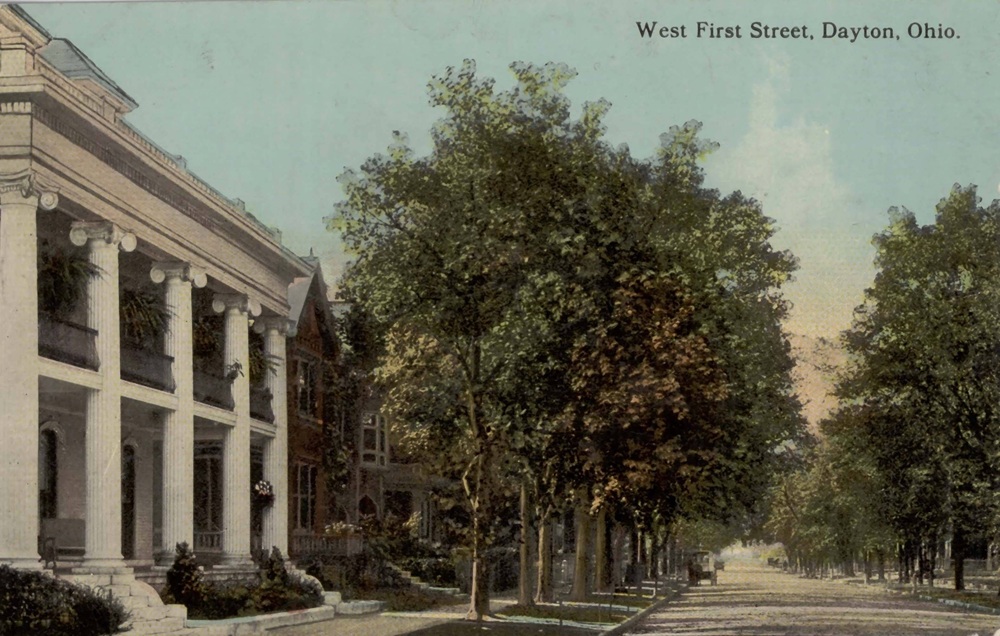
Many of the most prominent Daytonians of the 19th century, from pioneer settlers to the founders of some of Dayton’s most important businesses, were clustered in one particular area just west of the central business district at that time.
The neighborhood centered on West First Street was one the most luxurious residential areas in the city, which I’ve written about as “Dayton’s Lost Park Avenue.”
In this article I’ll take a closer look at a few of these famous Dayton families and what happened to their historic residences.
Horatio Gates Phillips and the Phillips Homestead
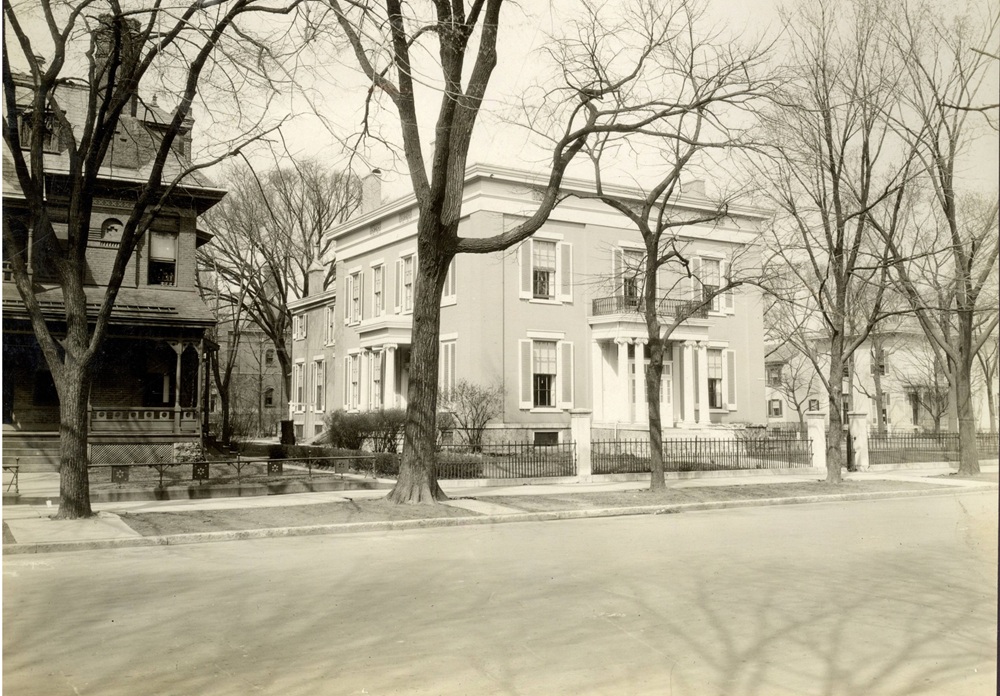
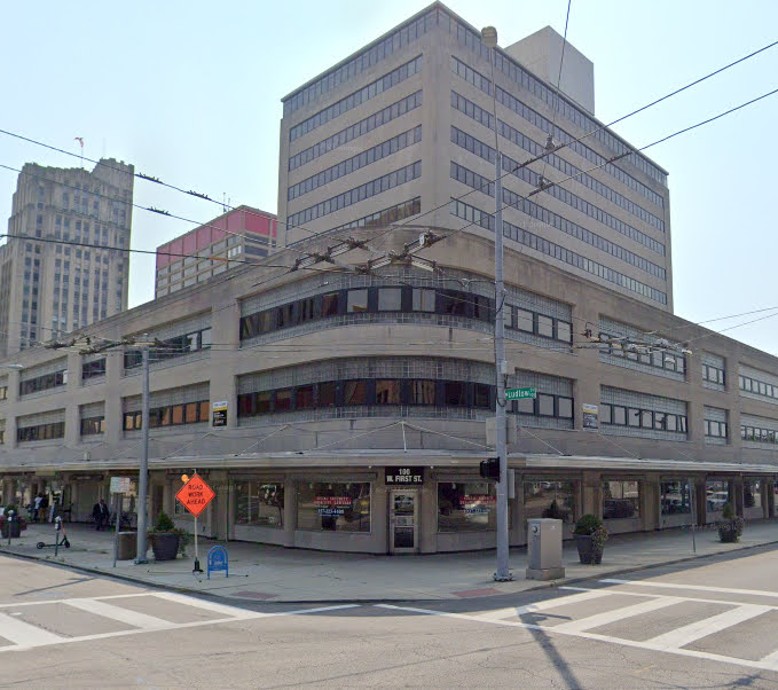
We’ll start at the SW corner of First and Ludlow, with this beautiful historic home built by Horatio Gates Phillips in 1846. It was also known as the J. D. Phillips Home who was his son.
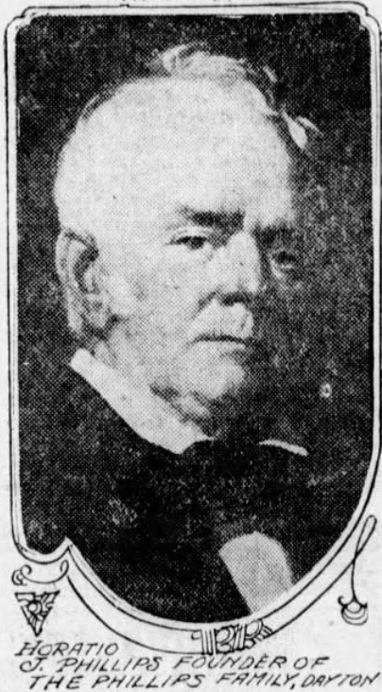
Horatio Gates Phillips was a Dayton pioneer who moved west from New Jersey in 1803 to seek a new home. He met Daniel Cooper, a fellow New Jerseyan who is widely considered to be the founder of Dayton, in Cincinnati, and decided to move to Dayton the following year in 1804.
Phillips went on to own a chain of stores in Dayton, Troy, Urbana and Greenville and became the wealthiest man in Dayton. He was also one of the founders of Dayton’s first bank: a stone building just south of Steele High School that opened in 1814.
The Old Phillips Homestead was surrounded by sturdy elms, which “toss(ed) their green branches before its windows and make a beautiful tracery against the wintry sky.”
The interior was “spacious and well proportioned. It was entered through a broad hall leading to a porch at the west end, on the south to the garden and up a circular stairway that led to the roof. South of the hall were the little parlor and the dining room, across it with windows facing north, east, and west was the “big room,” the center of social life in Dayton and almost as well known in Cincinnati and Columbus.” 48 feet long, 18 feet wide, the floor was of polished oak, on the walls were family portraits, and beautiful candelabra. For furniture a few pieces of mahogany, not many, for this room was for formal functions, receptions, large balls, and small dances where all were made welcome and all made happy.”
The Phillips home was removed for the construction of the first phase of the Talbott Tower in 1938.
The Robert Steele Home
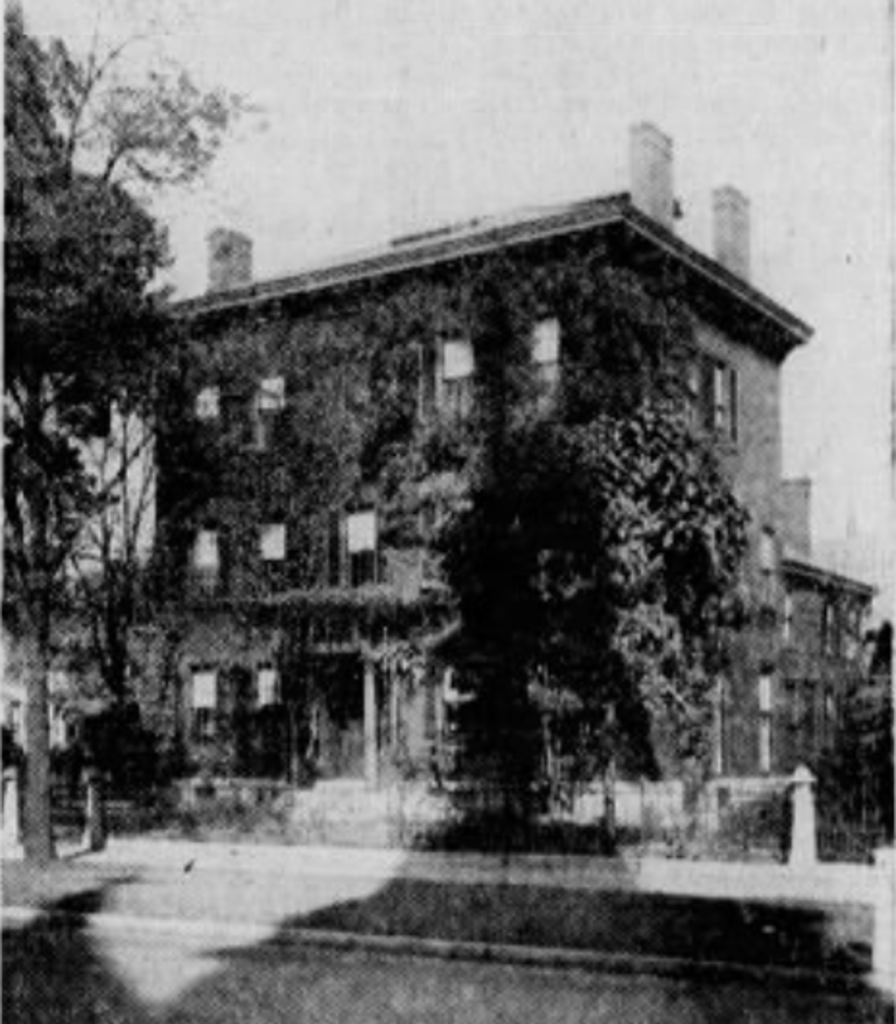
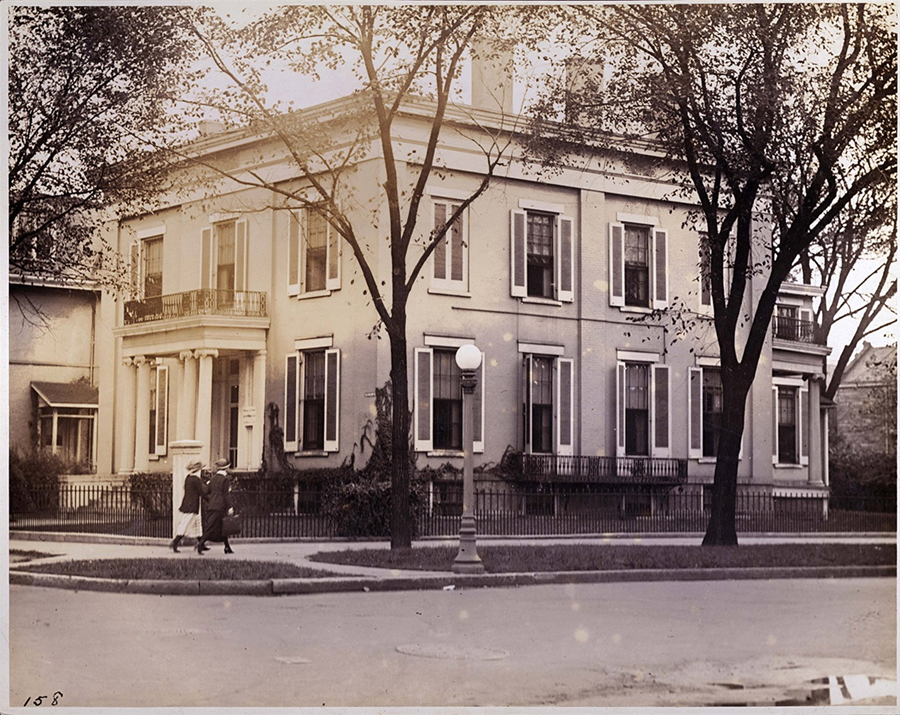
The northeast corner of the same intersection of First and Ludlow was the site of the home of Robert Steele.
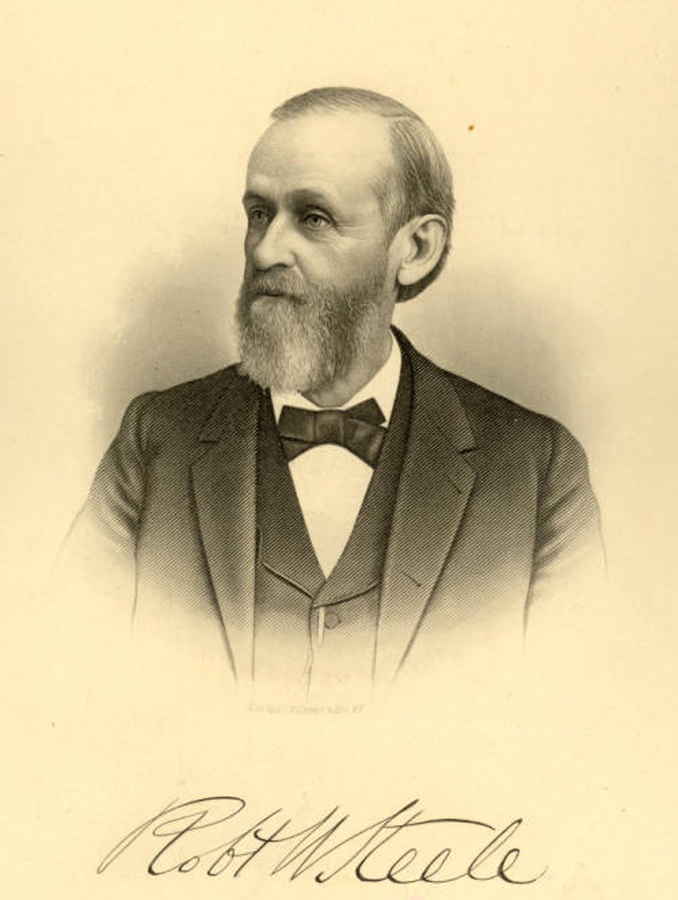
Another of Dayton’s most distinguished residents in its early years, one source called Steele a “businessman who headed many forward-looking city projects, and loved books, trees, and flowers.”
He has been called “Dayton’s most noted educator” and the castle-like Steele High School was named for him. Steele was also a stockholder and promoter for area railroads, and the founder and director of the Dayton Library association.
As for his home, Steele “had a kindly way of gathering all his relatives under one roof.” First the house had two stories. Later, as the tribe increased, he added a third. Since Steele liked quiet he built himself a bedroom and library in a wing at the rear.”
The Steele home was demolished for a parking lot visible here in this map from the 1950s, with plenty of other empty lots being used for parking around it as well.
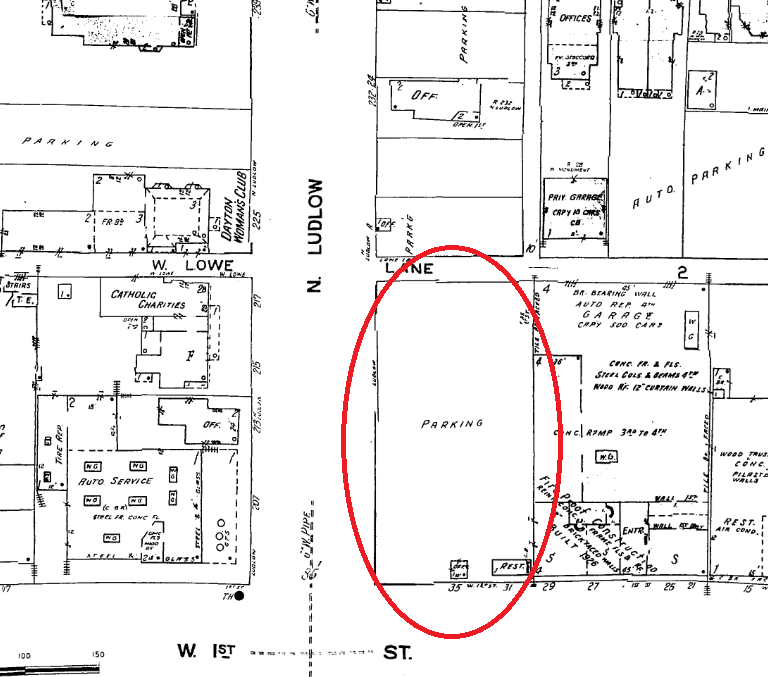
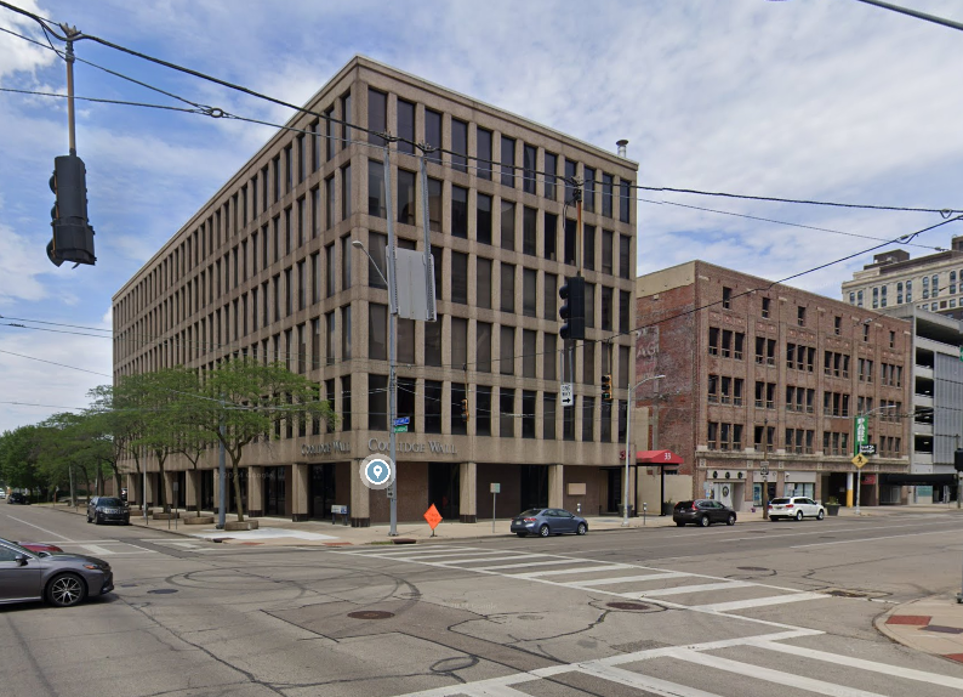
The parking lot that replaced the Steele home was then turned into the 6-story IBM Building in 1966, today occupied by the Coolidge Wall law firm.
The Colonel Daniel Eldridge Mead Home
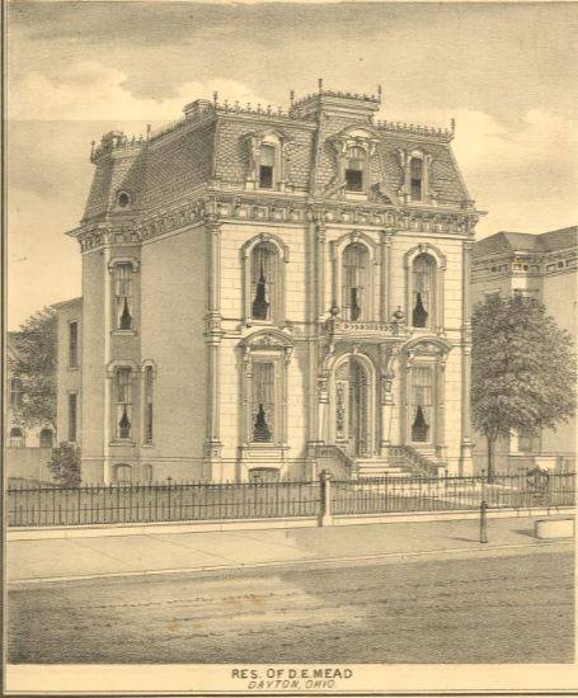
On First Street to the east of the Steele home was another magnificent residence belonging to Colonel Daniel Eldridge Mead at 23 W 1st St, built around the 1860s.
The Mead home was unique in that it featured carved busts of Abraham Lincoln and Daniel Webster on the front porch.
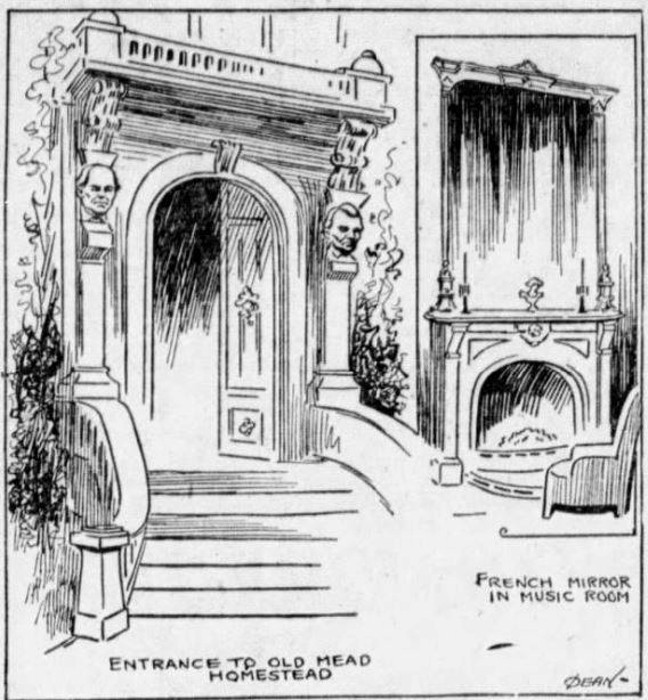
Mead was one of the founding partners of the Mead Corporation. By the time he died in 1891 it had become one of the largest paper manufacturers in the country.
Headquartered in downtown Dayton for decades, Mead was one of the central business district’s top tenants until it merged with Westvaco in 2001 and moved its headquarters to Connecticut.
The former Mead Tower, Dayton’s second-tallest building built on Courthouse Square in the 1970s, later became the KeyBank Tower.
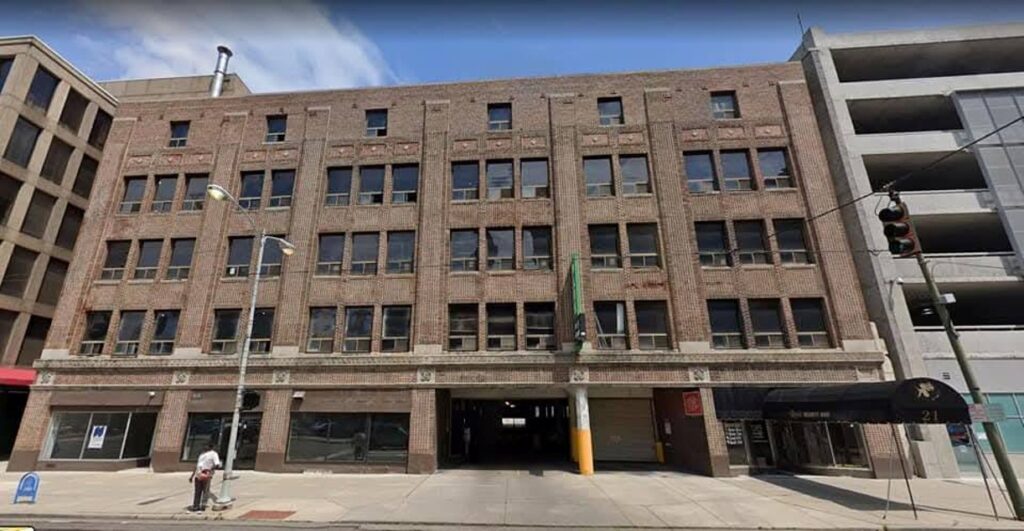
The Mead home, as well as the Callahan home next door, were demolished for the “First Street Garage” built in 1926 at 21-29 W. First Street, the oldest freestanding parking garage downtown and today home of Rabbit Hole Books.
The Ebenezer Thresher Home
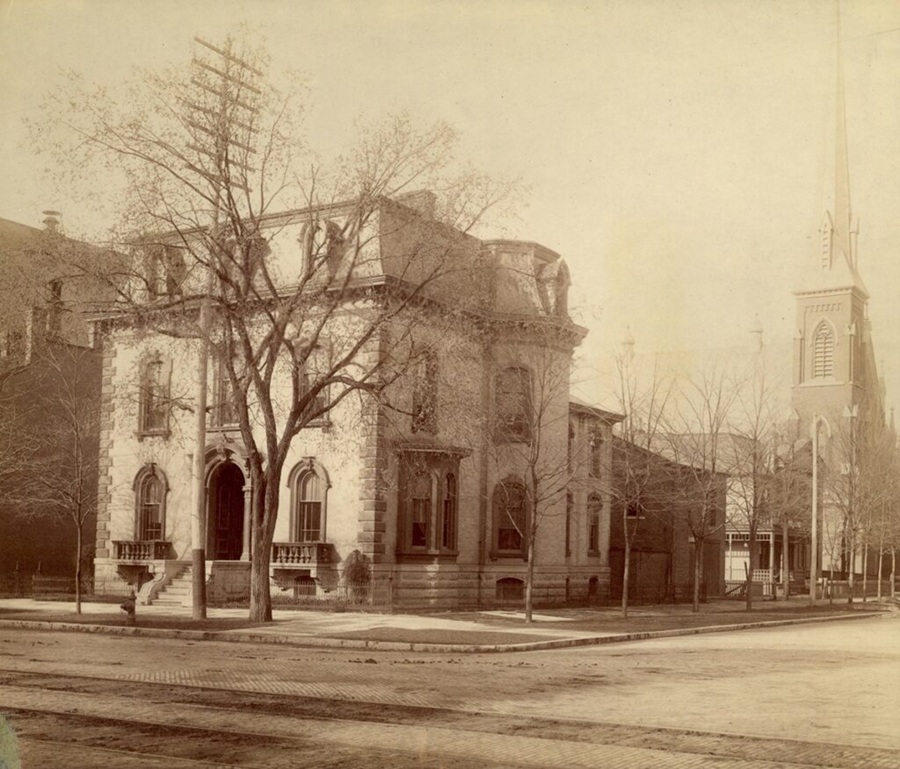
Continuing east to the SW corner of First and Main, we find another beautiful residence, the Ebenezer Thresher home.
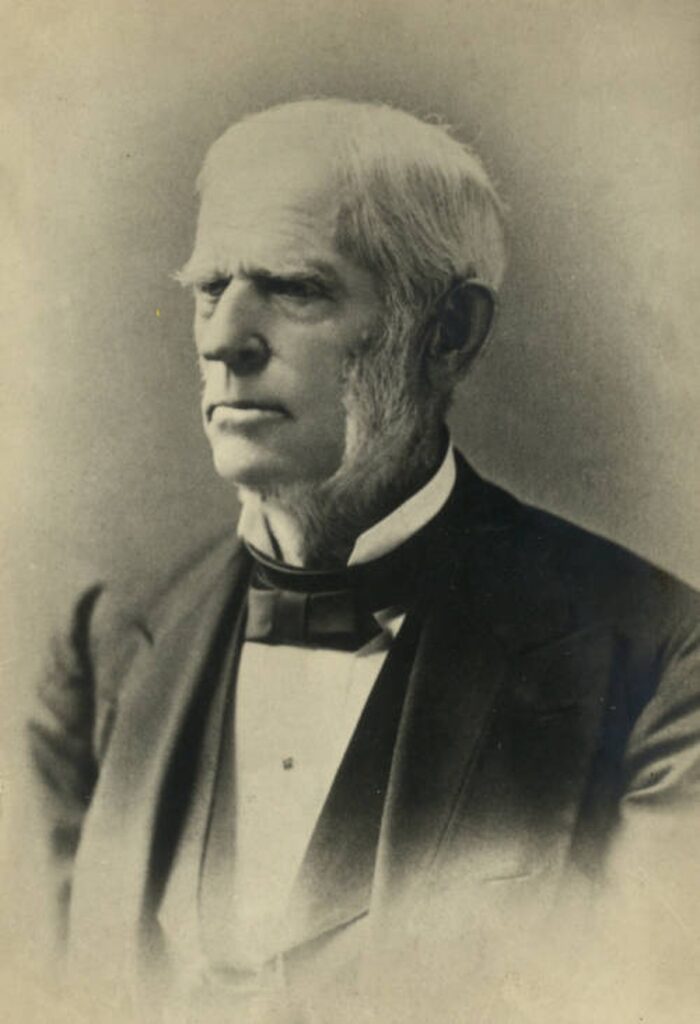
Thresher was a Baptist minister and prominent manufacturer who owned the Thresher Paint Co and operated a sawmill business.
He also helped form the railroad car company that became Barney and Smith.
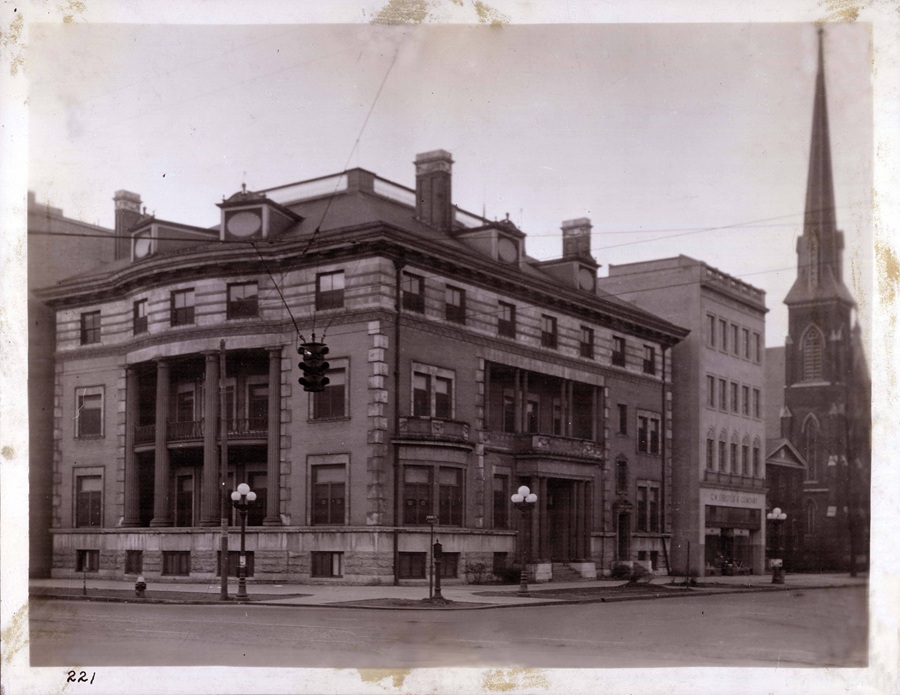
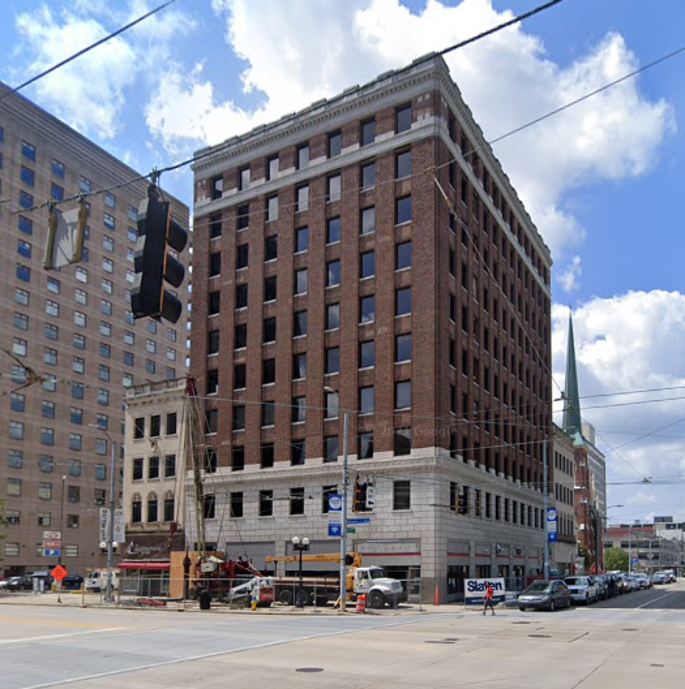
The Thresher home was removed and replaced by the Dayton City Club, which only lasted until 1925 until it too was removed for the construction of the Harries Building, also known as the Barclay Building, which recently was remodeled into the Hotel Ardent.
The Ezra Bimm Homestead
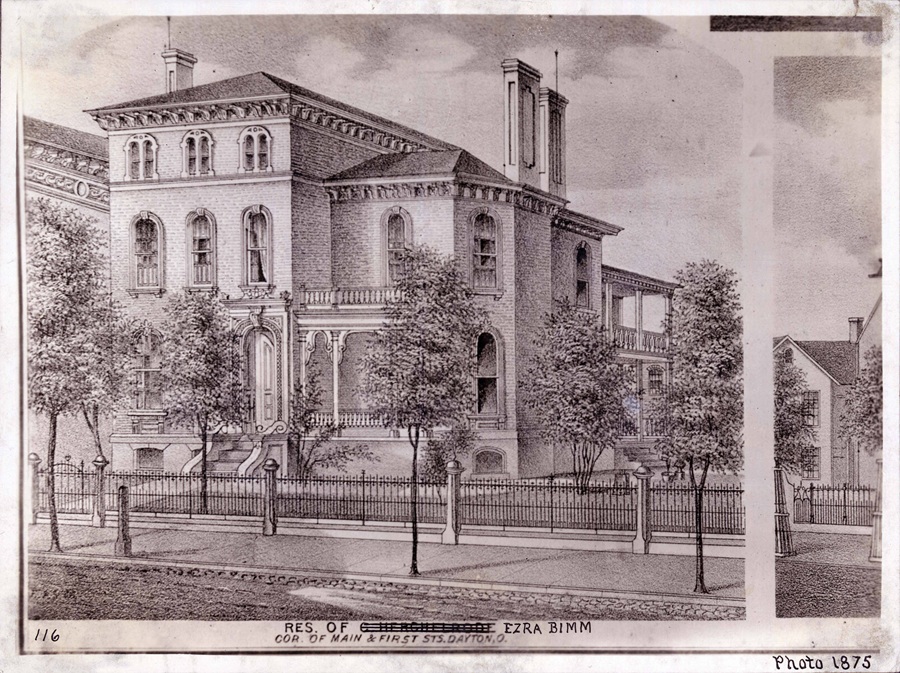
At the NW Corner of First and Main Streets was the residence of Ezra Bimm, another prominent Dayton businessman. His sons Joseph and Henry Bimm built the Bimm Fireproof Warehouse in 1912, where the wealthiest of Daytonians would store their valuables while summering in Europe. That building still stands and incredibly has been owned by the Lincoln Storage and Moving Company since 1916 when Henry Bimm retired due to illness.
The Bimm homestead, on the other hand, had a more gradual demise and a really fascinating but ultimately disappointing story.
In the early 1900s a two-story commercial building was built out on both First and Main Streets in what had previously been the Bimm homestead’s front yard, the edge of which can be seen to the right of this image of 1st St.
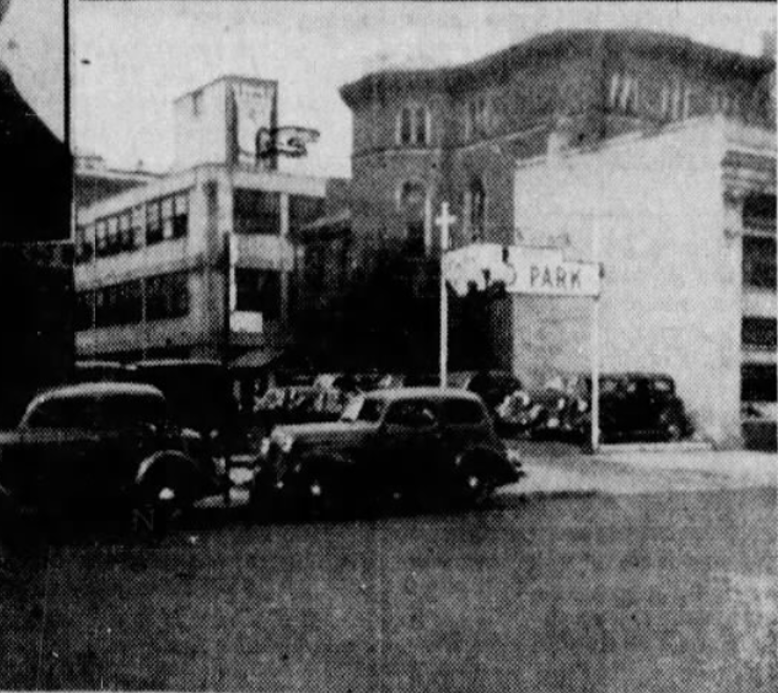
It all would be torn down in 1951, displacing many still active businesses including the Eatmore restaurant, Pfeiffer Shoe Repair, Miller’s Sporting Goods, G. E. L. Electric Co, and several other tenants on the 2nd floor, and was replaced by a parking lot. The Central Garage building to the north which was being used as a warehouse, was also razed at the same time.
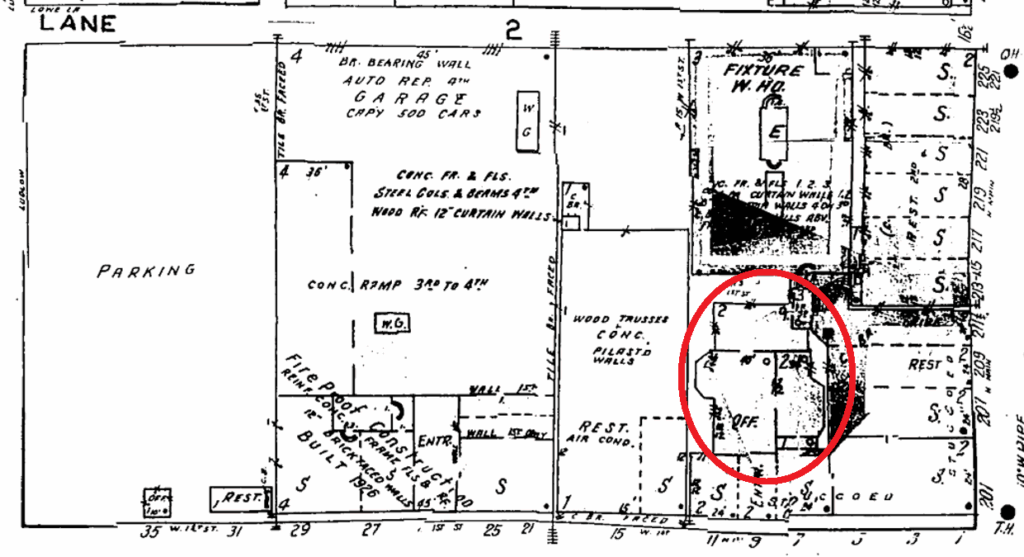
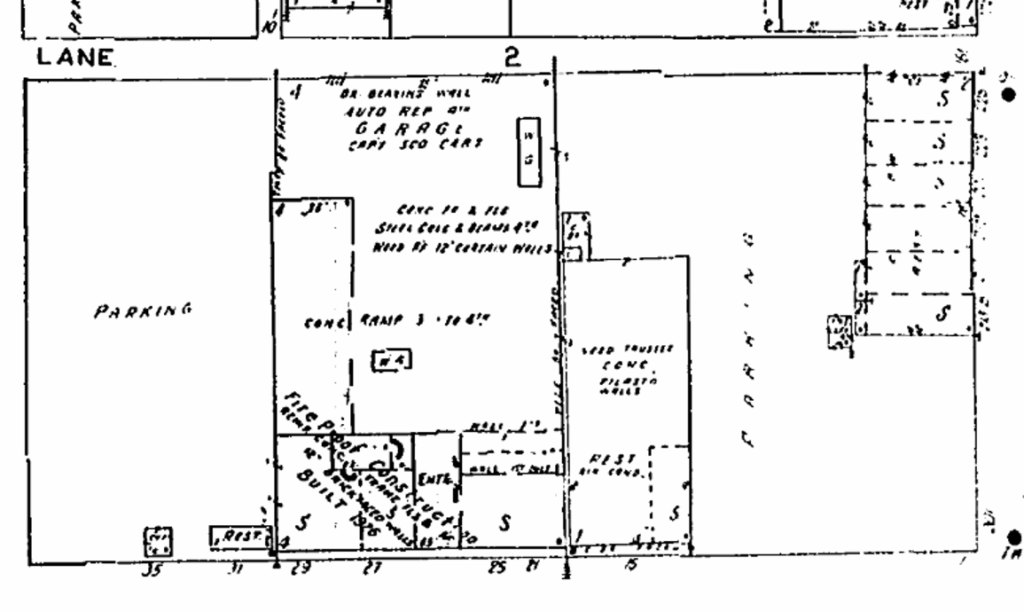
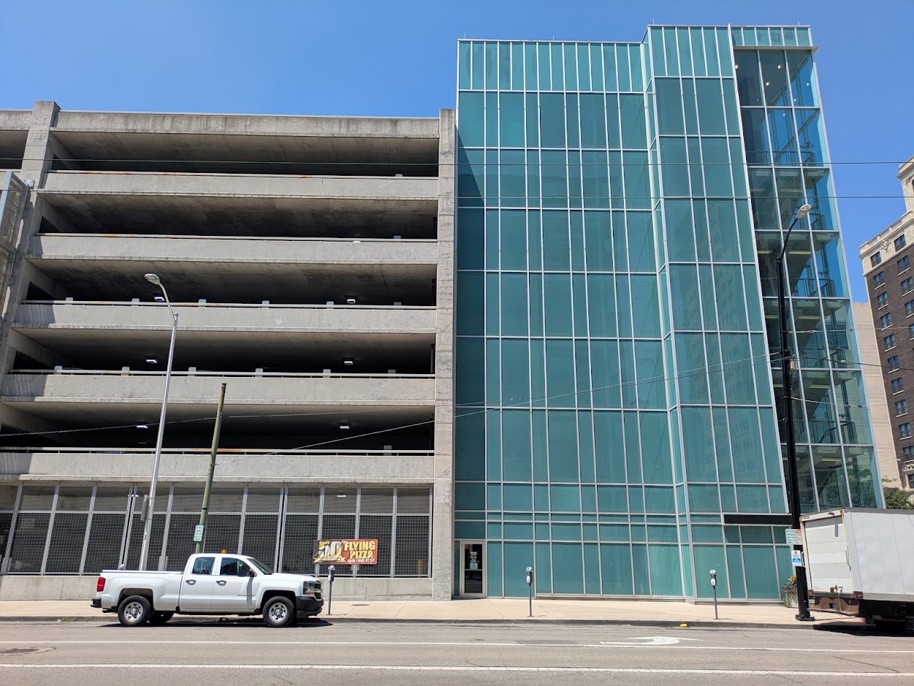
It remained a surface lot for over 50 years and today is the corner of a parking garage which does at least have 1st floor commercial spaces including the popular Flying Pizza on the Main St side.
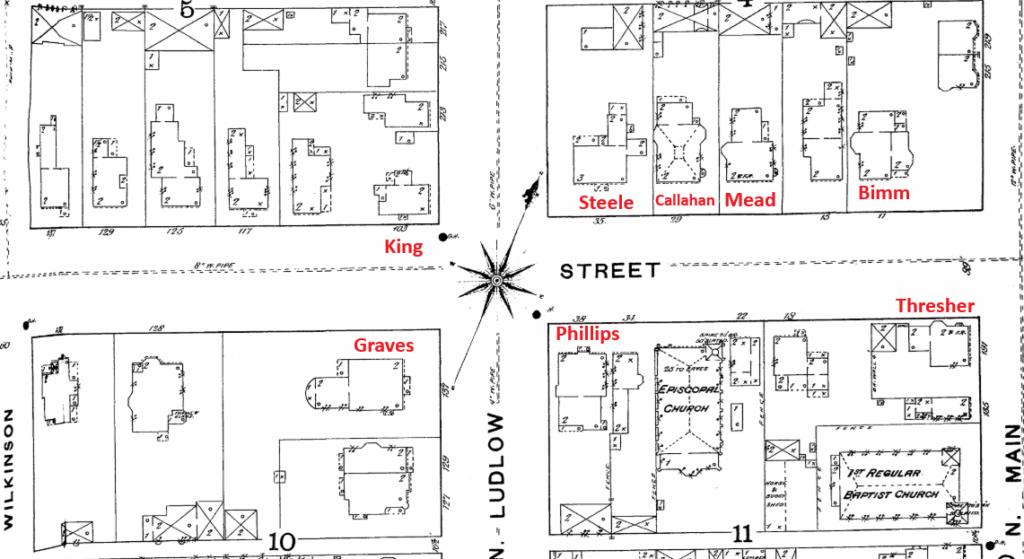
You can see a wider view of the same First and Ludlow intersection from 70 years earlier than the map above of the parking lot that replaced the Steele home.
Every lot is occupied by a home, and you can see how close many of Dayton’s prominent business leaders lived to each other in the late 1800s.
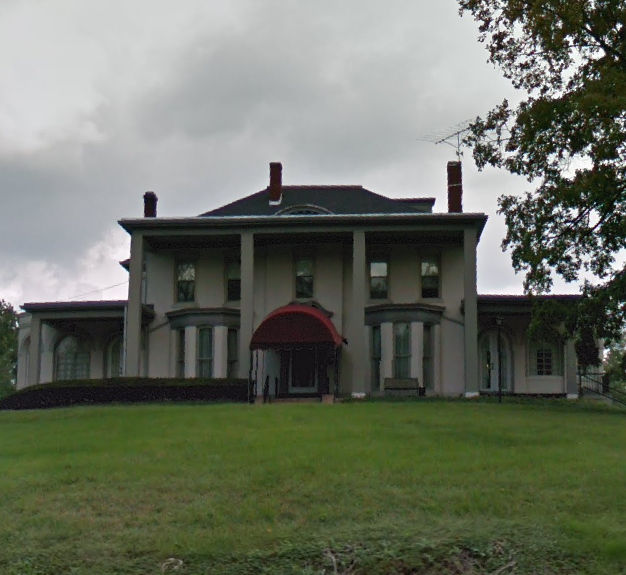
There is one old home remaining on West First, however: the Fowler-Parrott Home at 18 W First.
Sources:
Most historic images: Dayton Metro Library
Dayton Daily News and Journal Herald Archives
Additional Research on Mead home: Kegan Sickels of Preservation Dayton
Combination Atlas Map of Montgomery County, Ohio – 1875
Dayton, Ohio: An Intimate History by Charlotte Reeve Conover
Leave a Reply