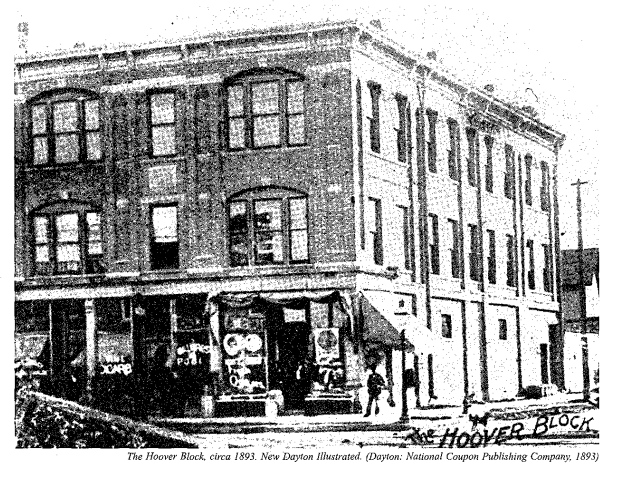
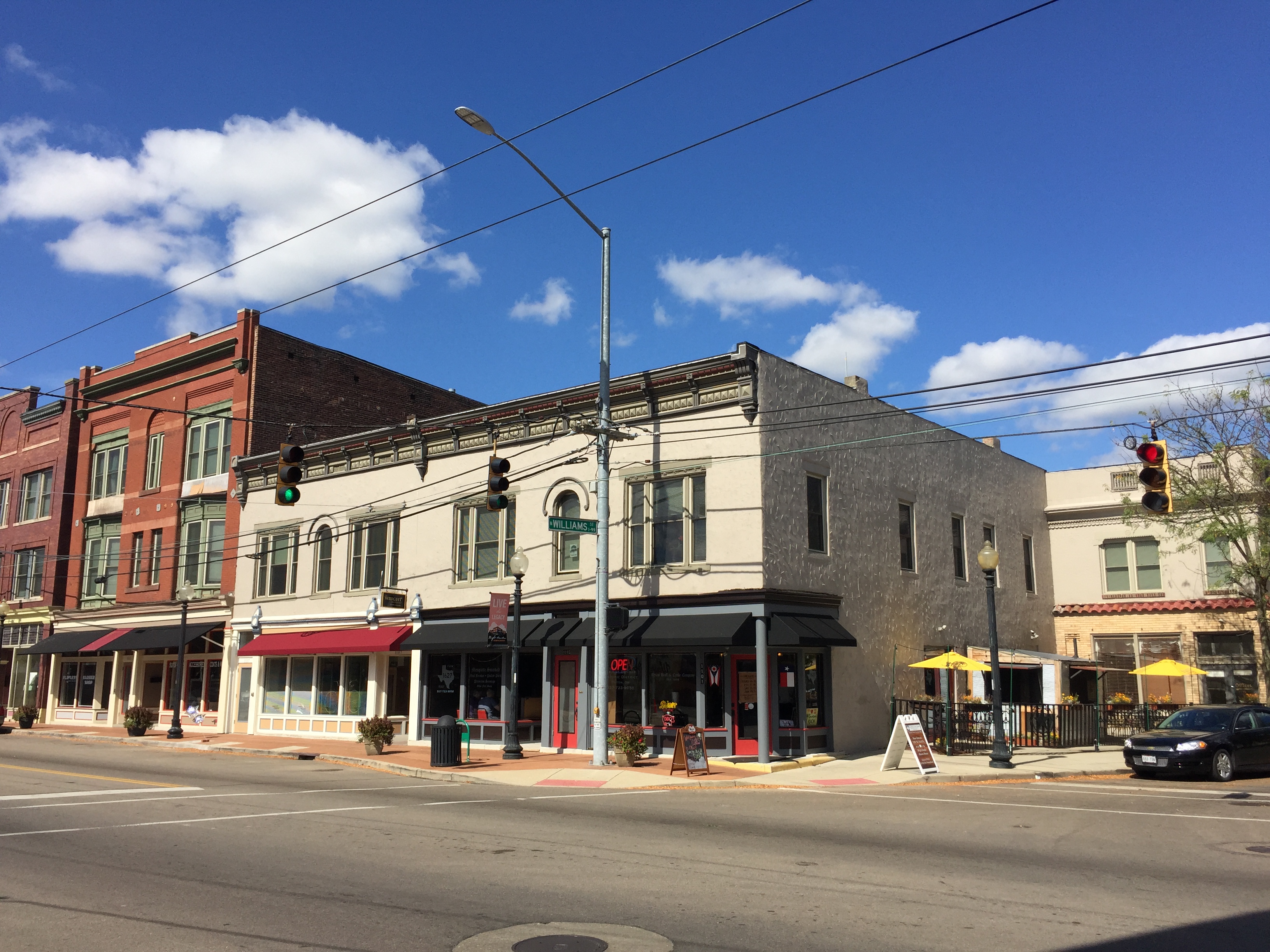
The Wright-Dunbar neighborhood has multiple sites connected to the Wright Brothers’ exploits in bicycles and then airplanes, but the Hoover Block at the SE corner of West Third and Williams is where Wilbur and Orville worked on their first business venture: printing.
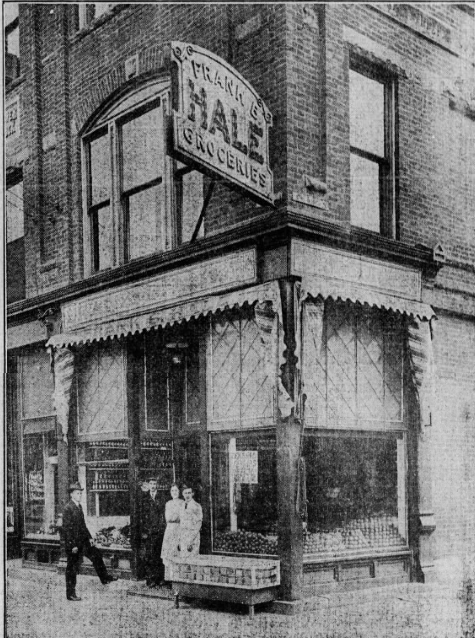
The brothers rented an office suite on the second floor from 1890 to 1895, but the building is also known for another popular tenant that occupied the ground floor for many years: the grocery store of Frank Hale.
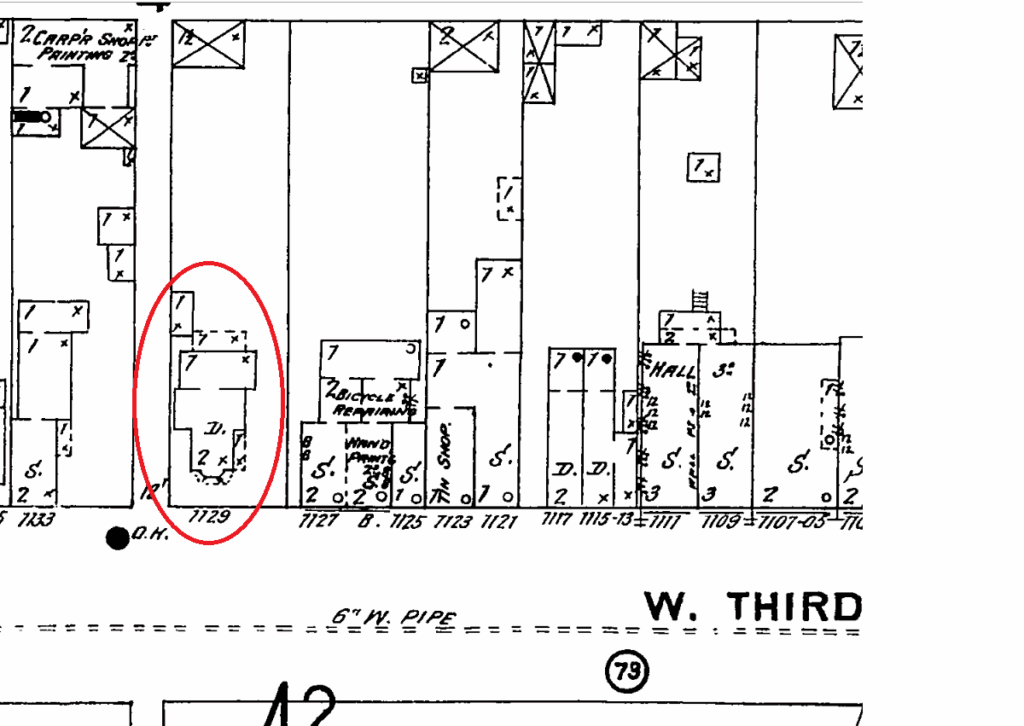
Hale was friends with Orville and Wilbur, and he lived at 1129 West Third Street, right next door to the brothers’ last bicycle shop at 1127 West Third (his home has been demolished and the shop was moved to Dearborn, Michigan).
Frank Hale also served as Mayor of Dayton from 1922 to 1925, while Wilbur and Orville’s older brother Lorin was also on the city commission. (Lorin Wright was also president of the Miami Wood Specialty Company.)
Frank B. Hale Fine Groceries was in business from 1900 until about World War I.
After the Great Flood of 1913, Hale installed a new front to his store which made it “very attractive and afford(ed) an abundance of light for the interior which makes trading a pleasure for his patrons” (Dayton Herald 12/16/14).
A 1915 article titled “The Store that Never Sleeps” recounted how Hale “found it necessary to maintain an all-night schedule for the delicatessen end of his establishment, which is separated from the body of the store and fronts directly upon the street.”
The store stayed open “all night each evening in the week excepting Sunday, and on Saturday until 10:30” (DDN 5/15/15).
The article also said “it is surprising how large a patronage rewards Mr. Hale’s enterprise, even after the midnight hours, for passersby and late automobile parties constantly avail themselves of light lunches chosen from the attractive stock on display, which includes fruits, vegetables, canned and bottled goods, summer drinks, picnic supplies, etc.”
The Hale Store also engaged in “calling their long list of patrons by phone each morning to ascertain their needs in the grocery line. This not only saves much time among the sales force of ten people in answering the phone calls, but many extra trips by the two delivery wagons.”
Hale was a grocer for about 25 years overall beginning around 1900.
He wasalso said to have formed “what was probably Dayton’s first store chain,” which operated six grocery stores around town under the name of Hale’s Liberty Markets (DDN 3/1/55).
Soon after his second term as mayor, Hale and his wife Lura purchased orange groves in Auburndale, FL where they lived until is death in 1955 (ibid).
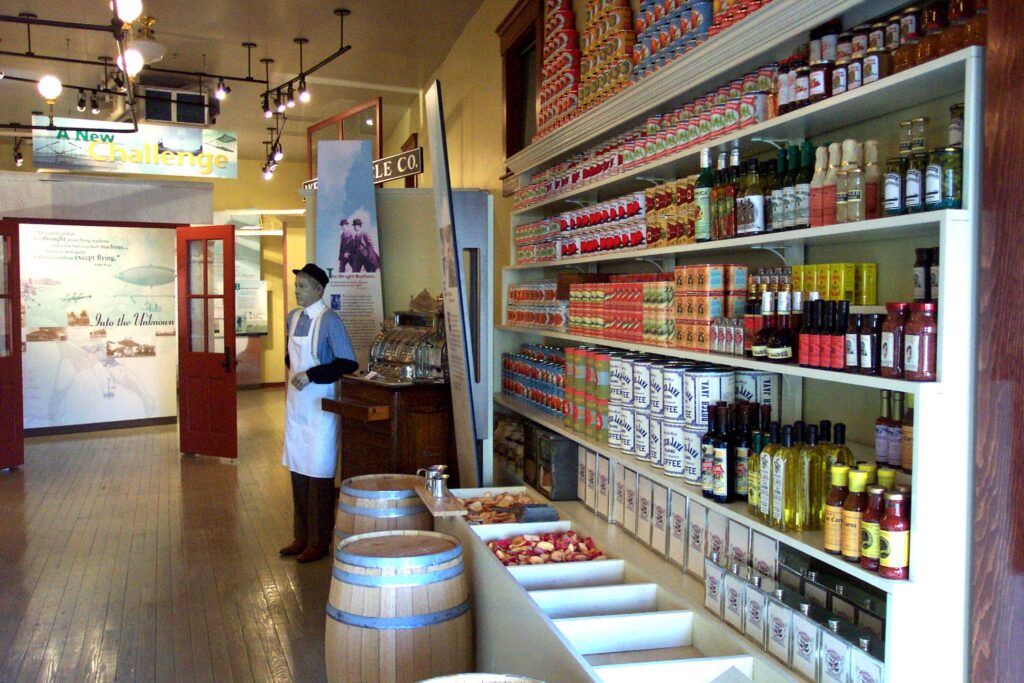
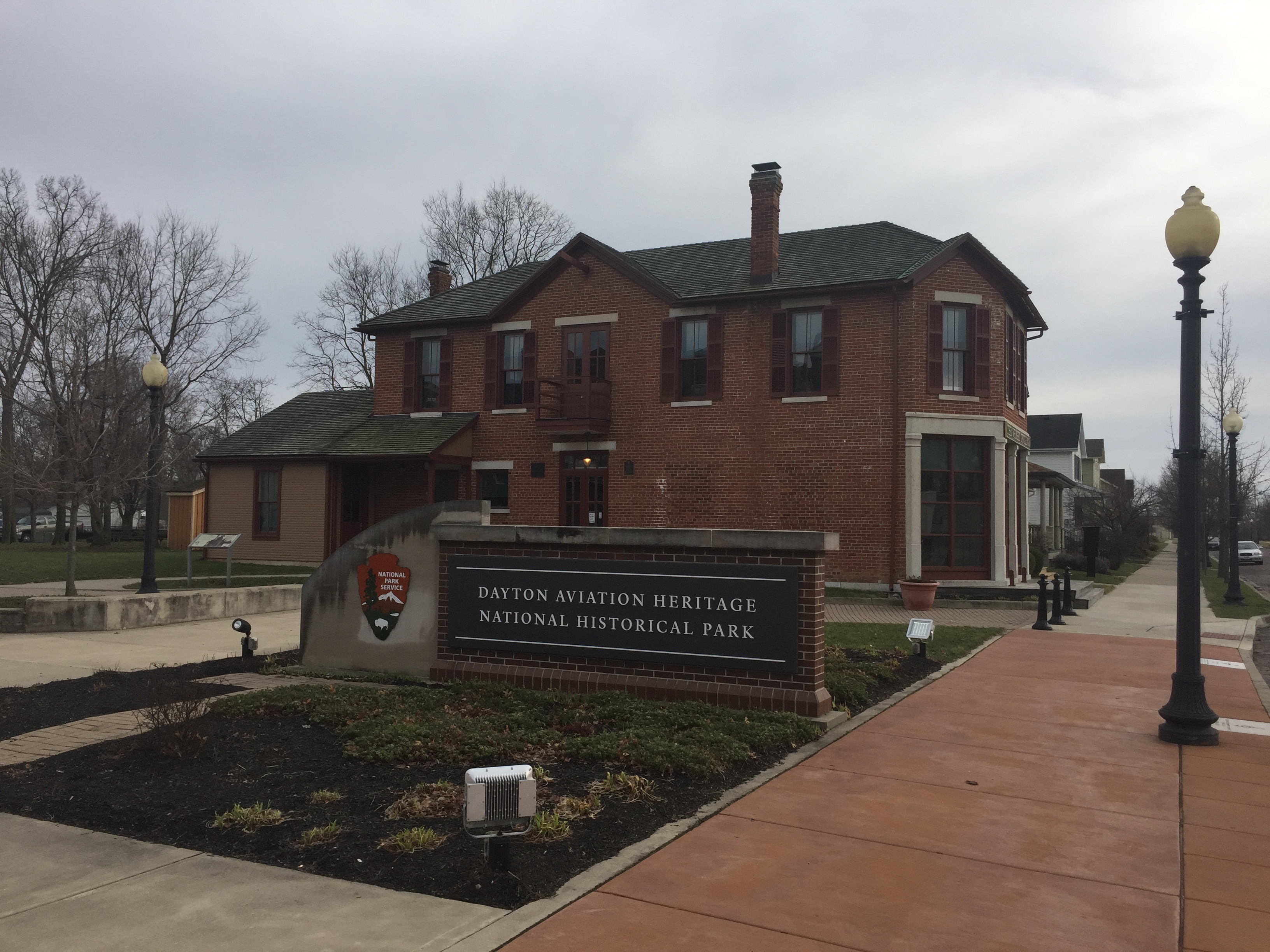
If you visit the Hoover Block today, you’ll see it is part of the Wright-Dunbar Interpretive Center, and you’ll actually be able to see a grocery store in the first floor.
It is one of the museum’s exhibits, which was “restored with painstaking attention to detail … NCR’s custom of immortalizing each cash-register installation on film came in handy: A photograph of the Hoover Block grocery store’s cash-register ceremony was found in the NCR archives, giving researchers a map that guides their reconstruction down to the last can of Heinz tomatoes” (DDN 6/27/03).
The museum opened in June of 2003.
More recently the corner building suffered damage in October 2023 when it was hit by a car.
Leave a Reply