All historic images are courtesy of Dayton Metro Library
The Museum’s Founding and Original Location
What is today the Dayton Art Institute was founded in 1919 as the Dayton Museum of Arts. Its letter of incorporation was signed on February 28, 1919, and some of its original patrons included Orville Wright and members of the Patterson family.
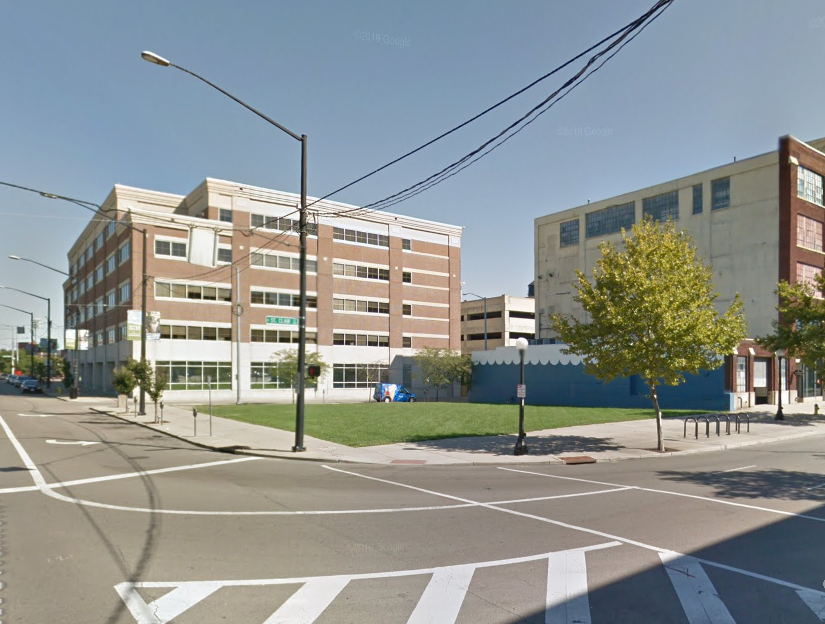
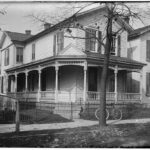
Another was Julia Shaw Patterson Carnell, who played a major role in securing a home for the museum on two separate occasions. Around its founding she “donated a mansion for the museum’s first home,” which was the Kemper house on the southeast corner of St. Clair Street and Monument Avenue.
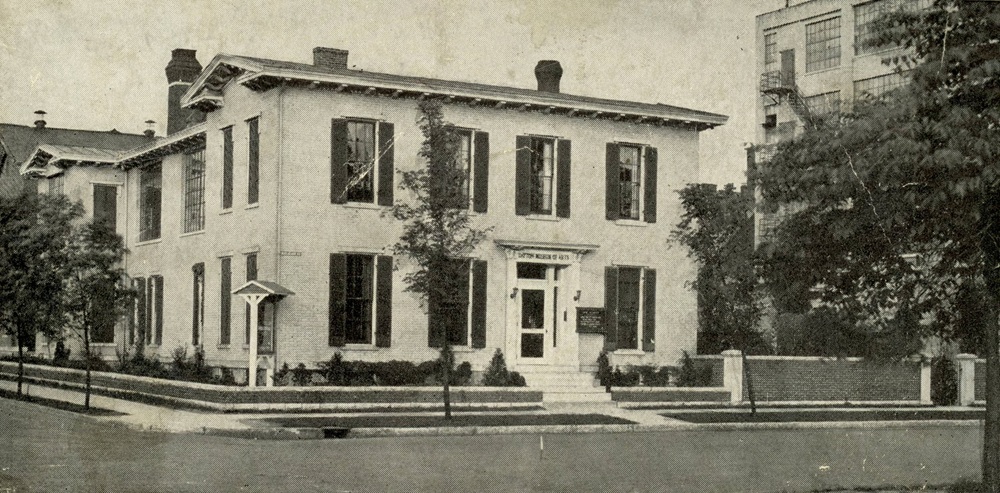
The museum changed its name to The Dayton Art Institute in 1923. The institution was founded as “an art school with a small art collection” and the new name was a result of the growth of the school.
But the institute’s rapid growth also meant that within its first decade it would outgrow its original home.
History of the Current Dayton Art Institute Site
With the DAI looking for a larger home, Carnell again took the lead and gave $2 million for a grand new museum structure “sitting atop a hill overlooking downtown Dayton” for which construction began in 1928. (The Kemper home would be demolished in 1945.)
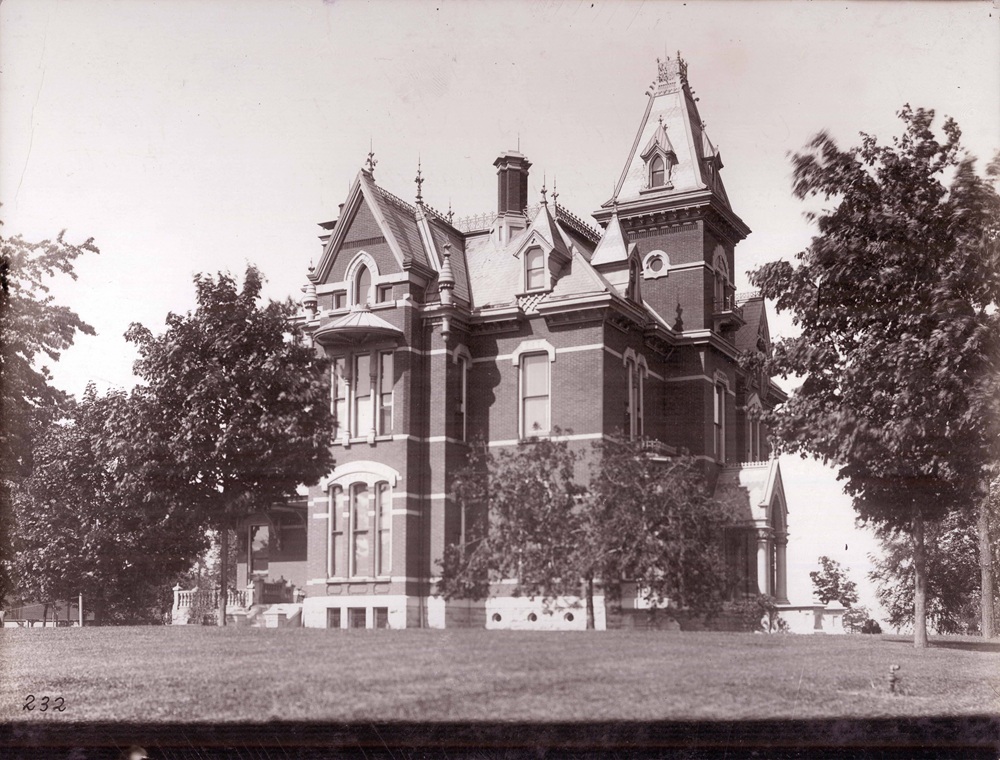
The current museum site at Riverview Ave and Belmonte Park was previously occupied by the home of C. L. Hawes.
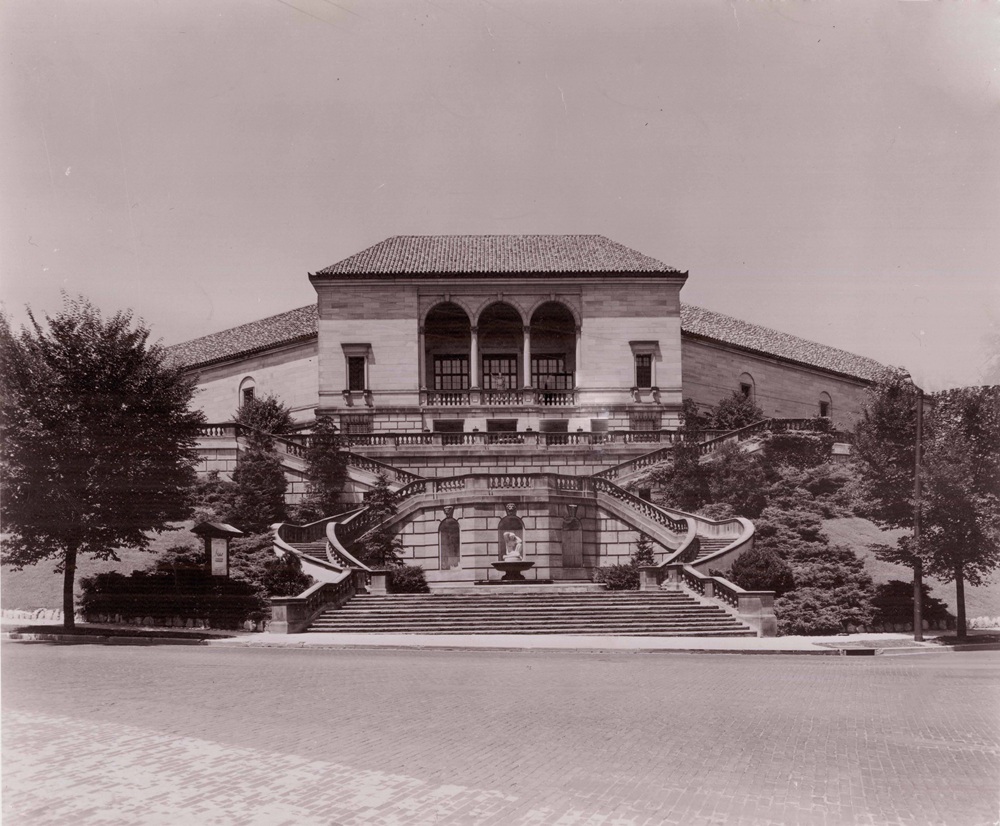
The new museum building was built as a replica of two Italian villas.
The architect of the new museum building was Edward B. Green, a noted museum architect from Buffalo, New York, and much of the design was inspired by Carnell who had traveled to Italy as a girl.
Carnell was also a resident of the neighborhood at the time of the building’s construction.
Many prominent Daytonians contributed funds alongside Carnell, and the grand new building would open in January of 1930. It is a splendid example of Second Renaissance Revival architecture.
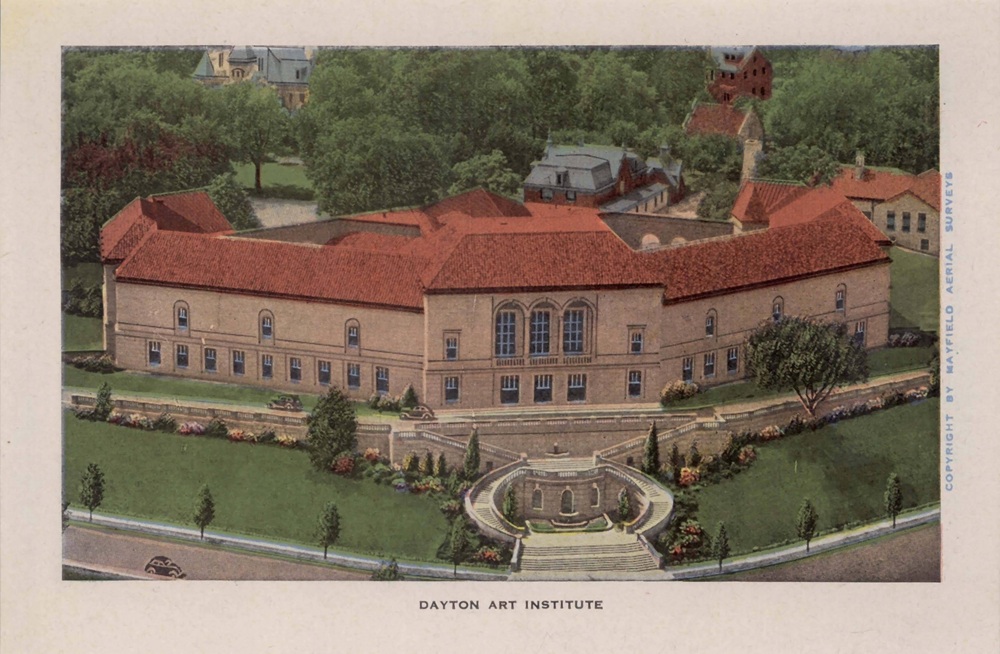
The DAI website explains how the museum also played an important role during the challenging times that the community found itself when it opened: “thousands sought respite from the difficult economic times of the Great Depression at the museum, which not only offered lovely galleries, but also musical programs, classes, social events and even a collection of birds and animals that become known as “Weng’s Zoo.”
The Dayton Art Institute building was added to the National Register of Historic Places in 1974, over a decade before the surrounding Grafton Hill neighborhood.
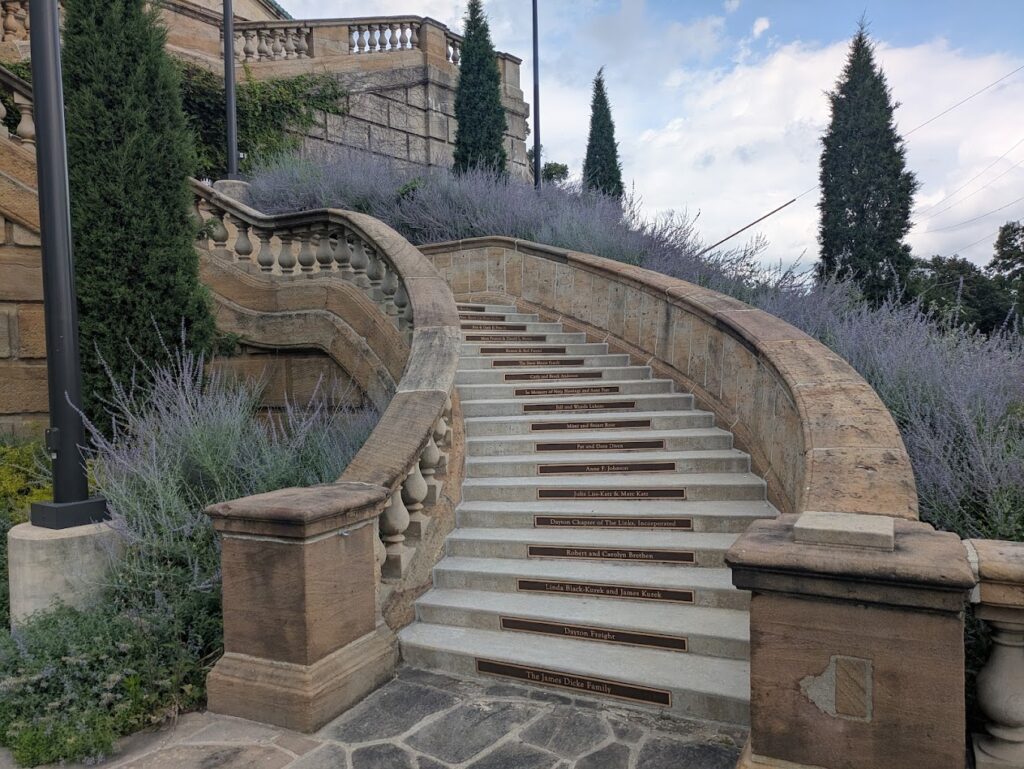
It was described as “a rambling structure of yellow stone, three stories in height, with a dominant hip red tiled roof. An outstanding curving stairway graces the classically detailed facade.”
The building is also mentioned in conjunction with its architecturally prominent neighbor on the hill the Masonic Temple, which opened the previous year (and also took the place of an old mansion).
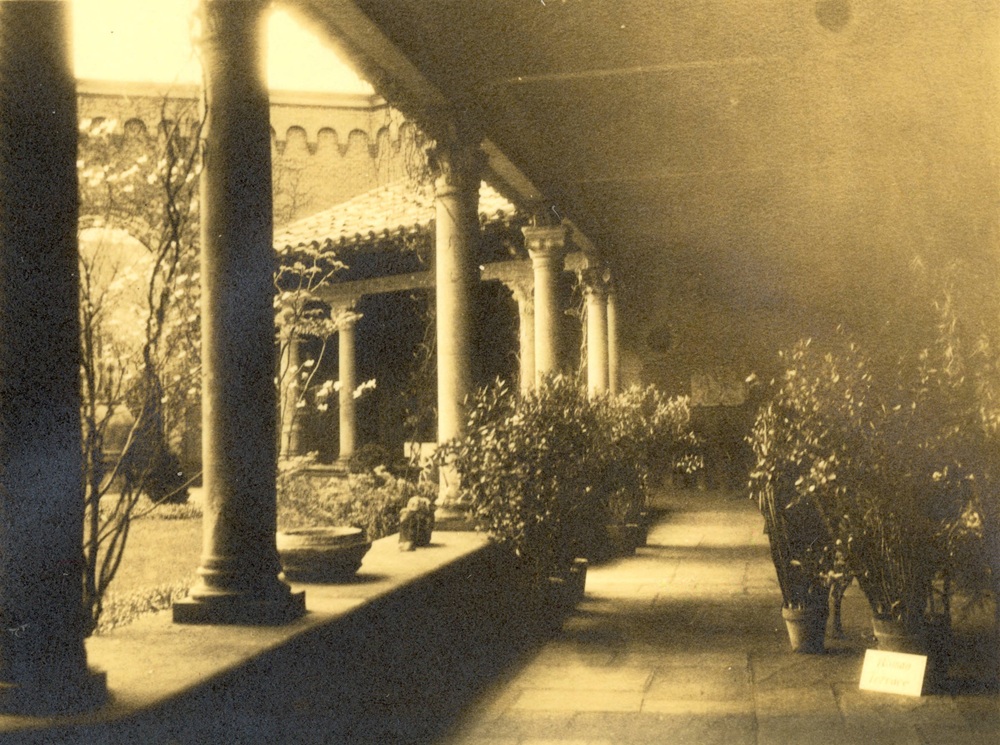
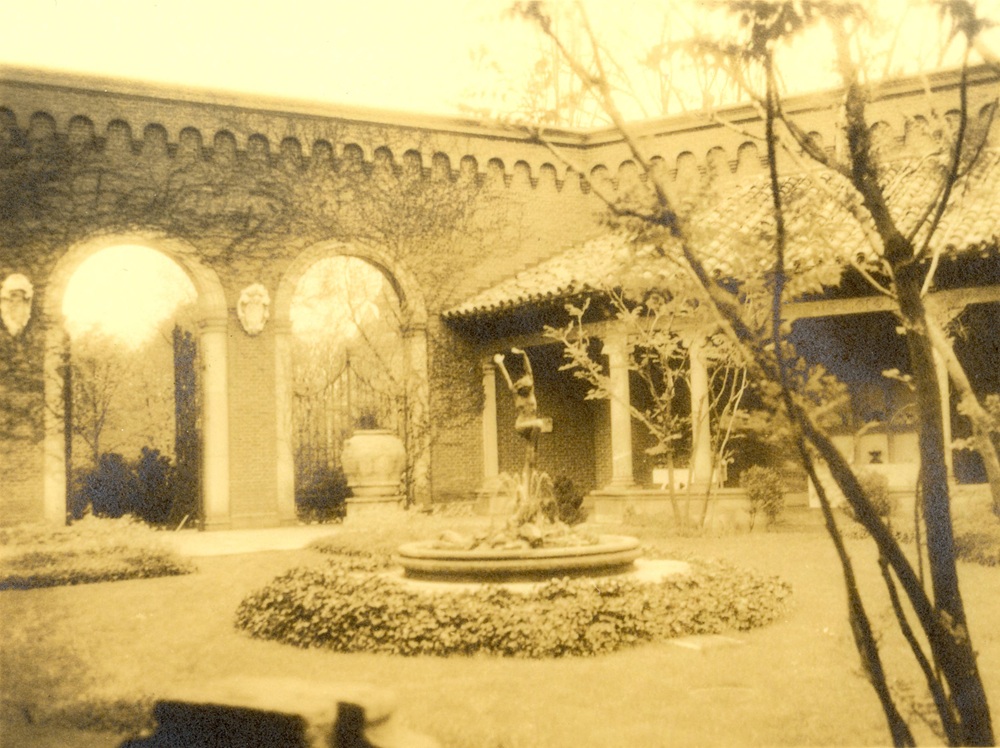
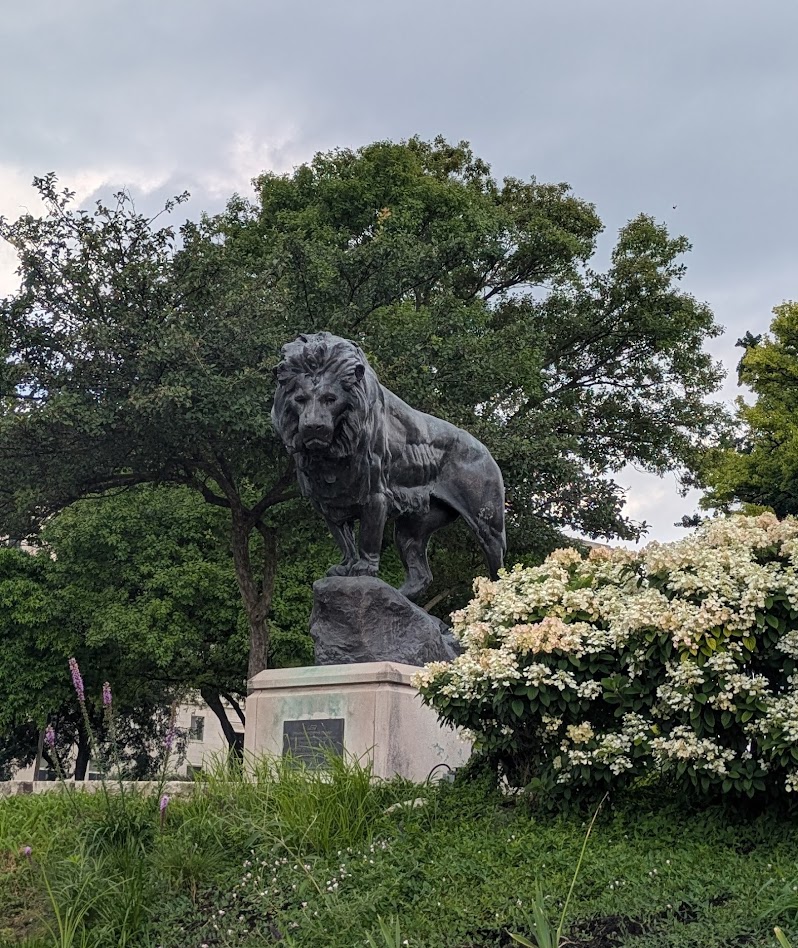
In 1955, after Steele High School closed downtown, its beloved Leo the Lion sculpture was transported to the grounds outside of the Dayton Art Institute where you can still find it today.
In 1994, a major capital campaign funded a huge museum expansion that added 35,000 square feet of new space and a complete renovation of the existing galleries.
And more recently, the grand front staircase was renovated and reopened in a major project that was completed in late 2020.
DAI Collections and Events
Today the DAI’s collection contains more than 27,000 objects that cover some 5,000 years of history. Only about 1,000 of those pieces can be displayed at any given time. The DAI also has a searchable collection database online.
The museum has continued to offer a variety of events, musical performances, talks and tours, and many other activities in conjunction with community partners.
Music has always been an important part of the museum, and today a jazz series “presents some of the best local and regional jazz performers in the Shaw Gothic Cloister.” Also, “regular performances are held throughout the year on the historic Skinner pipe organ in the Mimi and Stuart Rose Auditorium.”
Four annual social events also serve as major fundraisers for the DAI: Curated (which provides funds for art protection and conservation) Art Ball (which funds the mission of “bringing art to all”), Oktoberfest (DAI’s largest annual fundraiser that dates back to 1971) and Bourbon & Bubbles.
And visitors interested in supporting the museum can also become a member which provides a variety of benefits.
Leave a Reply