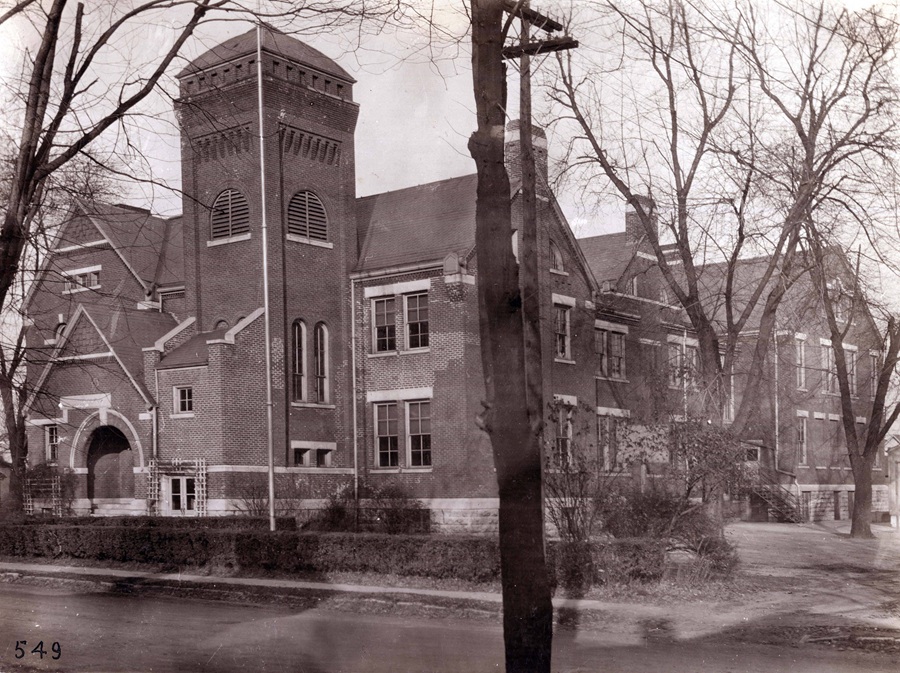
McPherson Town is a Dayton neighborhood just a short walk from downtown that is known for its beautiful stock of historic homes.
There’s also one prominent building in the area that is residential today but was constructed for a different purpose.
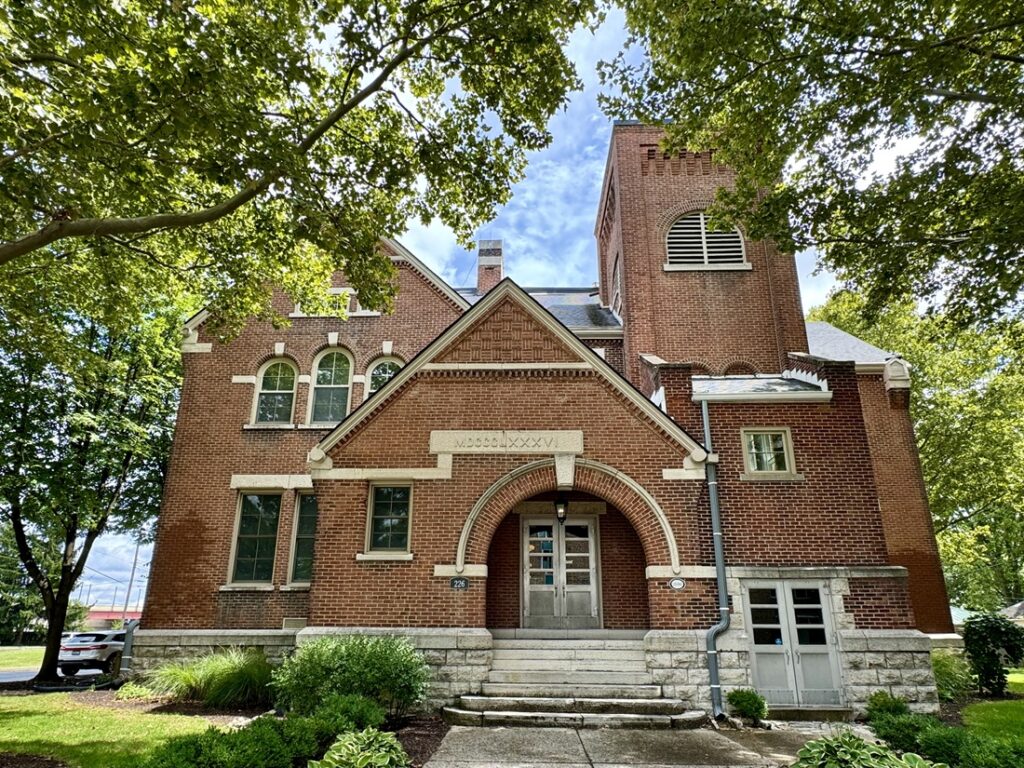
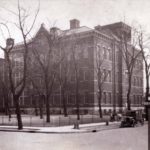
That is the Romanesque-style Hawthorne School building at 226 McDaniel St, which was built back in 1886 and expanded in 1911.
According to Preservation Dayton, its size “reflects the large school-age population living in and around the McPherson Town neighborhood in that time.”
Its architectural features include “a rusticated limestone foundation, a soaring multiple gabled roof, louvered bell tower with double round arch windows, brick corbelling and a round arch entrance bay with keystone.”
The interior also “includes other reminders of the late-19th Century educational institutions, including polished wood floors and wainscoting in the classrooms.”
The school was named for American author Nathaniel Hawthorne.
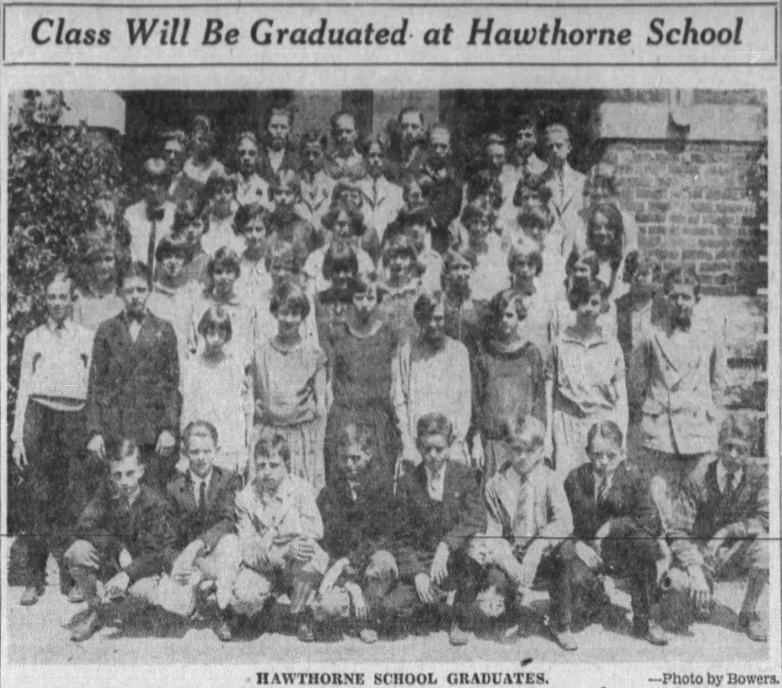
After being used as a school for nearly 90 years when it closed in 1974, it became a center for unwed mothers, and then was used by local dance companies as a practice space.
As of 1987, it was “in dire need of repairs.” But it was placed on the National Register of Historic Places, and in 1989 Dayton Public Schools transferred it to the city in a land swap.
There were a few efforts to redevelop the structure in the ensuing years, but they did not succeed until 1998 when it was converted into 20 apartment units.
The project was a joint venture of the McPherson Town Development Corporation and CityWide Development. The City of Dayton and National City Bank provided financing.
The renovation company Kapp Construction shared that “The original features of the school were maintained throughout the building. Care was taken to integrate original features into the final design, such as the original stage, the gymnasium floor, and the slate boards, thus retaining the historical relevance of the structure. The exterior façade of this circa 1886 building were restored as were the large windows and doors.”
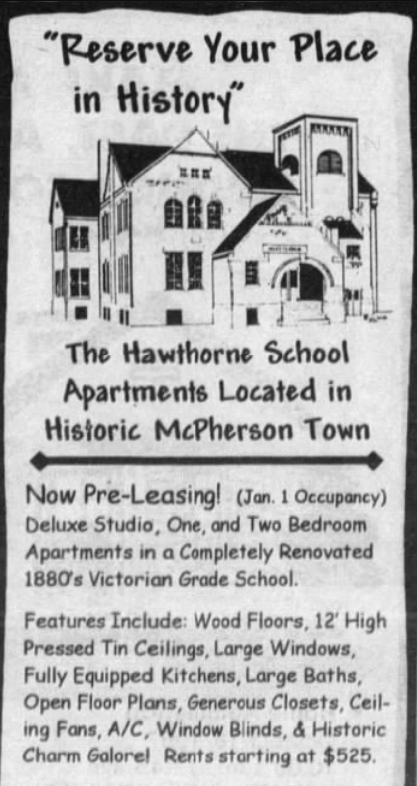
Then in 2018, the units were converted to condos. An article stated that “each condo is unique and includes reminders of late nineteenth century educational institutions, including polished wood floors, wainscoting transom windows, coat room hooks, chalkboards, and more. There are studio, one bedroom and two bedroom units.”


Leave a Reply