I’ve written about Downtown Dayton’s retail history, as well as its decline as suburban shopping malls emerged to take advantage of a region that was spreading out significantly in the 1950s and 1960s.
But today we will look at an interesting chapter bridging the gap in between the glory days of downtown and the eventual dominance of the suburbs.
I shared in my earlier article how it wasn’t downtown boosters competing against suburban retail developers. Instead, Dayton’s largest downtown retail forces were also very active in leading the way in terms of shopping center development.
Arthur Beerman was perhaps the most significant figure representing this trend.
Multiple sources say that he brought Dayton its very first shopping mall back in the 1940s, when he built McCook’s on Keowee Street, the far edge of North Dayton at the time that was then considered suburban.
McCook Shopping Center: Form and Evolution
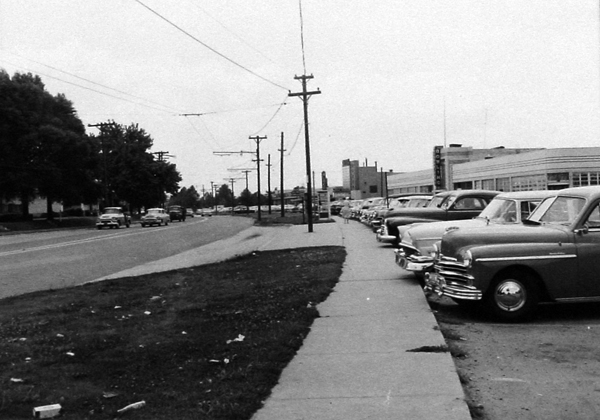
The McCook shopping center evolved over time to contain a variety of businesses. The two main attractions were a theater and bowling alley, which opened first in 1941 and then were joined by a Beerman’s (Elder-Beerman) department store, a Cassano’s restaurant, grocery stores Gershow’s Super Market and Albers, as well as multiple other shops.
Studying the physical footprint of the shopping center, there is parking in front of the stores, which was a departure from traditional urban retail, but there is still not nearly as much as subsequent shopping centers, and these stores are still much closer to the street than later suburban commercial strip developments.
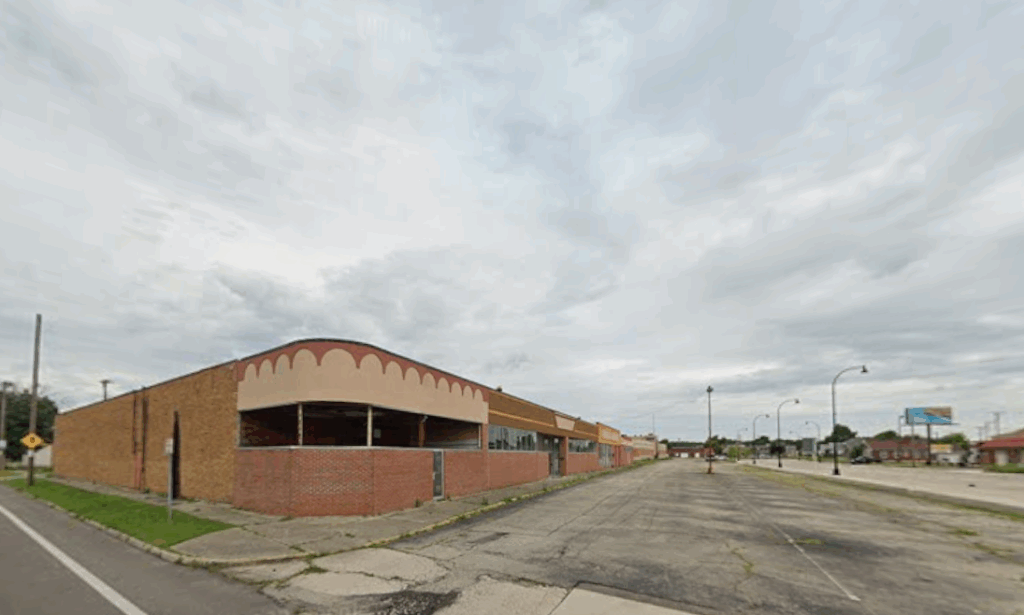
A post on UrbanOhio states that “Dayton’s first true shopping center was Miracle Lane, on Salem, dating from 1946-47” which was torn down in the early 2000s. But it called McCook Shopping Center “probably the first true auto-oriented shopping center, but it developed in bits and pieces as sort of semi-planned commercial strip, but one with more than one lane of parking in front and buildings with low horizontal lines, so it was probably the first place in Dayton where one could experience ‘shopping center space’ that was to become ubiquitous in postwar suburbia.”
It appears that Beerman brought the department store to McCook in 1947. A City of Dayton source states that “while today McCook Field wouldn’t be considered suburban, in 1947, local department store owner Arthur Beerman decided to build a new store outside of Downtown and selected the McCook Field neighborhood, anchoring the McCook Shopping Center with an Elder Beerman store. Although this retail no longer exists, its development is illustrative of this unique neighborhood’s attractiveness for local entrepreneurs.”
Later Arthur Beerman built three additional early malls: Northtown (ca. 1950), Eastown (1954) and Westown (1956).”
Similar developments would proliferate around that time in all areas of the metro area, while Dayton’s much larger Salem Mall would come in 1966 and the Dayton Mall in 1970.
Old Shopping Center Demolished Over Time
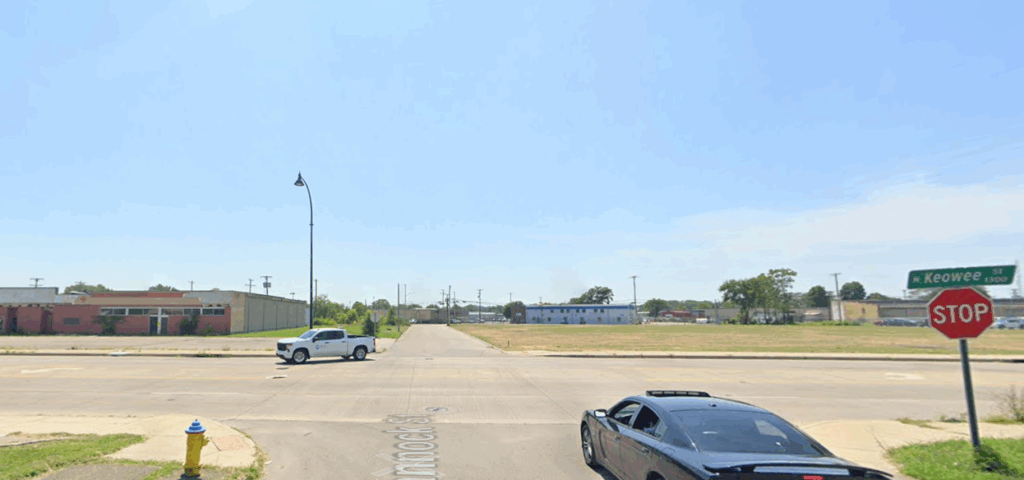
In more recent years the McCook Shopping Center emptied out and eventually became totally vacant.
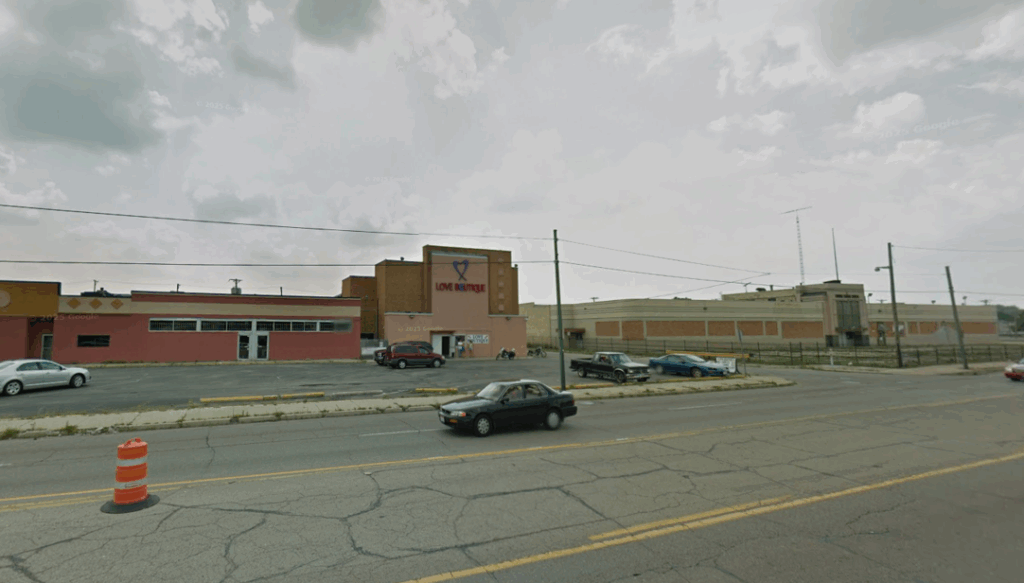
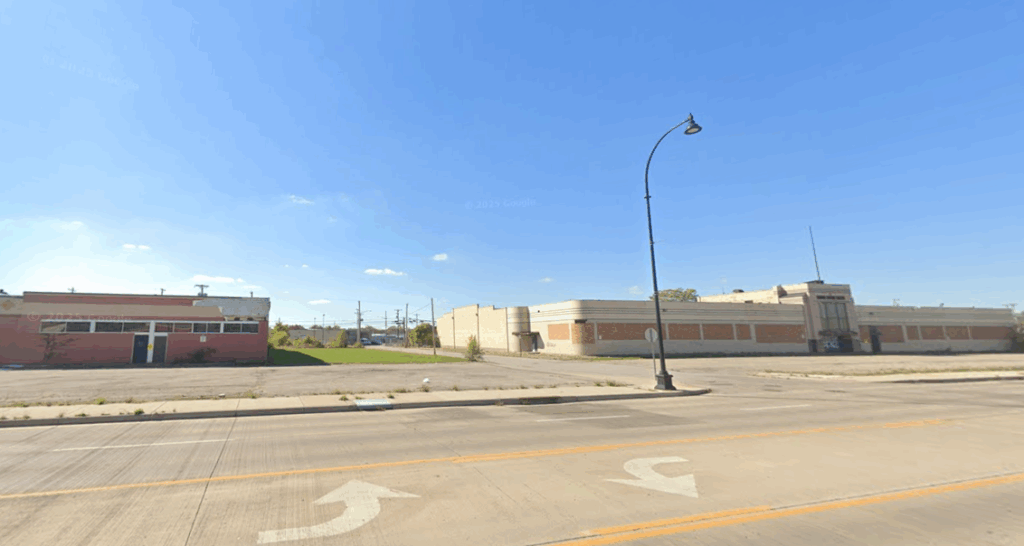
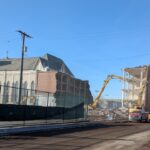
Parts of it, including the old theater, began to be demolished in the mid 2010s.
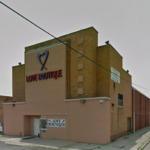
The bowling alley was just demolished in 2025. And a few of the old storefronts still stand on the 1200 block of Keowee Street.
You can see the progression of the demolition in the series of images below.
And read Part 2: History of the McCook Bowling Alley and Theater
My next article is a more complete history of the bowling alley and the theatre:
I really enjoyed this memory of shopping in downtown Dayton. Your observation of the demolition of most buildings that closed many of the stores downtown, contributed to the massive decline in retail shopping downtown is spot-on. Once the malls were built, the writing was on the wall for downtown Dayton. The emploding of the former Rike’s was a sad day for many, and marked the end of an era.
I noticed that you did not mention Forest Park Plaza, and wonder why? It was at one time a thriving shopping center also. Its fate was sealed by the opening of the Salem Mall.
Ironically, now many of the retail areas downtown have been consumed by residential sites, and there is not enough retail downtown to meet the needs of the new residents. You have to get in your car and leave the downtown area to do most of your shopping. I know there are many reasons for that. But, if I were considering downtown Dayton as a new residence, this could be a deal breaker.
Thanks for the interesting article!
I saw many movies at that theatre. There was a sporting goods store (was it a Tuffy Brooks?) and next door to the mall was an amazing authentic jewish deli! You are simply a fountain of knowledge. Thank you!!