In a recent article I dug into some history of the McCook shopping center, the first suburban-style commercial strip in Dayton. In that piece I mentioned that two major tenants were a theater and a bowling alley, and here I will share their histories in more detail.
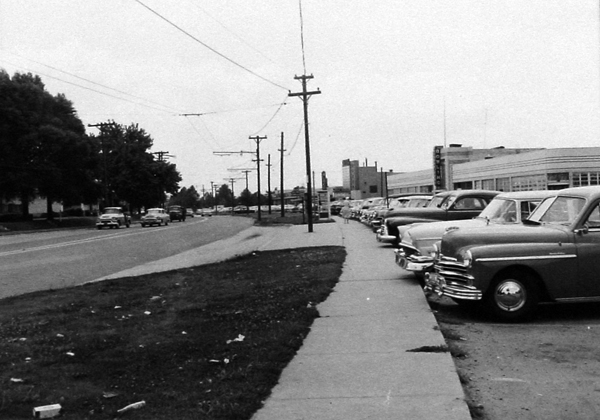
The 1957 image below depicts the McCook Bowl to the right, with the marquee and the McCook Theater visible behind it, both of which opened in 1941.
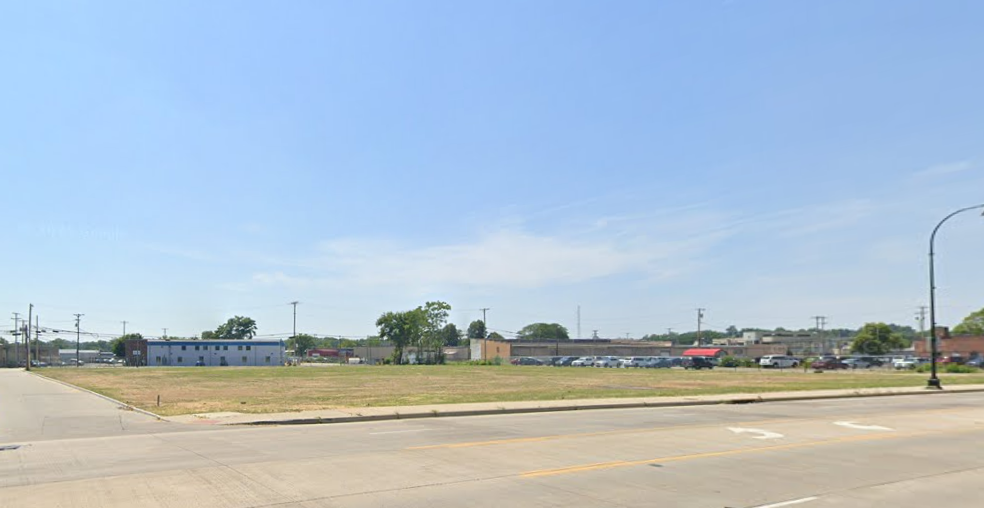
Both buildings have been demolished today, with the former theater being razed around 2013 and the bowling alley biting the dust in 2025 after a long period of abandonment.
McCook Theater History
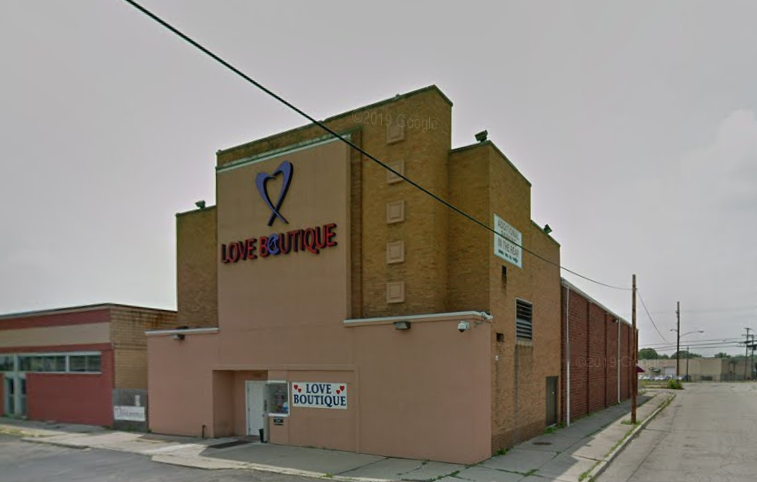
The theater at 1267 North Keowee Street opened in 1941. At the time it was called Dayton’s “newest, most beautiful theater” with “soft, indirect lighting and (a) modulated color combination” as well as air conditioned comfort.
It originally had 900 seats but that was reduced to 700 after it was purchased by Pearl and Herman Hunt in the 1950s who installed state-of-the-art Todd-AO projection equipment which showed films in “65 mm size, almost twice the size of standard motion picture film at the time” and a 6-channel sound system that promised surround sound for every seat in the house.
The screen got even bigger in 1961 with a 60 ft wide by 20 ft high curved screen to show Cinerama pictures, which “combined 3 pictures, made by 3 cameras.”
But in the subsequent years, attendance dropped off. It was sold again in 1974 and by 1978 it was averaging only 20 people per evening.
The owners decided to pivot to showing adult films, a move which immediately increased business three-fold and even “helped bring business to the shopping center where it was located.”
The owner of a barber shop said that “Actually it’s improved the quality of the clientele. You used to see kids hanging around the theater all the time, and sometimes there would be problems. But now you see expensive cars and older gentlemen going into the theater and there haven’t been any problems.” (Source: Curt Dalton, When Dayton Went to the Movies)
Later it became known as the Love Boutique, and after closing was owned by the Montgomery County Land Reutilization Corp, which in 2013 sold it to Garrett Day LLC which demolished it “for potential future retail use” (Dayton Business Journal). The firm specialized in redeveloping brownfield sites, but in this instance the land still sits empty today.
McCook Bowl – Story of a Prominent Dayton Bowling Alley
And just one month after the theater opened in July 1941, another major attraction opened up right next to it on Keowee Street.
McCook Bowl was an alley that earned a reputation far beyond the Gem City for its quality and sheer size. It was built by Ben Danis and Sons Construction at a cost between $200,000-250,000 after a committee had visited and studied 20 bowling alleys in Columbus, Detroit, and Chicago.
It boasted a staggering 44 lanes, which made it the largest alley east of the Rocky Mountains and the second biggest in the country after Hollywood Bowl in California which had 52 lanes. (But McCook Bowl could still claim the top spot for an alley built from scratch because Hollywood Bowl had started as a 32-lane outfit and later added 20 more.)
In an article remembering the alley at the time of its demolition in May 2025, Dayton Daily News sports columnist Tom Archdeacon called it “the most fabled Dayton bowling alley of its time” and quoted an early story calling it the “finest in the country.”
The night the alley opened, a roster of top teams from across the region came to face off in a series of matches, including Herman’s Undertakers from St. Louis, the Strohs Bohemians from Detroit, and the Shook-Bieph Girls and Brunswick Minerals from Cincinnati.
In those early years the pins were set manually by pin boys, 22 of whom were needed at a time. They were replaced in 1957 by an automated pinsetter machine.
McCook Bowl was extremely busy during its heyday, with “approximately 100 games a day on each of the 44 lanes.” At one point it also featured 2,850 bowlers who competed in 81 leagues.
The alley also had an unexpected connection to a volatile labor conflict when it served as the headquarters for picket line managers during the Univis Strike, a late-1940s clash that drew thousands to protest the plant located just around the corner on Leo Street. It eventually required the Ohio National Guard to maintain order.”
The alley was purchased by a group led by Louie Zavakos from Arthur Beerman in 1946. After World War II the manager of the alley was Walter “Bob” Brodbeck, and after he passed away Zavakos’s son Jim took over in 1971. At the time the alley had been struggling and Zavakos later said that “I was just 25 and it was a baptism by fire.” Zavakos rose to the occasion, but many years later would exit the business, and vacancy and deterioration set in.
A few years before it met its end, an urban exploring group toured the alley after it had been shuttered for many years:
“Portions of the roof were gone and the lanes that weren’t removed were destroyed. Bushes and small trees grew inside the building and everywhere you looked, there was rubble that occasionally held reminders of the past. Bowling balls lay in the gutters. Rental shoes were still stored in their individual cubbies. Names of bowlers were displayed up on a wall and they found a trophy awarded to the 1992 Delco Hoover second high bowler. … A racoon appeared and seemed to guard the forgotten bowling shoes from the intruding explorers.”
The former alley was then bought by the Miami Conservancy District which moved to take down the building, a demolition that “was complicated by the likely presence of asbestos from the collapsed ceiling” and required a separate company to complete asbestos removal.
(Source: Archdeacon: McCook Bowl was once the ‘finest in the nation’ – now it’s rubble)
The demolition followed another former alley that was razed the previous year just a mile away on Troy Street, Congress Lanes.
Early Modern Design with Some Interesting Details
Architecturally, the theater and alley reflect their era where style was beginning to give way to car accessibility, but there are still some interesting details and design features to notice.
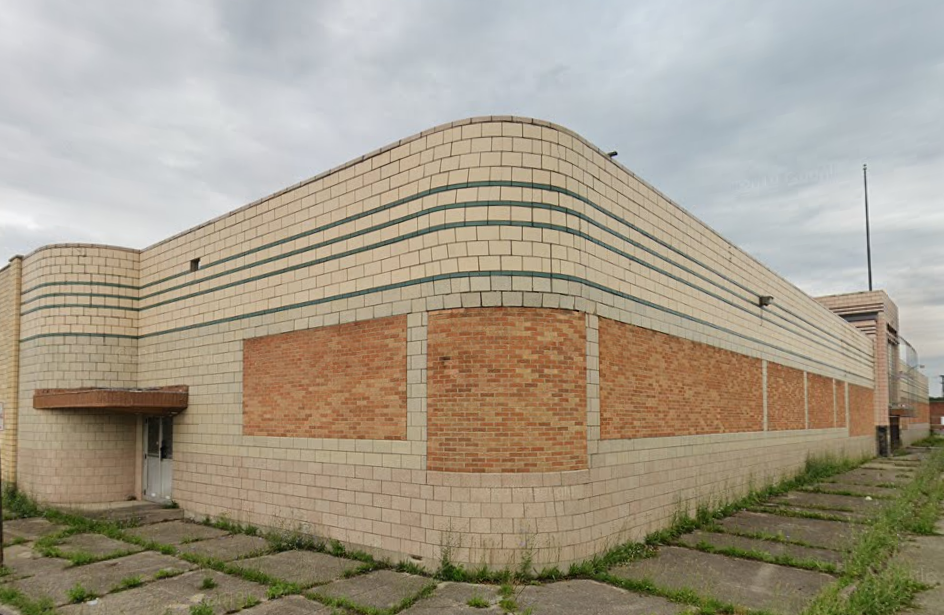
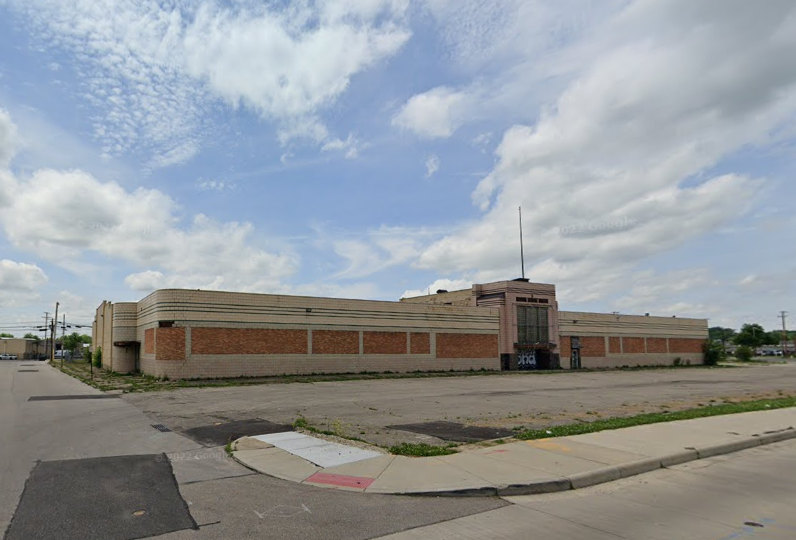
The bowling alley’s design has been described as “a streamlined moderne style” and both the alley and the theater “share a large vertical central feature on the façade, contrasting the with the horizontals elsewhere in the complex” and the curving corner was also highlighted as a nice detail.

Leave a Reply